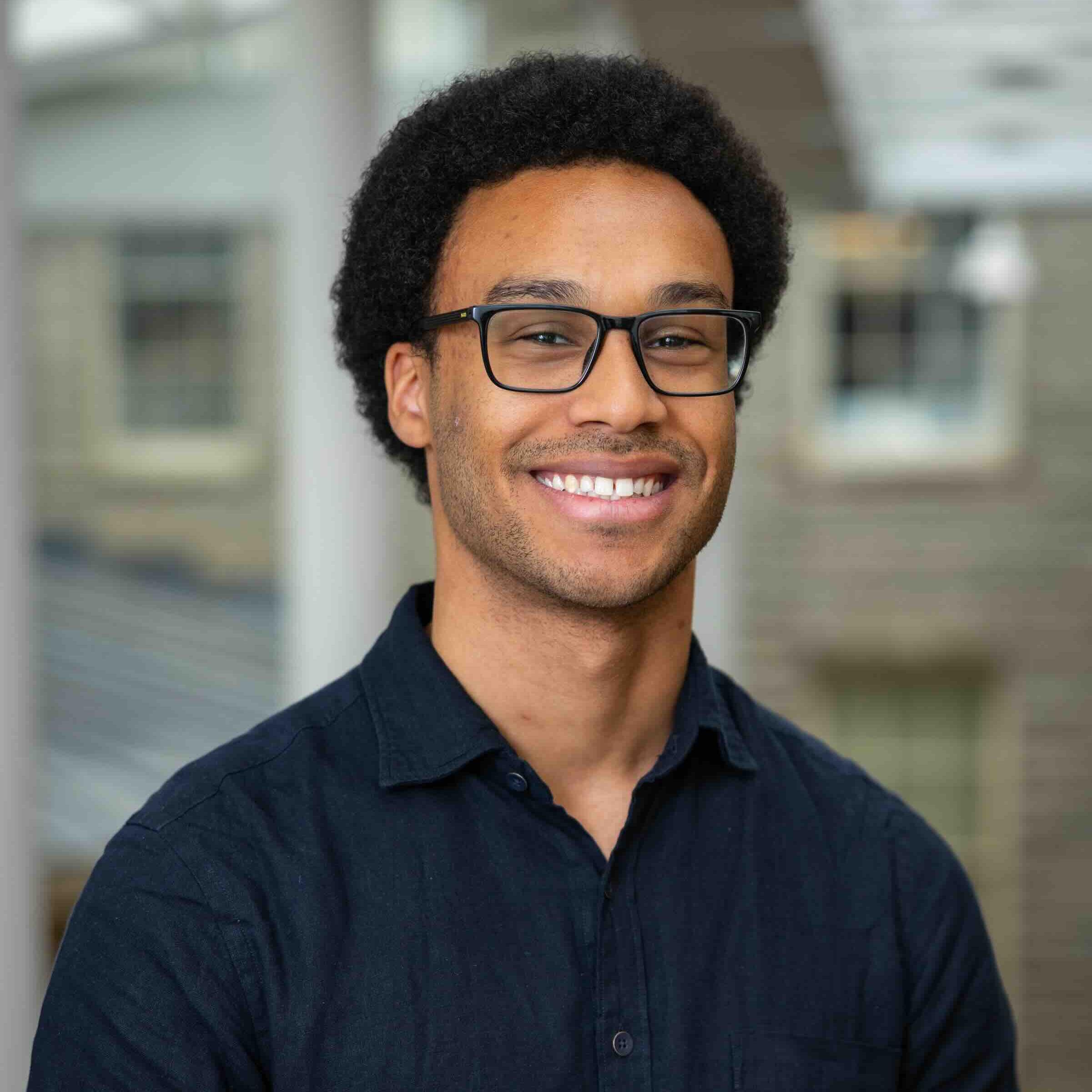
Osita Achufusi: Environment & Sustainability
'I feel equipped to handle whatever uncertainties lie ahead'
A&S Communications
Live, study and grow at the nexus of discovery and impact.
Our research activities and academic programs are remarkably broad, but they share one characteristic: all are curiosity-driven. Exploring the unknown is central to our mission to be the nexus of discovery and impact.
Courses offered in A&S of 4000 courses at Cornell.
Majors to choose in A&S. Design your education.
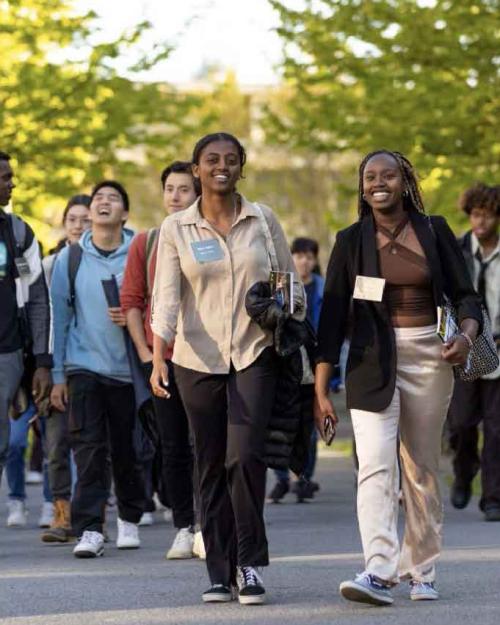
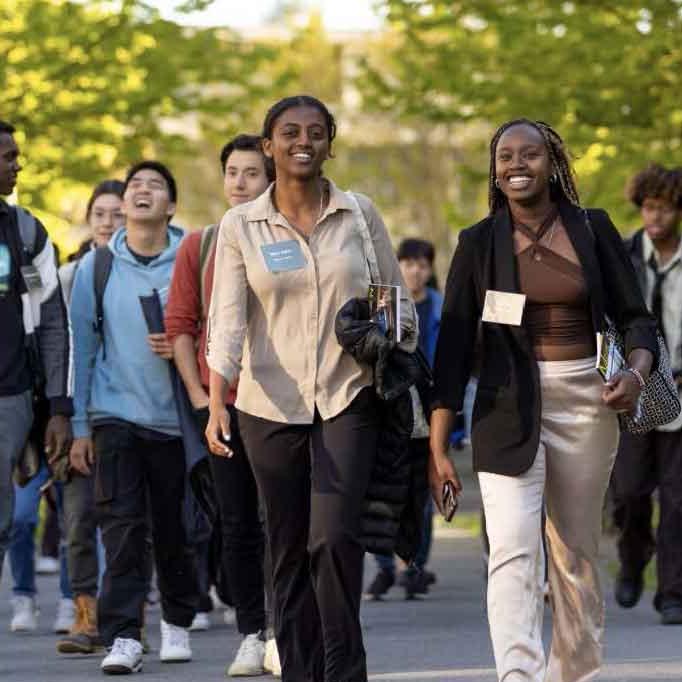
Students in A&S, each with an extraordinary journey to tell.
A&S alumni in our network. Go Big Red!
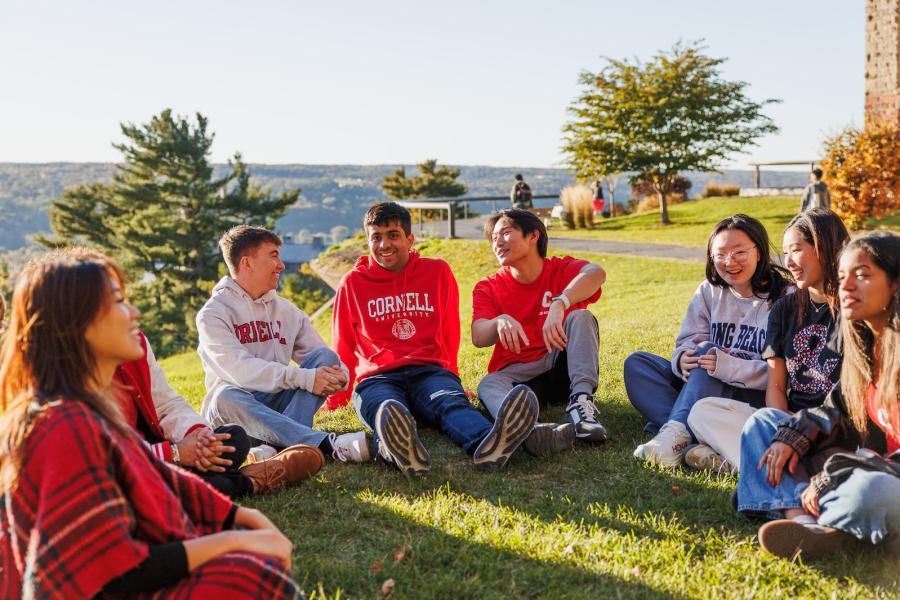
Welcome to the Big Red community.
Get ready to expand your life and experience beyond the classroom, and to let your curiosity drive your ambitions. The College of Arts & Sciences embodies Ezra Cornell’s founding vision where "any person can find instruction in any study."
The innovative undergraduate curriculum at A&S has distribution requirements that range from global citizenship to physical sciences to ethics and the mind. Classes build upon each other and cross the boundaries of traditional academic fields. Extensive work occurs outside of your major and minors, and there are no required core courses. Work closely with inspiring faculty to develop the hallmark skills of a liberal arts and sciences education – the ability to read critically, write persuasively and think broadly.
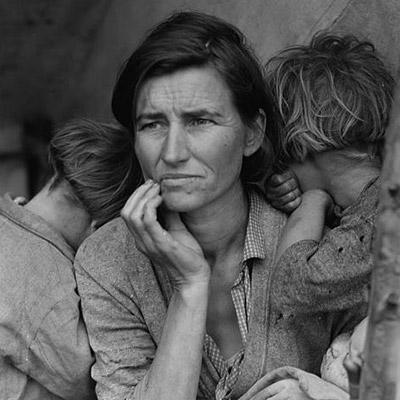
In American Studies, you’ll embark on an interdisciplinary study of the themes, trends and patterns that characterize the American past and present. You’ll use multiple perspectives and methodologies, learn to synthesize knowledge and develop the critical thinking skills needed for rigorous, complex analysis. American Studies majors have the flexibility to define their own area of concentration, such as visual studies, cultural studies, race and ethnicity, legal and constitutional studies, the American environment, American capitalism or class and social structure.
Details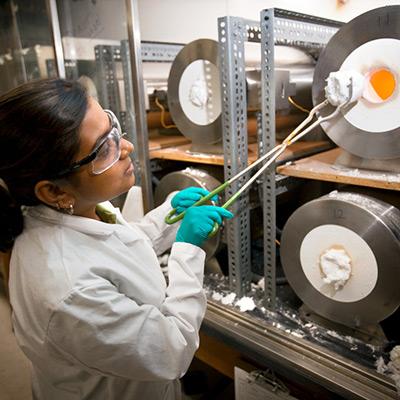
As a chemistry major, you’ll learn logical thinking and creative problem solving and can either dive deep following a traditional curriculum or pursue a flexible program that may be ideal for those with alternative career goals. The department’s research areas include inorganic, materials, organic, analytical and physical chemistry, as well as chemical biology.
Details
Research in astronomy is making rapidly increasing use of analysis methods that draw from developments in artificial intelligence, machine learning with a strong basis in Bayesian statistics. The overarching questions raised in astronomical science are attractive to students from a wide range of disciplines and can provide the motivation for learning the fundamentals of data science as they are applied to the astronomical domain.
Researchers in the Astronomy Department are involved with specific projects involving large empirical and simulation data sets: spacecraft imaging data from solar system missions, spacecraft survey data for exoplanets, sky surveys at radio, infrared, and optical wavelengths, data sets from gravitational wave detectors, and cosmological simulations of large scale structure in the universe. These data sets will provide attractive contexts for learning and applying modern analysis methods.
Details
With a minor in Asian studies, you can focus on East Asia, South Asia or Southeast Asia. Your courses can include the study of language, literature, religion and culture in the Department of Asian Studies, as well as courses on Asian history, politics, anthropology, sociology and economics offered in other departments.
Details
As an astronomy major, you’ll gain in-depth knowledge about the nature of the universe, with thorough preparation in physics and mathematics. Like nearly all majors, there are opportunities to engage in research projects in your junior and senior years — faculty and students have played major roles in space exploration, including a heavy involvement in NASA missions such as the Mars Rovers.
Details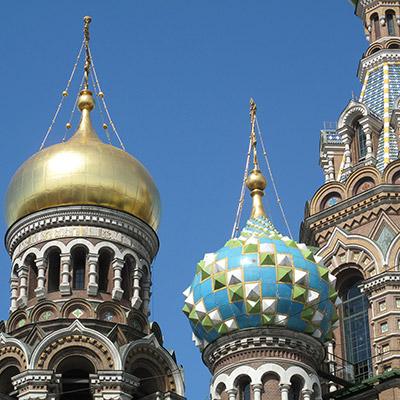
With a minor in Russian through the Department of Comparative Literature, you can explore Russian language, literature and culture. Translate your interest in politics, books, history or foreign travel (or your Russian heritage) into a broad and satisfying academic program that will introduce you to new ideas and new people across centuries and across campus.
Details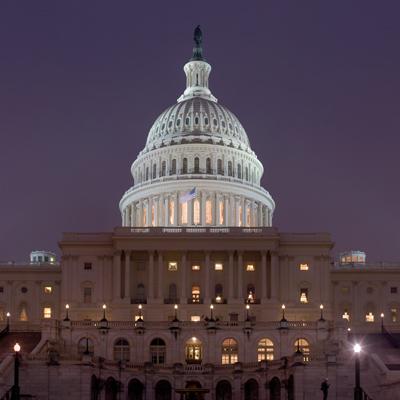
The study of public policy is a comprehensive exploration of the politics and mechanisms that shape policy formulation and execution, coupled with an assessment of their effects on society’s welfare and quality of life. Students who choose to major in public policy engage with a broad range of topics, including governmental policies impacting areas such as children and families, crime prevention, democratic processes, educational systems, environmental conservation, financial sectors, social inequality, public health initiatives, market regulations, and workplace dynamics, among others.
The major’s distinctive strength lies in its cultivation of robust theoretical frameworks, rigorous quantitative analysis skills, critical analytical thinking, strategic planning abilities, and the application of these skills to address real-world policy challenges. These competencies are highly sought after in both government and private sector settings, and our graduates are equipped to navigate complex policy landscapes and drive positive social change.
The public policy major is administered through the Cornell Jeb E. Brooks School of Public Policy, while the public policy minor is administered through the Department of Government.
Details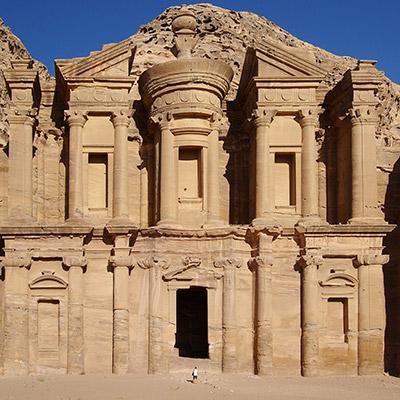
As a Near Eastern studies major, you’ll have the opportunity to acquire language skills as well as familiarity with the history, cultures, literatures and religions of the Near East/Middle East from antiquity to the modern day. You’ll become acquainted broadly with the region – which extends from Turkey east through Iran and Afghanistan, south through the Arabian Pennisula to Yemen and across north Africa from Egypt to Morocco — and its cultures and be able to study a particular subfield in depth. Special focus is given to the ancient east Mediterranean and Mesopotamian regions and to the Levant and Egypt.
Details
With an international relations minor, you’ll be able to take advantage of the vast resources available across colleges and departments for studying the politics, economics, history, languages and cultures of the countries and regions of the world, adding a global and cross-cultural dimension to your major studies. This interdisciplinary program, offered through the Mario Einaudi Center for International Studies, is open to undergraduates enrolled in any of the seven Cornell undergraduate colleges.
Details
With a visual studies minor, you’ll pursue an interdisciplinary approach to visual art, media (including digital works), performance and perception. You’ll study with faculty from disciplines throughout the college, including history of art, film, literary studies, psychology, theatre and more.
Details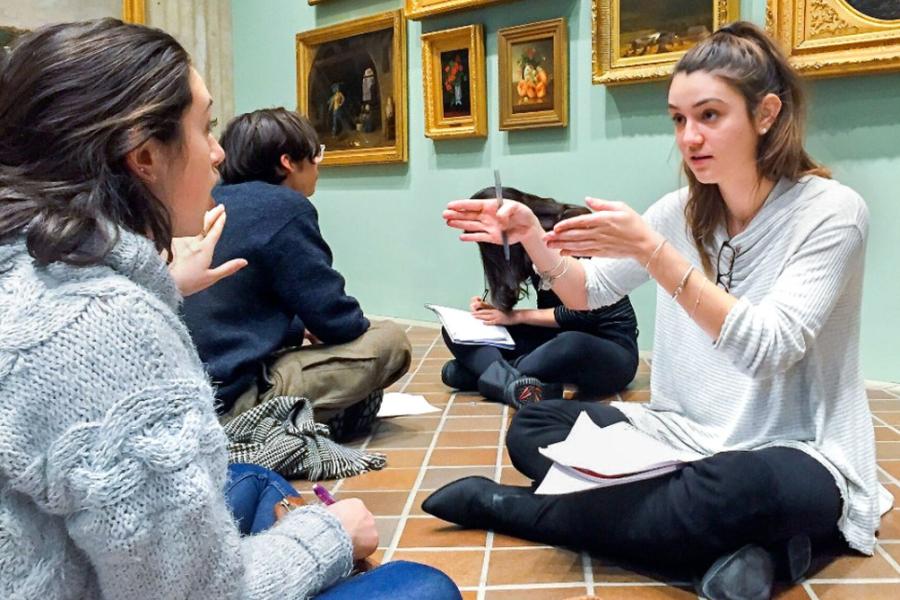
The pinnacle of the liberal arts experience
Students design their own interdisciplinary major, organized around a question or issue of interest, and pursue a course of study that cannot be found in an established major. Harrison College Scholars explore subjects with a broader integration of related disciplines than most students would attempt.

A deep dive into the humanities
This program offers a signature learning, research and collaboration opportunity for undergraduate students across the university who are interested in the humanities.
Shaping the future
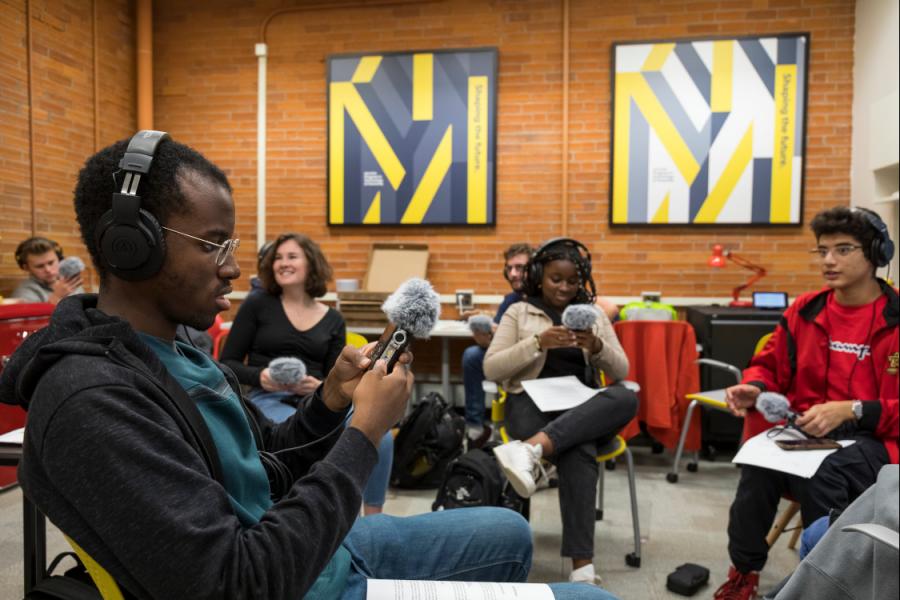
Students in the Milstein Program in Technology & Humanity combine Cornell’s renowned liberal arts and sciences classes in Ithaca with the 21st century tech curriculum at Cornell Tech in NYC.
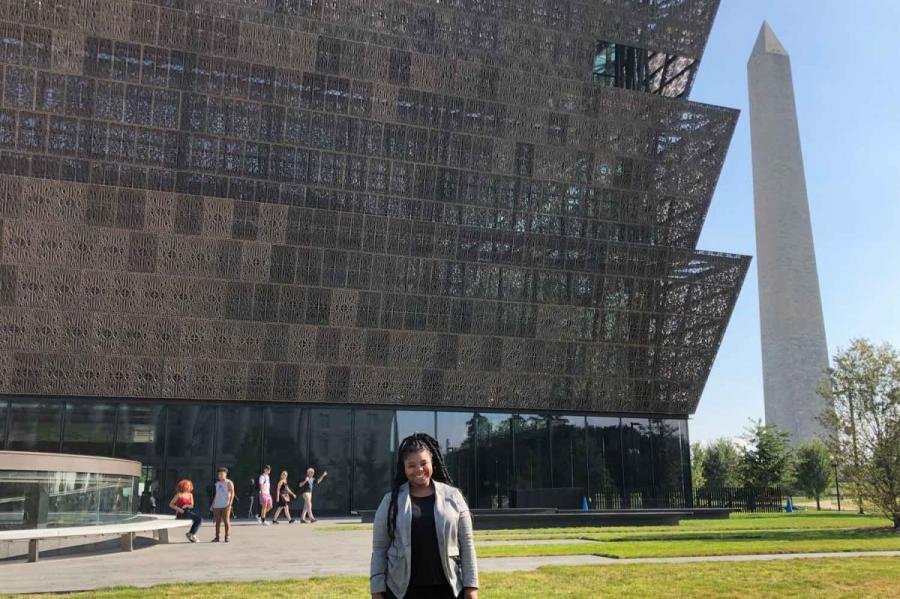
Funding your summer experience
Summer opportunities are crucial to student career success, but these life-changing experiences frequently offer little to no funding. That’s a critical barrier for many of our students – and one that the College of Arts and Sciences feels is vital to overcome.
The Summer Experiences Grants (SEG) do just that. They support students with living expenses, transportation, and travel so that these essential experiences are available to all of our students, who may otherwise not be able to afford them.
Curiosity is the driver for research in A&S. From the dendrochronology lab where archaeologists analyze tree-ring growth to understand climate change to the linguistics department where students created a new language for a Captain Marvel movie, our students and faculty take full advantage of all that our world-class research university encompasses.
With opportunities spanning the natural sciences, social sciences and humanities, research here takes place in laboratories, museums, field sites, libraries, hospitals, greenhouses, performance spaces and archives.
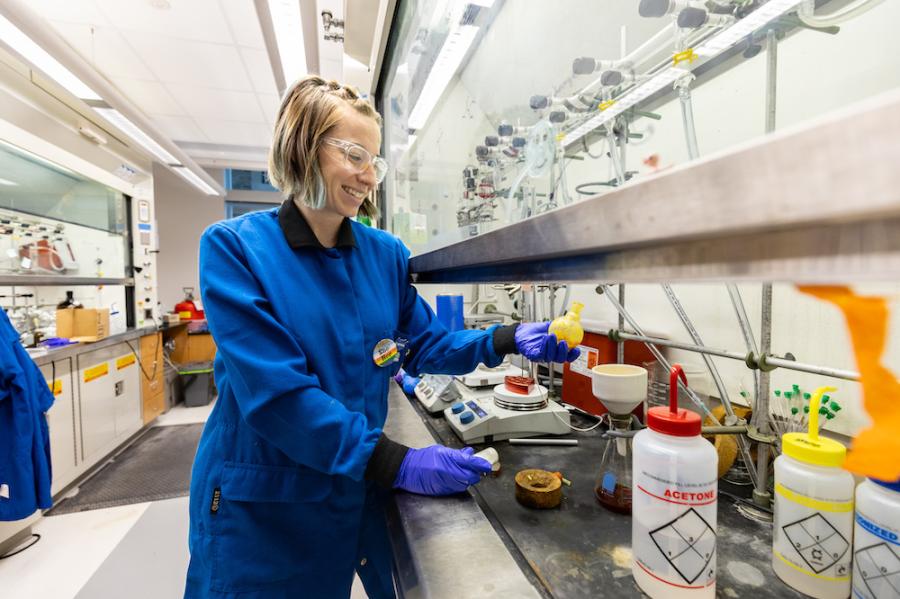
Premier postdocs
This premier postdoctoral fellowship program offers opportunities for early-career scholars of outstanding talent, initiative and promise to devote themselves to frontline, innovative research without being tied to specific outcomes.

Undergraduate research opportunities
The Nexus Scholars Program in the College of Arts & Sciences provides undergraduate students with summer opportunities to work side by side with faculty from all across the college (humanities, social sciences, and STEM) on their research projects.
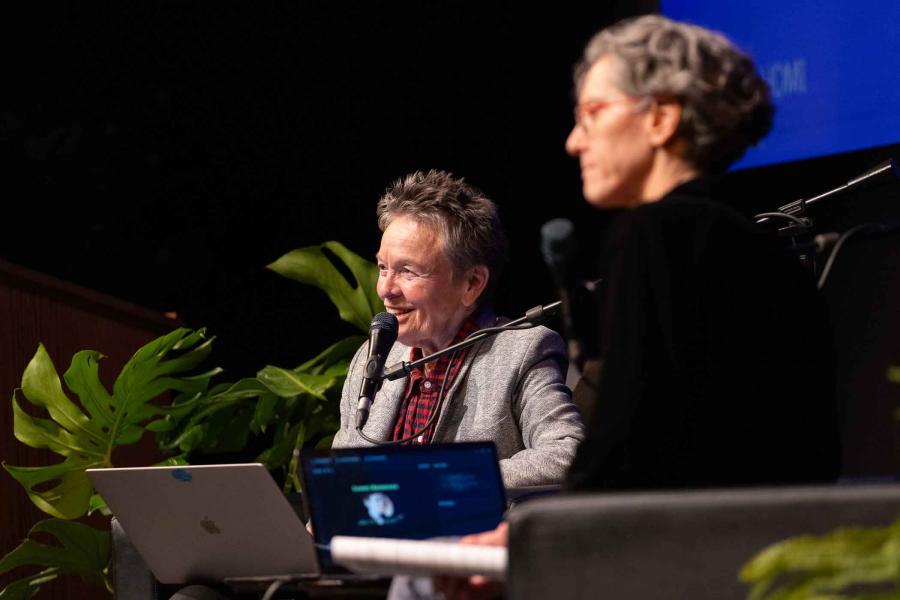
Open your mind
The College of Arts & Sciences’ Arts Unplugged series brings research and creative works into the public sphere for discussion and inspiration. These outreach events invite a broad audience to explore the work of scholars and faculty from all disciplines, all backgrounds and all time periods and to celebrate the impact that work continues to have on our daily lives.
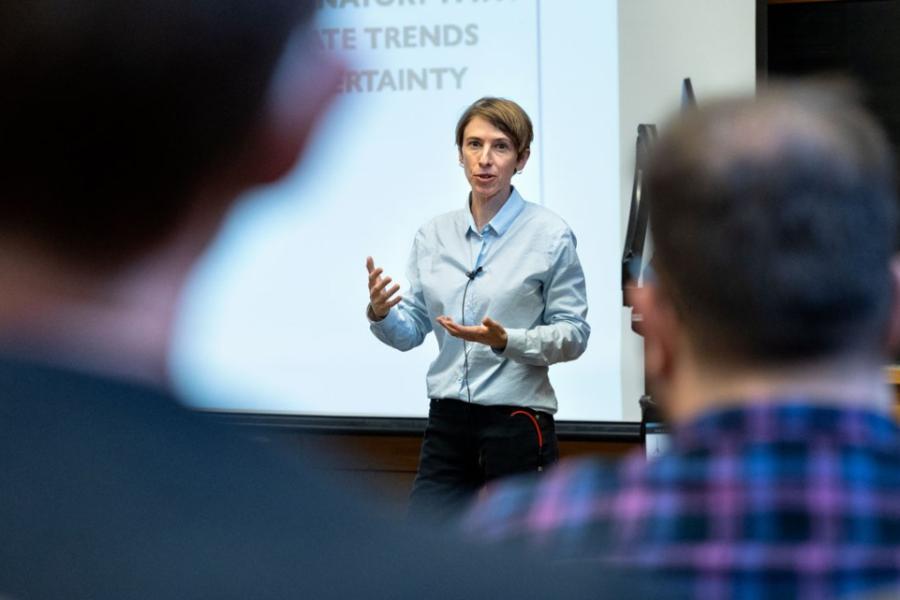
Engagement for an informed society
The College of Arts & Sciences' Distinguished Visiting Journalist Program brings accomplished journalists to Cornell for extended visits. The program aims to recognize excellence in journalism and to provide opportunities for select journalists and the university community to engage with each other.






Bloomberg
Related people
Sarah Kreps
Related Departments
Government
The Atlantic
Related people
Suzanne Mettler
Related Departments
Government
The Atlantic
Related people
Lawrence B. Glickman
Related Departments
History, American Studies Program
Forbes
Related people
Lisa Kaltenegger
Related Departments
Astronomy, Carl Sagan Institute
Location: St. Luke Lutheran Church
Location: Barnes Hall
Location: Barnes Hall