| Name | Departments | |
|---|---|---|

|
Helena Aparicio Assistant Professor | Linguistics |
| Personal Introduction I am a psycholinguist interested in understanding how humans extract meaning from natural language strings during linguistic interactions. My background is in Linguistics and Cognitive Science. Project Description A cornerstone of linguistic communication is the ability to adapt to how different speakers use language. For example, when listening to accented speech, listeners recalibrate their perception of speech sounds in order to successfully decode the intended message. Although research has shown that adaptation occurs across all levels of linguistic representation, little is known about how this ability emerges during childhood. This project aims to investigate the developmental trajectory of adaptation in language comprehension through experimental research. Summer Student Research Assistant Level 2 Specific tasks associated with the project work Code behavioral experiments; generate experimental stimuli; obtain the required certifications to be able to interact with children; work on recruiting interested families; travel to different schools/summer camps/museums in the Ithaca area to administer experiments to children ages 5-8; generate visualizations of the data collected throughout the summer. Required Coursework None Helpful Coursework Prior completion of Introduction to Linguistics (LING 1101) or Introduction to Cognitive Science (COGST 1101) is preferred. Required Skills The ideal candidate will have strong interpersonal skills and enjoy engaging with children ages 5-8. Helpful Skills Familiarity with a programming language and/or R scripting is an advantage but not a requirement. Possessing a valid driver's license and access to a car is helpful but not required. |
||

|
Catherine M. Appert Associate Professor | Africana Studies and Research Center, Anthropology, Feminist, Gender and Sexuality Studies Program, Music |
| Personal Introduction Although my primary appointment is in Music, my work falls at the intersections of feminist and gender studies, critical disability studies, Africana studies, and anthropology. I am currently working on a constellation of projects with a common theme of education/pedagogy, digital humanities, access, and social justice. Project Description Students will be preparing materials for the Palestine Pedagogy Network, an in-progress, collaboratively-sourced, open-access digital humanities platform that compiles and organizes pedagogical resources - academic texts, but also multimedia sources like music and artwork - for public use. It addresses the accessibility of knowledge along multiple axes: by making sources broadly available, by building intentional pedagogical tools into the platform itself, and by creating those tools with different kinds of users and access needs in mind. This project is led by an interdisciplinary faculty working group that also includes Amiel Bizé (Anthropology), Begum Adalet (Government), and Juliana Hu Pegues (Literatures in English). Summer Student Research Assistant Level 2 Specific tasks associated with the project work Students will be responsible for identifying, collecting, and coding resources for a large-scale digital humanities platform focused on democratizing pedagogy and for generating original text and summaries. Required Coursework None Helpful Coursework Coursework in anthropology, sociology, critical ethnic studies, and/or feminist and gender studies provide useful foundational knowledge. Previous coursework in computer science or information sciences is not necessary but helpful. Required Skills Basic familiarity with Excel or comparable spreadsheet software; able to closely follow instructions but self-motivated and able to work independently; strong reading and writing skills including ability to summarize and synthesize scholarly texts; familiarity with the Cornell library catalog. Helpful Skills Capacity in French or Arabic; familiarity with basic web editing. |
||

|
Mal Ballinger Assistant Professor | Ecology and Evolutionary Biology |
| Personal Introduction I’m an evolutionary biologist who studies how and why traits differ across mammals. I’m especially fascinated by hibernation, and my lab combines genetics, physiology, and lab experiments to understand how some mammals are able to hibernate. Project Description Many mammals survive cold or food shortages by entering dormant states like hibernation, in which they sharply drop their body temperature and slow their metabolism. Mitochondria, the energy-producing structures inside cells, are central to this slowdown, but we still don’t fully understand how it works. This project will test whether mammals that differ in their ability to go dormant also differ in how many mitochondria their cells carry, and whether those differences change how much oxygen their cells use to make energy. Summer Student Research Assistant Level 2 Specific tasks associated with the project work Students will do hands-on lab work with rodent tissue samples. Using a technique called quantitative PCR, students will measure the amount of mitochondrial DNA in frozen tissues. Additionally, using a high-resolution respirometer, students will measure how much oxygen mitochondria consume from these tissues. Students will record and organize data and attend weekly lab meetings. Required Coursework None Helpful Coursework None Required Skills No lab experience is required; we will teach all techniques, including pipetting. Helpful Skills a) Following detailed, multi-step written instructions. b) Keeping careful, organized notes. c) Basic spreadsheet use (e.g., entering and sorting data in Google Sheets). d) Comfort working with animal tissue samples. e) Curiosity and willingness to ask questions. |
||

|
Austin Bunn Professor, Koenig Jacobson Sesquicentennial Fellow | Performing and Media Arts |
| Personal Introduction I'm a writer and filmmaker who writes feature films, has directed several short documentaries, published books of short fiction, and worked as a journalist for the New York Times and elsewhere. I'm also a Provost's Fellow for Public Engagement in Arts & Sciences. Project Description This is a reportorial research project -- interviewing, documenting, synthesizing, strategizing -- about effective community engaged learning (CEL) for undergraduates. The Engaged Cornell Initiative aims to reach 100% student participation in CEL across the university, but what programs/courses/experiences have the greatest impact? What do students consider the most successful? Why? What challenges do they experience? The goal for the Nexus Scholar is to consult with students, alumni, and the Einhorn Center to produce an executive report for consultation by the Provost's Fellow, the Einhorn Center, and College leadership. Summer Student Research Assistant Level 1 Specific tasks associated with the project work Interviewing, coding transcripts, filming student interviews and documenting their projects, editing short student profiles, synthesizing interviews into a white paper. Required Coursework None Helpful Coursework Some experience in journalism, interviewing, social science, community engagement, fieldwork, or non-profit administration through coursework would be helpful. Required Skills Interviewing experience Helpful Skills Photography, audio recording, film production. |
||

|
Shami Chatterjee Associate Professor | Astronomy, Carl Sagan Institute, CCAPS |
| Personal Introduction In the Extreme Astrophysics group at Cornell Astronomy, we study neutron stars in their various manifestations and use them as laboratories for astrophysics. Radio pulsars can be exquisitely precise clocks that enable observation of low frequency gravitational waves emitted by distant supermassive binary black holes, while Fast Radio Bursts emitted by distant magnetars probe the intergalactic medium in the voids between galaxies. Students will be jointly mentored by Professors Jim Cordes and Shami Chatterjee. Project Description Fast Radio Bursts are difficult to detect, since they are only millisecond-duration flashes, but they can provide insight into the underlying engines, the host galaxies, and the intergalactic medium, as well as the disk and halo of our own Milky Way. The release of the second catalog of bursts detected by the CHIME radio telescope has increased the known sample of these bursts by nearly a factor of ten. The student will use the new catalog along with previously known bursts to investigate various aspects of Fast Radio Bursts (FRBs), such as whether there is a periodicity signature in the burst sequences, or using the burst dispersion and scattering to constrain host galaxy properties. Summer Student Research Assistant Level 2 Specific tasks associated with the project work a) Data mining, to extract burst properties of interest from FRB catalogs. b) Cross matching of burst positions against archival resources at different wavelengths. c) Data visualization, e.g., to create histograms of burst properties and extract relationships between parameters. d) Modeling of burst arrival times with periodic models. e) Deployment of new methods to search for bursts in data from other radio telescopes. Required Coursework None Helpful Coursework Coursework in physics and astronomy, at least at the introductory level, and math at the AP Calculus level. Required Skills Some experience with data analysis and visualization (graphing, making plots) and some experience with computer programming (any language). Helpful Skills a) Computer skills: familiarity with Unix / Linux, running programs from the command line, and expertise in Python (NumPy, Matplotlib). b) Eager to learn methods and techniques (e.g. machine learning methods for burst detection, unsupervised classification, etc.) on their own with pointers to starting resources. |
||

|
Dongwoo Chung Assistant Professor | Astronomy, CCAPS |
| Personal Introduction I work in extragalactic astronomy/astrophysics and cosmology, with an emphasis on radio and mm-wave surveys that reveal how the earliest galaxies form and transform gas and dust into stars. I'm involved in several collaborations that generate and analyse simulations and real-world data spanning hundreds of billions of cubic lightyears, with the highly sensitive nature of the instrumentation and surveys requiring numerical and analytic techniques at the cutting edge. Project Description Collaborations like COMAP, TIME, and CCAT/FYST are deploying surveys to undertake line-intensity mapping, which involves mapping out how gas distributes itself over large scales across the cosmos in three dimensions to learn about the structures hosting that gas. In this project, we will work to refine our understanding of line-intensity mapping observations, either in simulation or in real-world data. More precisely, the goals are to better understand the behaviour of streams of data from arrays of highly sensitive detectors, and/or to better relate astrophysical/cosmological parameters to summary statistics of reduced data (power spectra, histograms, cross-correlation statistics against external datasets). Summer Student Research Assistant Level 3 Specific tasks associated with the project work Students will perform generation and/or analysis of simulated or real-world data, with precise tasks depending on the project as tailored to the student's interests. For instance, students may verify analysis techniques for COMAP data based on simulations generated from real-world measurements of instrument noise and systematics over the course of an observing season, synthesising summaries and comparisons of different ways to suppress systematics. In another example, students could investigate the summary statistics of simulated line-intensity maps in cross-correlation with other observables, generating mock data using pre-existing code and building new code as necessary to generate or compare summary statistics. In most sub-projects like these, shared tasks would include creating and/or executing computer programs, creating summary plots or tables, and writing short reports for collaborators who may be interested in the outcome of the project. Throughout the execution of such sub-projects, students will be given readings and other resources as desired so as to aid in learning new skills and scientific context in a way that will guide them in navigating future careers. Required Coursework Understanding both differential and integral calculus is required, which translates to MATH 1120, 1220, or 1910, or equivalent advanced placement credit. Helpful Coursework a) Basic knowledge of multivariable calculus, linear algebra, and statistics can guide successful work on the project, with no preference for any particular course sequence in any of these areas. Knowledge of further mathematical topics in analysis and numerical techniques (principal component analysis, convolutional operations, Fourier transforms) can guide successful work on the project depending on the student's exact interests. But again, the context of exposure to these techniques is less important—for instance, depending on your prior background you may have had exposure to some of these topics in lower-division CS coursework. b) An elementary background in topics in astronomy, astrophysics, and/or cosmology is helpful, at the level of any lower-division astronomy coursework (inclusive of non-major-oriented courses like ASTRO 1101 or 2201). Required Skills The student should have prior experience (however little) with computer programming, which should involve some coding by hand as opposed to purely vibe coding. This can include any programming language, although Python (either standalone scripts or Jupyter notebooks) would be the primary language used in this project. Helpful Skills Familiarity with Unix-like command line tools, Git, and numeric/scientific Python are desirable. None of these would be required by any means; only the motivation to learn depending on the student's interests. |
||

|
Andrew G. Clark Jacob Gould Schurman Professor of Population Genetics | Ecology and Evolutionary Biology, Molecular Biology and Genetics |
| Personal Introduction I am a population geneticist who makes use of genome sequence data to understand how evolution has shaped and organized life. Much of the work focuses on the mechanisms underlying evolutionary change, including how genomes change by mutation, how the DNA sequence manifests as different phenotypes, and how natural selection and random drift work. Project Description Selfish DNA like transposons can duplicate themselves and proliferate in the genome. A specific type of transposons encodes envelop proteins that allow them to be transferred from one cell to another—just like a virus, except that these "viruses" come from within, genetically encoded in our own DNA. To study how they behave, we developed a genetic trick to unleash these normally silenced selfish DNA to "watch" them move between cells in the gonads, testes and ovaries, in the model organism fruit fly Drosophila. You will get to do experiments in the lab and analyze large datasets of whole-genome sequencing to gain insight into their behavior and ecology. Summer Student Research Assistant Level 3 Specific tasks associated with the project work Not every student will need to perform all skills, which include setting up Drosophila matings, performing dissections to acquire needed tissues, isolating DNA and RNA from flies, PCR to validate stocks, DNA and RNA sequencing, and a long list of computational skills to analyze the data. Required Coursework At least one college-level introductory biology course (including AP Biology in high school) is essential. Helpful Coursework Introductory genetics course: BIOMG 2800 or BIOMG 2801. Additional courses in genetics, evolutionary biology, and population genetics would always help, but are not essential. Required Skills The most important required skills are curiosity and eagerness to learn. Helpful Skills Students who have some experience with Drosophila would get going on projects a bit faster. Skills in handling genomics data on the computer would also be helpful, but these can be learned too. Familiarity with basic statistical tests and computer coding in R or Python would be helpful. |
||

|
Thomas A. Cleland Professor | Psychology |
| Personal Introduction We are a neuroscience lab with interests in neural circuitry and sensory representations in the brain, particularly in olfaction (the sense of smell). We are particularly interested in how useful representations of the outside world are physically constructed, learned, and curated within the brain. Project Description Most project work is conducting behavioral studies: training mice to perform tasks related to olfactory perception and memory. We then use immediate-early gene activation patterns in the brain to assess which regions of the brain are used to solve different aspects of the behavioral task. There will be plenty of opportunity to learn the technical underpinnings of the brain mapping and analysis portions of the project, and exposure to electrophysiological and modeling studies in which we look more closely at the dynamics of brain operations. Summer Student Research Assistant Level 4 Specific tasks associated with the project work Training and testing mice in structured behavioral tasks, analyzing video recordings of behavior with Annolid video analysis software, careful maintenance of records. IACUC certification for working with animals will be completed right at the start of the program. Other opportunities may arise including data analysis, physiology, or computational circuit modeling. Required Coursework None Helpful Coursework Neuroscience, animal behavior, biology, or cognitive science coursework will definitely be of use. Computer science and engineering coursework or background will be very useful for modeling or some analysis offshoots that may arise. Statistics coursework will be useful for data analyses. Required Skills Comfort in handling rodents. Reliability, consistency, and attention to detail. Ability to work well as part of a coordinated team. Helpful Skills Any experience in the areas listed under "helpful coursework" will be useful. |
||

|
Benjamin Cornwell Professor | Center for the Study of Inequality, Sociology |
| Personal Introduction I have been a professor of sociology here at Cornell for 18 years. My research focuses on social networks, sequence analysis, health and social epidemiology, collective behavior and disasters, and sociology of elites. Project Description I am writing a book (currently under contract) on how pandemics, as social disruptions, shape social networks. My working theory in the book is that deadly social disruptions on the order of global pandemics have immediate impacts on social network connections and structures - but that these disruptions are usually temporary because networks, as systems, tend to self-regulate and self-repair in order to re-achieve social equilibrium. Summer Student Research Assistant Level 2 Specific tasks associated with the project work The book manuscript will be due by the end of 2027. As part of this, I will need assistance with various tasks, especially: (1) tracking down and summarizing studies in the scientific literature on the history of pandemics, as well as recent work on social networks and network epidemiology; (2) helping to put together tables and figures for use in the book; and (3) helping to check and format the bibliography and subject index of the book. Required Coursework Students should have taken courses relating to social networks and/or health and epidemiology. Helpful Coursework Some kind of course on social research, health/epidemiological research, and/or methods relating to networks. Some familiarity with sociology would be helpful, but is not required. Required Skills Experience with conducting literature reviews or with creating annotated bibliographies. Knowledge of table construction using easily accessible and editable programs, especially Excel. Helpful Skills Some familiarity with social network analysis, familiarity with interpreting regression analysis estimates, and use of programs capable of creating/polishing figures (e.g., graphs) would be useful, but not required. |
||

|
Kennia Coronado Assistant Professor | Government, Latina/o Studies Program |
| Personal Introduction Broadly, my scholarship examines Latino politics in the United States. I am particularly interested in how Latino communities navigate American democracy under unequal conditions of citizenship and belonging. My research explores how these dynamics shape political behavior, civic engagement, and representation. Project Description This project examines how Spanish-language media, Latino community leaders, and community-based organizations shape political knowledge, civic engagement, and political participation among Latinos in the United States. It seeks to better understand how these actors serve as sources of political information, facilitate civic engagement, and foster Latino political incorporation in an evolving political landscape. Summer Student Research Assistant Level 2 Specific tasks associated with the project work The students will assist with literature reviews, the collection and organization of qualitative and quantitative research data, and preliminary data analysis. Responsibilities will include managing research materials and bibliographic references using Zotero, organizing and maintaining shared research files, and assisting with the interpretation and contextualization of Spanish-language media content, including colloquial expressions and regional language variations. Required Coursework 1) LSP/GOVT 2031: Introduction to Latina/o/x Politics AND 2) GOVT 3252: Media, Race, and Political Power in the U.S. OR 3) GOVT 4000: Latino Politics and the Boundaries of Belonging Helpful Coursework Previous coursework in Latino politics, American politics, immigration, political communication, or related fields. Any additional coursework in quantitative or qualitative methods would be beneficial, but is not required. Required Skills a) Fluency in Spanish, including the ability to understand colloquial language and regional variations in spoken Spanish. b) Proficiency with Google Workspace (particularly Google Drive, Docs, and Sheets), including organizing, managing, and sharing files. c) Strong organizational skills and attention to detail, particularly when working with research materials and data. Helpful Skills a) Previous use of qualitative or quantitative research methods, including experience with interviews, content analysis, surveys, or data analysis. b) Familiarity with research software such as Zotero, Excel, Stata, R, NVivo, or similar tools for organizing and analyzing research materials. c) Experience conducting literature reviews, identifying scholarly sources, and summarizing academic research. d) Familiarity with Spanish-language media and the political and social issues affecting Latino communities in the United States. |
||

|
Brian Crane George W. and Grace L. Todd Professor | CDER, Chemistry and Chemical Biology |
| Personal Introduction Brian Crane trained in biochemistry and biophysics through studies of cofactor containing metalloproteins and photoinduced electron transfer reactions. He was then drawn to understand mechanisms of photochemistry and redox chemistry in signal transduction. His group researches: 1) molecular interactions and assemblies that mediate receptor signaling and energy sensing in bacterial chemotaxis, 2) the structure and function of the bacteria flagella, 3) the entrainment of circadian clocks by photoreceptors, 4) the enzymology of nitric oxide signaling in bacteria, and 5) fundamental properties of photochemistry and electron transfer that are relevant to these and related systems. Project Description In one project, we are developing a new class of genetically encoded biological sensor that can report on cellular environment and molecular structure through the formation of stable radicals (unpaired electrons) induced by light. Students would be optimizing the photochemical properties of these probes and studying their signals upon targeting to different cellular locations and environments. In another project, students would participate in studies of proteins, particularly light sensors, that entrain circadian rhythms or elicit taxis responses in bacteria in response to changes in redox. Summer Student Research Assistant Level 3 Specific tasks associated with the project work Molecular biology and protein engineering (basic cloning and mutagenesis, and protein expression and production in bacterial and mammalian cells). Electron-spin resonance spectroscopy and fluorescence microscopy imaging. Stuctural biology, application of x-ray crystallography, and cryo-electron microscopy. Required Coursework Introductory course work in chemistry and biology: either CHEM 2070/2080 OR CHEM 2150 AND at least one 1000-level biology course. Helpful Coursework Introductory biochemistry coursework would be a bonus. Required Skills Some knowledge of basic molecular biology (e.g., knowledge of how proteins are produced recombinantly, for example). Most important is motivation and maturity. Helpful Skills Good communication skills and ability to work with others. Some work in experimental science or computational studies would be a benefit. Some computational/programming skills would be helpful but not necessary. Any advanced biochemistry or molecular biology lab skills would be an advantage, but not necessary. |
||

|
Abigail Crites Assistant Professor & Fred Young Faculty Fellow | Astronomy, CCAPS, Physics |
| Personal Introduction Abby is an assistant professor at Cornell University and leads an observational cosmology group that builds mm-wavelength instruments. She is the PI of the TIME instrument and also works on CCT/FYST. Project Description Large mm-wavelength instruments are currently being built to probe cosmology, particularly the early universe with the CMB and the epoch of reionization. This project will entail working with mm-wavelength hardware and software to prepare for the next generation of experiments to probe the early universe. Students will learn Python programming and potentially some C. Work will also be done with thermometry and detector readout for the instruments and students will learn vacuum systems and cryogenics. Summer Student Research Assistant Level 2 Specific tasks associated with the project work Students will use CAD software and assemble and test hardware in the lab. Students will program in Python. Students will work with faculty and other students to test and characterize instruments in the lab. Required Coursework None Helpful Coursework Any physics and math coursework is helpful (e.g., PHYS 1112 or 1116, PHYS 1110, etc.). Required Skills None Helpful Skills Students are expected to be able to read literature and condense that into short paragraphs summarizing the background needed for the project. Students are expected to learn new skills both independently and by asking questions of the PI and fellow students. |
||

|
Jennet Dickinson Assistant Professor | Physics |
| Personal Introduction I am an experimental particle physicist. I study the production of Higgs bosons in proton-proton collisions at the Large Hadron Collider (LHC). I also develop new detector technologies for measuring charged particle tracks. Project Description The smart pixels project designs machine learning (ML) algorithms that can be implemented directly in the electronics of particle tracking detectors. The Nexus Scholar will train ML models to identify particle track signatures using techniques commonly used to identify objects in images. Summer Student Research Assistant Level 2 Specific tasks associated with the project work The scholar will write and run Python code for training ML models and evaluating their performance. They will also prepare short presentations to share their findings with the broader group. Required Coursework None Helpful Coursework A course in Python, machine learning, or solid state physics would be helpful but is not required. Required Skills It is important that the scholar be able to code in Python. Helpful Skills Familiarity with machine learning would be helpful but is not required. |
||

|
Antonio Fernandez-Ruiz Associate Professor and Nancy and Peter Meinig Family Investigator in the Life Sciences | Neurobiology and Behavior |
| Personal Introduction My lab studies the neural mechanisms of learning and memory. We conduct neural recordings and manipulations in rodents while they perform different behaviors. You can find more information about our research and publications on our lab website: braincomputation.org Project Description The project will involve performing brain recordings on rodents performing social and spatial learning tasks in an outdoor naturalistic enclosure. We aim to uncover the brain mechanism of animal natural learning and flexible behavior in complex environments. Summer Student Research Assistant Level 3 Specific tasks associated with the project work The student will train rodents in learning and memory tasks and conduct brain recordings during the tasks. Experiments will take place both in traditional laboratory mazes and in our outdoor natural enclosures. Required Coursework None Helpful Coursework BIONB 2220: Introduction to Neuroscience, BIONB 4740: Neural Dynamics for Learning and Memory Required Skills Desire to work with animals and motivation for neuroscience research. Helpful Skills Prior experience with rodents, animal behavior, or neuroscience research is useful but not necessary. Interest in pursuing a PhD or academic research is helpful but not necessary. |
||

|
Carolyn Fornoff Associate Professor of Latin American Studies | Comparative Literature, Latina/o Studies Program, Romance Studies |
| Personal Introduction I'm a scholar of Latin American literature, film, and art. My two regions of expertise are Mexico and Central America. Project Description Central American writers in the late nineteenth and early twentieth centuries used the novel to dig into social problems and imagine possible futures. I'm interested in how non-realist genres, like sci-fi and fantasy, served to predict what might happen: from US interventionism to regional unification. In this initial fact-finding stage, we will examine what these speculative novels are doing and how they speak to historical events. Summer Student Research Assistant Level 2 Specific tasks associated with the project work Students will read primary sources written in Spanish: Central American speculative fiction. They will also read secondary sources that analyze these works, in addition to secondary sources written in English that discuss Central American history. Based on this work, students will produce an annotated bibliography and present their findings orally. Required Coursework Students must have demonstrated interest in Latin American literature and/or Latin American history by taking coursework in at least one of these areas: SPAN, HIST, or LACS. Helpful Coursework SPAN 2150 or 2205, or above. Required Skills Student researchers must have proficiency in Spanish. They must enjoy reading and feel comfortable reading in Spanish. They must be willing to perform research without assistance from AI tools. Helpful Skills The ideal student will be curious about Central America. They should demonstrate interest in either literature or history as a field of study. They should be willing to persevere when reading texts written over a century ago. |
||

|
Maria Cristina Garcia Howard A. Newman Professor of American Studies and Stephen H. Weiss Presidential Fellow | American Studies Program, History, Latina/o Studies Program |
| Personal Introduction I teach and write about refugees, immigrants, and asylum seekers in the United States and the Americas. I have a joint appointment in the History Department and the Latina/o Studies Program, and am also affiliated with the American Studies and Latin American Studies programs. I am the author of four books including my most recent, State of Disaster: The Failure of U.S. Migration Policy in an Age of Climate Change. Project Description I seek undergraduate research assistants for three historical research projects. Students will gain exposure to how a book, an article, and an anthology come together. Summer Student Research Assistant Level 2 Specific tasks associated with the project work Students helping with the book project will evaluate evidence in secondary sources on 19th/20th century U.S. immigration history. Those assisting with the article project will work with primary source materials such as congressional testimony and other government records, newspaper accounts, and diaries related to a disaster-driven migration. Students working on the edited collection will track down and assess essays on local history published over the past forty years. Applicants are welcome to indicate which project they prefer. Students on all three projects can expect to meet as a group to discuss research strategies and compare experiences. Required Coursework None Helpful Coursework Research seminars in history (or adjacent fields) that required writing research papers. Required Skills Many sources are not digitized, so, ideally, you should have experience navigating library and archival collections, using keyword and subject searches, and working with finding aids. If you haven't used archives before, tell me about any related experience you think might be helpful. You should be comfortable reading long scholarly and archival texts closely and summarizing them concisely. Helpful Skills Familiarity with tools like Zotero or EndNote is helpful because you will build bibliographies and format footnotes using the Chicago Manual of Style. Proficiency in Spanish and/or Portuguese is also helpful but not required. |
||

|
Michael H. Goldstein Professor, Stephen H. Weiss Presidential Fellow, and Director of the Robert S. Harrison College Scholar Program | Psychology |
| Personal Introduction I study the evolution and development of vocal and social learning. My lab focuses on how babies learn to talk and how birds learn to sing. Project Description My lab seeks to understand the development of communication as part of a larger parent-infant system, which means that we study parental behavior as well as infant development, we connect prelinguistic social and vocal learning with the development of later linguistic skills (e.g. word learning), and we take a comparative approach to understanding the development and evolution of vocal learning. Current projects include studies of early vocal learning and parental responsiveness in human infants and songbirds. Summer Student Research Assistant Level 2 Specific tasks associated with the project work Infant lab: running experiments, coding behaviors and vocalizations from video and audio recordings, recruiting and scheduling participants, and participating in lab meetings. Bird lab: running experiments, coding behaviors and vocalizations from video and audio recordings, and participating in lab meetings. Required Coursework None Helpful Coursework None Required Skills None Helpful Skills Knowledge of R statistical software would be helpful but not required. |
||

|
Christine L Goodale Frank H.T. Rhodes Professor of Environmental Science | Ecology and Evolutionary Biology |
| Personal Introduction I am a forest ecosystem ecologist. My lab group and I study how trees, soils, and microbes cycle and store carbon and nutrients, and how forests respond to climate change, air pollution, and other disturbances. Project Description Projects available next summer center on studying how local trees and soils contribute to emissions or uptake of greenhouse gases, under both current conditions and in response to altered nutrient availability. Summer Student Research Assistant Level 2 Specific tasks associated with the project work Specific tasks will vary by project, but all will entail a mix of fieldwork (for example, measuring gas fluxes or collecting plant or soil samples) and lab work (for example, measuring gas emissions from soils; preparing plant and soil samples for elemental analysis). Required Coursework None Helpful Coursework We encourage, but do not require, students to have some coursework in introductory ecology (e.g., BIOEE 1610), or similar courses in plant, microbial, or soil science. Required Skills Students do not need to have any prior technical skills to participate in this research. We do require willingness to spend some long days in the woods for fieldwork, along with the capacity for organization and attention to detail in sample processing and lab work. Helpful Skills Skills for success include interest in learning from others and reading about ecosystem ecology in the primary literature. |
||

|
Anna Y.Q. Ho Richards Family Assistant Professor | Astronomy, CCAPS |
| Personal Introduction I am an astronomer who studies the most energetic explosions in the universe in order to learn about the lives and deaths of stars: how a star's properties determine its manner of death and its corpse (black hole, neutron star). To do this, I use telescopes across the Earth and in space, as well as analytical modeling. Project Description Asteroseismology, or the study of stellar pulsations, can help us better understand the interiors of stars and how disturbances propagate. In particular, pulsating stars in eclipsing binary systems represent a useful laboratory in which to probe stellar interiors, given the distortion of the pulsation cavity as compared to a spherical star (this phenomenon is known as “tri-axial” or “tidally tilted” pulsation). This summer, we are looking for an undergraduate to model a large sample of eclipsing binary systems in order to derive their physical parameters to determine whether the class of tri-axial pulsators has different population-wide properties than regular eclipsing binaries. Summer Student Research Assistant Level 2 Specific tasks associated with the project work The student would be reading papers to acquaint themselves with the field and using Python to model eclipsing binary stars. In Python, the student would use both publicly-available packages (such as Phoebe and JKTEBOP) and improve upon bespoke code to model these binary systems. Required Coursework Mathematics at the level of calculus. Helpful Coursework It would be helpful to have a basic understanding of stars at the level of ASTRO 2211 and/or ASTRO 3302. It would also be helpful to have an introduction to quantum mechanics. Required Skills Students should be comfortable with programming in Python, and be able to use common packages such as numpy, scipy, and matplotlib. Helpful Skills None |
||

|
Georg Hoffstaetter de Torquat Professor | Physics |
| Personal Introduction My research is in accelerator physics. I have pursued this field at Cornell for the past 24 years and have supervised a large number of graduate and undergraduate students. Currently my research group mostly contributes to the Electron Ion Collider to be constructed at Brookhaven National Laboratory, including Machine Learning for automated particle accelerator operations. Project Description The undergrad is to apply beam-based alignment to Cornell's own circular accelerator, CESR. The goal is to change parameters of the accelerator and to observe changes in its charged particle beam, and to then explain these changes by appropriate misalignments of its sextupole magnets. The student has to simulate this method in the new accelerator simulation environment SciBmad and determine the precision to which it can work, then they have to develop a control-room experiment to verify the method experimentally. It should be used to align the sextupoles in CESR more perfectly. Finally, the student should extrapolate and extend this method to the new Electron Ion Collider. Summer Student Research Assistant Level 3 Specific tasks associated with the project work Particle accelerator simulation using SciBmad. Designing and executing a particle accelerator control room experiment in collaboration with the controls team of CESR. Required Coursework PHYS 1116: Mechanics and Special Relativity and PHYS 2217: Electricity and Magnetism. Helpful Coursework PHYS 2218: Waves and Thermal Physics and PHYS 3318: Analytical Mechanics. Required Skills Appropriate ability to program in Julia. Helpful Skills Good communication skills to communicate with CESR's accelerator controls team. |
||

|
Natasha Holmes Ann S. Bowers Associate Professor | Astronomy, CDER, Physics |
| Personal Introduction My research group studies physics education research - the teaching and learning of physics. We generally focus on instructional physics labs, studying what students are learning, how they are experiencing labs, and how we can improve instruction to improve students' learning and experiences. Project Description The successful student will help evaluate new designs for instructional physics labs that introduce students to experimental physics topics such as cosmic ray muon detection and active matter. The goals for the summer research include iterating on preliminary instructional materials, evaluating the levels of inquiry in the instructional materials, analyzing data collected during the academic year, and preparing for upcoming data collection. The project offers lots of flexibility to best serve students' interests, expertise, and areas for development. Summer Student Research Assistant Level 1 Specific tasks associated with the project work Students will work with a team of postdocs, graduate students, and undergraduate students to analyze previously collected data. This may include analyzing instructional materials using structured rubrics, statistical analysis of student data, or LLM/genAI methods of analyzing students' written work. Students will also read papers and attend collaborative team meetings to move work forward and learn about the research enterprise. Required Coursework Some introductory physics instruction, preferably PHYS 1110. Helpful Coursework Other previous coursework will inform the particular tasks the student will carry out. For example, if the student has taken statistics coursework, the project can involve more quantitative data analysis. If computer science coursework, the project can involve exploring natural language processing possibilities. Required Skills None Helpful Skills It would be helpful for students to have some proficiency with coding (at least familiarity with code in Colab/Jupyter Notebooks or R) and some familiarity with basic statistics ideas (e.g., distributions). They should have reasonable attention to detail and be ready for iterative cycles of work that involve collaboration and feedback. |
||

|
Katherine Irajpanah Assistant Professor | Government |
| Personal Introduction I am an Assistant Professor in the Department of Government, where I research and teach on issues at the intersection of political violence, international law, and U.S. foreign policy. My book project examines the impact of warfighting norms on military strategy and conflict outcomes, while my other research considers the implications of this work for learning in counterinsurgency and intelligence assessments. Project Description The Global Wars (GloW) dataset documents cross-national patterns in major inter-, intra-, and extra-state wars between 1800 and 2022. During the Nexus Scholars Program, students can expect to work on data collection supporting the development and expansion of GloW. Specific topics students may study in this work include troop numbers, weapons technology, war duration, war aims, outcomes, strategy, and characteristics about the war participants. Summer Student Research Assistant Level 1 Specific tasks associated with the project work Students are expected to gather information on historical and contemporary wars by consulting with primary sources, academic literature, and encyclopedias. Other tasks may include fact-checking, indexing sources, and attending team meetings. Required Coursework Students should have completed at least one of the following courses by the end of Spring 2027: GOVT 1817, GOVT 1313, GOVT 2264, GOVT 2817, GOVT 2867, GOVT 3867, or GOVT 3947. Helpful Coursework Coursework in introductory statistics or languages other than English would be helpful. Required Skills Students must be familiar with accessing databases via Cornell Libraries. Students must also be proficient in Microsoft Excel. Helpful Skills Having the ability to research in languages other than English is a plus. Familiarity with R software is not required, but I may offer additional opportunities beyond data collection if the student does have these skills. |
||

|
Rayna Kalas Associate Professor | Literatures in English |
| Personal Introduction My area of specialization is early modern literature and I am an affiliated faculty member of the Media Studies program. In addition to teaching 16th and 17th century literature, I also teach courses on literature and technology, free speech and censorship, and literature and political theory. Project Description I am completing a book manuscript titled "How to Frame your Government" that establishes a relationship between literary writing and constitutionalism. I show how writing — both individual acts of composition and a culture's corpus of imaginative works — constitutes us politically. And I use this evidence to advance an alternative theory of constitutionalism. The research for this project is in its final stages; the goal of the summer research will be to finalize the manuscript for publication. If time allows, research assistance could be completed on a new course I am developing to teach next fall: Literature and Consent. Summer Student Research Assistant Level 2 Specific tasks associated with the project work The students' work will involve some final-stage research, reviewing and adding citations, proofreading, and editing. The work will involve library research, and is likely to involve consulting materials in the rare and manuscript collections in Kroch library. I will also be asking students for assistance gathering images and preparing slides for presentations and promotional materials to publicize the book. Required Coursework Interested students should have completed at least one college-level course in literature. Helpful Coursework Coursework in Renaissance and early modern literature and/or political theory is desirable but not required. Required Skills Strong writing and editing skills required. Helpful Skills An interest in the humanities generally, and curiosity about literary invention in particular. Informal digital design experience would also be helpful. Familiarity with library research is useful, but I will also train. |
||

|
Jonathan A. Kephart Assistant Professor | Chemistry and Chemical Biology |
| Personal Introduction The Kephart Lab studies inorganic synthesis and electrochemistry with the aim of gaining molecular level insights into more complex, solid-state chemical systems. To do this, we employ several approaches. We synthesize molecular models of defects present within interfacial catalysts. We also synthesize new forms of molecular matter through exploratory inorganic synthesis. We also harness interfacial ligation to dictate surface dynamics and structural evolution at electrochemical interfaces. Project Description We have two viable projects ongoing within the Kephart Lab that are well suited for an undergraduate researcher. 1) Students will synthesize molecular cluster complexes as models for interfacial O-atom vacancy, and study their unique reactivity toward the small molecules (e.g., N2) in the context of Haber-Bosch catalysis. This will allow us to garner molecular-level insight into the role a defect rich metal-oxide support plays in challenging bond activations. 2) How does coordination chemistry impact surface restructuring and corrosion along electrochemical interfaces? Although the principles of coordination chemistry are well established in molecular systems, it is somewhat unclear how this translates to polarized electrochemical interfaces. Students will answer this question by conducting detailed potentiometric and microscopic analyses of electrochemical interfaces to resolve interfacial ligand exchange kinetics. Summer Student Research Assistant Level 2 Specific tasks associated with the project work Students will prepare notebook pages in our electronic lab notebook. They will read literature and participate in literature discussions within their respective subgroup. Students will shadow graduate student or postdoctoral mentors as they learn experimental techniques. With appropriate training, students will conduct synthetic or potentiometric experiments independently, and interpret their results with assistance from Prof. Kephart. Required Coursework CHEM 2070 and 2080 are required. Helpful Coursework CHEM 4100 is a helpful course. In addition, CHEM 2071/2081 are ideal. That said, I am receptive to working with students who are interested in chemistry research regardless of prior lab experience. Required Skills Students must be able to research literature topics independently. Helpful Skills Excel or other data processing skills. |
||

|
Kyle M. Lancaster Stephanie Czech Rader ‘37 Professor in Chemistry | Chemistry and Chemical Biology |
| Personal Introduction I am an inorganic chemist who studies metal-catalyzed reactions in both biological and non-biological contexts. Project Description Students will either synthesize transition metal complexes or purify metalloproteins. The synthetic projects will involve learning molecular orbital theory. The metalloprotein project will involve studying how nature uses ammonia as a fuel instead of sugar. Summer Student Research Assistant Level 2 Specific tasks associated with the project work A student who joins the synthesis subgroup of the laboratory will carry out the preparation and characterization of transition metal complexes with sterically bulky ligands to enforce low coordination numbers. They will learn to manipulate air and moisture sensitive compounds and to characterize them using an array of spectroscopic methods as well as structural methods including NMR spectroscopy and X-ray crystallography. A student who joins the biochemistry subgroup of the laboratory will prepare and characterize metalloproteins relevant to biological ammonia oxidation, an entirely distinct primary metabolism whereby ammonia, not sugar, is life's fuel. The student will learn cell culture, protein extraction, protein purification, and enzyme kinetics. Required Coursework CHEM 2070/2080 or equivalent AND CHEM 3570/3580 or equivalent. Helpful Coursework CHEM 4100 Required Skills None Helpful Skills None |
||

|
Marissa Lavagnino Assistant Professor | Chemistry and Chemical Biology |
| Personal Introduction I am a synthetic chemist who has trained in the areas of organic and organometallic chemistry. Throughout my career, I have been interested in discovering new catalytic reactions and studying the mechanisms by which they react. Project Description The research goal of my laboratory is to discover catalytic reactions that improve the access of synthetic chemists working in industry to molecules with medicinal, agricultural, and materials relevance. We utilize unconventional elements as our catalysts (metals from the main group, as opposed to d-block transition metals) and as such must design novel mechanisms to accomplish catalysis. Students will gain experience with reaction optimization, structural analysis, and mechanistic study. Summer Student Research Assistant Level 2 Specific tasks associated with the project work The student will set up reactions, analyze products formed in the reactions, and design follow-up experiments based on these results. Required Coursework The student should have completed at least one 3000-level organic chemistry class at Cornell by the end of Spring 2027. Helpful Coursework Any synthetic or analytical chemistry coursework is helpful for this project, as we work in an interdisciplinary field between organic, inorganic, and analytical chemistry. Some example courses include CHEM 2510, 3020, 3570, 3580, 3590, and 3600, but this list is not exhaustive. Required Skills None Helpful Skills Potentially helpful skills for the project would be experience with cooking or baking, as these are similar to the actions we perform in the organic lab. |
||

|
Jun Liu Robert J. Appel Professor of Molecular Biology and Genetics | Molecular Biology and Genetics |
| Personal Introduction I believe that science is for everyone. I am fascinated by how a single fertilized egg can divide and develop into a fully functional organism made of multiple cell types. We use the free-living nematode C. elegans as a model system to identify new players and define their functions in a highly conserved signaling pathway, the bone morphogenetic protein (BMP) pathway. Our research findings will contribute to the general understanding of developmental processes and fundamental mechanisms involved in cell-cell communication. Project Description A student joining the lab will learn various molecular genetic techniques at the bench, develop problem-solving and critical thinking skills, and work both independently and in a collaborative environment. Examples include generating C. elegans strains using CRISPR to determine the function of a gene in BMP signaling or determining the expression and localization patterns of a regulator of BMP signaling using fluorescence microscopy or deciphering the relationship between two genes functioning in the BMP pathway. Summer Student Research Assistant Level 3 Specific tasks associated with the project work Tasks vary based on the specific project that the student will be working on. Tasks include, but are not limited to, performing C. elegans crosses, genotyping using PCR and gel electrophoresis, using fluorescence microscopy to determine protein localization, and conducting statistical analysis. Student will also read relevant papers, and attend and present at weekly lab meetings. Required Coursework BioG1500 and BioMG1350 Helpful Coursework It would be great if the student has taken genetics or molecular biology but this is not necessary. Required Skills Being enthusiastic, curious, motivated, and organized is essential. It is also important that the student is collaborative and a team player. Helpful Skills Any advanced genetics or molecular biology lab skills would be helpful, but not necessary. |
||

|
Yuxin Mao Professor | Molecular Biology and Genetics |
| Personal Introduction My research interest is to elucidate the molecular mechanisms of the interaction between an intracellular bacterial pathogen and its hosts. We use molecular, cellular, biochemical, and structural approaches to how bacterial toxins hijack host cellular pathways. Project Description We have several options tailored for undergraduate summer interns. 1) How bacterial toxins hijack host ubiquitination pathways. In this project, we will use biochemical and mass spec approaches to identify specific host targets and will use cell biology approaches to study the physiological functions of these toxins. 2) How bacterial toxins post-translationally modify host proteins. In this project, we will elucidate the enzymatic reactions catalyzed by the toxins using biochemical and structural approaches. Summer Student Research Assistant Level 2 Specific tasks associated with the project work DNA cloning, protein expression and purification, transfection, fluorescent confocal microscopy, etc. Required Coursework The candidate must have taken BioMG1350 or BioG1500 with a minimum grade of B+. Helpful Coursework None Required Skills None Helpful Skills DNA cloning or protein expression and purification. It is super if you have some wet lab experience but not necessary. |
||

|
Vida Maralani Associate Professor | Center for the Study of Inequality, Feminist, Gender and Sexuality Studies Program, Sociology |
| Personal Introduction I'm a sociologist, and I study social inequality in the areas of education, gender, and health. Social inequality is a multidimensional and dynamic process, and my work measures and explains how this multifaceted process plays out in different contexts, changes over time, and differs across subgroups of people. Project Description My project examines experiences of sex discrimination in U.S. higher education and university and federal responses to allegations of sex discrimination at four-year universities between 1994 and 2014. Working with a team of undergraduate research assistants (RAs), we have been coding allegations of sex discrimination under Title IX and constructing an original dataset to document these experiences, examine how universities have responded, and analyze how experiences and responses vary by the race and gender of the complainant and the type of discrimination alleged. Research assistants help develop codebooks, participate in qualitative data analysis, and conduct literature reviews. Their tasks include learning to code text-based data, constructing and summarizing variables, and coding responses to open-ended questions. Research assistants with quantitative skills in Stata or R can also participate in cleaning, coding, and analyzing the project's quantitative data. Summer Student Research Assistant Level 2 Specific tasks associated with the project work Students will learn how to develop a codebook, how to code qualitative data, and how to clean data. They will also learn how to conduct scientific literature reviews. If they have prior training in coding and quantitative analysis, RAs will set up, clean, and summarize data using statistical software such as Stata. RAs also participate in the data management process of a large and complex data creation project. Required Coursework None Helpful Coursework None Required Skills Our coders need a very high level of facility with English language processing because the letters are text-based data. RAs need to understand nuance in written English text and be able to code it correctly. Our team works as a hive. Our work is collaborative and transparent to others, and our RAs conduct team coding at all times. This means our RAs need to have excellent communication and teamwork skills and a desire to work in this type of environment. If a person prefers working alone, our project is not going to be a good fit for them. Helpful Skills If an RA wants to participate in quantitative analysis, they need to have experience coding data in a prior project and learn how to use Stata quickly and effectively. |
||

|
Doug McKee Teaching Professor | CDER, Economics |
| Personal Introduction Douglas McKee teaches in the Department of Economics where he works with other faculty to incorporate active learning methods into courses. His research is primarily in economic education, where he tries to identify new methods of teaching that work well for a diverse population of economics students. Project Description The college experience has changed dramatically over the past decade. The COVID-19 pandemic disrupted how courses are taught, generative AI has changed how students complete their work, and social media and extracurriculars compete more and more for students’ time. How have these shifts affected the ways students study? This project will analyze detailed study surveys and Canvas usage data from thousands of students in economics courses between 2016 and 2026 to track both how much students study and how they study. We ask: Are students spending more or less time studying than before? Has the timing of studying changed, for example toward last-minute cramming? Are students using strategies research shows work well, such as spaced practice and self-testing, and how do these patterns relate to course performance? The answers can help instructors and institutions design courses and supports that fit how students learn today. Summer Student Research Assistant Level 1 Specific tasks associated with the project work Students will review theoretical and empirical literature related to study behavior. Students will organize data and set it up for analysis. Students will use statistical and econometric methods to analyze data. Students will write up their results and prepare presentations for a technical audience. Required Coursework Students must have taken at least one course in econometrics. Helpful Coursework Additional courses in statistics and/or econometrics would be helpful. Required Skills Students should be clear thinkers and skilled communicators. Helpful Skills Some programming experience would be useful. |
||

|
Tracy McNulty Professor | Comparative Literature, French Studies Program, Romance Studies |
| Personal Introduction I'm a professor of literature, although for some years now my research has been focused on psychoanalysis, political theory, and comparative religion. I'm also a practicing psychoanalyst. Project Description Tentatively titled “The Matriarchate in History, Religion, and Speculative Thought,” this project deals with a little-studied period in the history of the ancient Mediterranean, dating from the Neolithic period through the Bronze Age, when matriarchal religious practices and gynocratic social forms flourished in a significant but undetermined number of ancient societies prior to the emergence of patriarchal religious and social practices that came to dominate throughout the region in the mid-second millennium BCE. The goal is to produce an edited volume that will include a number of major texts from classical antiquity, religious and mythological scholarship, recent archeological excavations, and speculative essays, which we will put in dialogue with art historical research, recent archeological evidence, and psychoanalytic scholarship that has offered original insights into this period and its place in the prehistory of monotheism. Summer Student Research Assistant Level 2 Specific tasks associated with the project work Depending on the student's background and interests, tasks and duties might include preparing indexes of ancient artworks; reading, indexing, and synthesizing archeological finds; editorial work including seeking publication permissions, editing texts, and developing scholarly apparatus including footnotes and indexes; and/or translation. Required Coursework This project involves interpretive and analytic work and is best suited to humanities majors. Applicants must have taken college coursework at the 3000 level or higher in one or more of the following subjects: psychoanalysis (not psychology), classics, comparative literature, archeology, art history, Near Eastern Studies, and/or religious studies, with a minimum grade of A-. Helpful Coursework Helpful coursework would focus either on the ancient Mediterranean (Egypt, Greece, Israel, or Persia), psychoanalytic theory (especially Freud), or comparative religious studies (ancient Egypt, ancient Greece, early monotheism). Required Skills Textual and aesthetic analysis. Helpful Skills Language skills (ancient Greek, ancient Hebrew, ancient Persian); art historical analysis; archeology. These skills are not necessary, but they could shape the direction the student's work takes. |
||
|
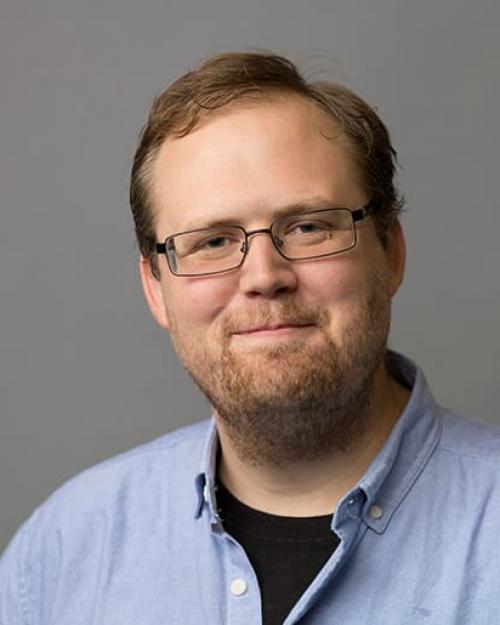
Phillip Milner Associate Professor | Chemistry and Chemical Biology |
| Personal Introduction My research group focuses on the development of new polymeric materials, which we use for applications in drug discovery and environmental remediation. Project Description Halogenated molecules such as PFAS and fluorinated greenhouse gases represent a particularly difficult group of persistent organic pollutants to remove from the environment. We have pioneered new methods for the functionalization of these molecules under electrochemical conditions. The project would focus on new approaches to design catalysts for converting these environmental pollutants into useful products. Summer Student Research Assistant Level 3 Specific tasks associated with the project work Students will be trained to run and work up reactions, analyze data, and conduct spectroscopic analyses (NMR, MS). Required Coursework General chemistry (e.g., CHEM 2070, 2080). Helpful Coursework Organic chemistry (e.g., CHEM 3530, 3570, 3580, 3590, 3600). Required Skills None Helpful Skills Organic synthesis, chemistry lab work |
||

|
Anton Mosunov Lecturer | Mathematics |
| Personal Introduction I study number theory, specifically Diophantine approximation and its applications to solving equations in integers. I am also interested in computational number theory, an area where large-scale calculations are used to provide evidence in support of existing conjectures and gather extensive data on various mathematical invariants. Project Description Class numbers of imaginary quadratic fields are very important invariants in number theory. I am currently working on the algorithm that aims to push the bound for tabulation of these invariants beyond 2^40. This requires modifying special tabulation formulas involving multiplication of polynomials of large degrees. Summer Student Research Assistant Level 4 Specific tasks associated with the project work a) Learn algebraic number theory (specifically theories of modular forms, binary quadratic forms, and ideal class groups of imaginary quadratic fields); b) Learn computational number theory (specifically theory of fast multiplication of polynomials of large degree); c) Learn the C programming language and parallelization with OpenMP / Open MPI; d) Implement new class number tabulation formulas in a C library POLYMULT (https://github.com/amosunov); e) Discover new class number tabulation formulas; and f) Run calculations on a supercomputer. Required Coursework At least an A- in a MATH linear algebra course (e.g., 2210, 2230, 2240, 2310, 2940) AND at least an A- in a CS programming course (e.g., 1133, 2110, 2112, 2024, 2800). Helpful Coursework Any advanced CS course, MATH 3040: Prove It!, MATH 3320: Introduction to Number Theory, MATH 3360: Applicable Algebra, MATH 4370: Computational Algebra, MATH 4330: Honors Linear Algebra, and/or MATH 4040: Patterns, Proofs, and Problems. Required Skills Proficient in programming in at least one major language (e.g., Python, C, C++, Java) and able to read and understand theoretical math and computer science literature. Helpful Skills Experience with mathematical proofs. |
||

|
Shaun Nichols Distinguished Professor of Arts & Sciences in Philosophy | Philosophy, Psychology |
| Personal Introduction I work in philosophy of cognitive science, especially on the psychological foundations of philosophical thought. My research draws on philosophy and cognitive science to understand how people acquire and use concepts involving causation, responsibility, morality, and other core aspects of human thought. Project Description Students will work with the Cornell Explanation Lab on behavioral research with children and adults about how people explain and evaluate the world. Projects will span causation and responsibility—including causal language, intention, negligence, punishment, and questions relevant to law—and categorization and purpose, including how what something is for shapes judgments about what it is. Nexus Scholars will help turn theoretical questions into experiments, build and run online studies, collect and analyze data, and develop new research directions. Summer Student Research Assistant Level 4 Specific tasks associated with the project work a) Read and synthesize research in psychology, cognitive science, linguistics, philosophy, and (for some projects) law. b) Help develop hypotheses, experimental scenarios, stimuli, and study designs, and assist with piloting and pre-registration materials. c) Build, modify, and debug browser-based behavioral experiments using JavaScript/jsPsych, with HTML/CSS as needed. d) Pilot studies, conduct quality-control checks, document changes, and collaborate through version-controlled project repositories. e) Assist with data collection and research logistics for studies with adults and children, following approved research procedures. f) Clean, organize, analyze, and visualize data in R and Python; carry out appropriate statistical analyses with guidance. g) Attend project and lab meetings, give brief progress updates, maintain clear research notes, and contribute to the Nexus Scholars capstone presentation. h) As projects develop, help interpret results and contribute ideas for follow-up studies; substantial contributions may lead to conference presentations or papers. Required Coursework By the end of Spring 2027, students should have completed (1) at least one college-level course in statistics or empirical research methods AND (2) at least one course in psychology, cognitive science, linguistics, or a closely related empirical field. Relevant Cornell examples for requirement #1 include PSYCH 2500 (Statistics and Research Design), STSCI/ILRST 2100 (Introductory Statistics and Data Science), and PSYCH/HD 2830 (Research Methods in Human Development). A formal programming course is not required if the student can demonstrate the programming skills listed below; no minimum grade requirement is proposed. Helpful Coursework Helpful courses include CS 1110 (Introduction to Computing: A Design and Development Perspective), INFO 2950 (Introduction to Data Science), COGST 1101 / PSYCH 1102 / HD 1102 (Introduction to Cognitive Science), and LING 1101 / COGST 1105 (Introduction to Linguistics). Also useful are courses in developmental or cognitive psychology, semantics/pragmatics, philosophy of mind or language, ethics/moral psychology, law, computational modeling, machine learning, natural language processing, or more advanced statistics/data science. Required Skills a) Working familiarity with both Python and R: able to read and modify scripts, load and reshape data, run basic analyses, and produce plots. Advanced proficiency is not required. b) Foundational understanding of statistics and empirical study design (for example: variables/conditions, randomization, descriptive statistics, hypothesis testing, etc.). c) Strong attention to detail, reliable follow-through, and the ability to keep research materials and code organized. Helpful Skills a) Prior JavaScript/jsPsych, HTML/CSS, Git/GitHub, or web-development experience. b) Experience with computational modeling, machine learning, natural language processing, or reproducible data-science workflows. c) Experience with behavioral experiments, participant recruitment/testing, developmental research, or creating visual/animated stimuli. d) Familiarity with mixed-effects or Bayesian modeling, data visualization, or more advanced R/Python analysis. e) Background in philosophy—especially causation, responsibility, mind, language, or ethics—is helpful but not required. |
||

|
Michael Niemack Professor and Director, Laboratory of Elementary Particle Physics | Astronomy, CCAPS, Physics |
| Personal Introduction Our research focuses on developing new instrumentation and using it to study the formation and evolution of the universe through precision measurements of microwave radiation. I am principal investigator of the Prime-Cam instrument for the Cornell-led CCAT Observatory, which will be deployed in Chile in the coming months and we will be analyzing data from in the coming years. Project Description Nexus Scholars will aid with analysis of data from the CCAT Observatory's Prime-Cam instrument. This could span from low-level calibration analyses of the data to analyzing astrophysical maps to learn new information about our Milky Way galaxy, galaxy clusters, or the cosmological model that describes our universe. There may also be opportunities for developing new instrumentation in our laboratories in preparation for deploying the instrumentation at the CCAT Observatory. Summer Student Research Assistant Level 3 Specific tasks associated with the project work The students would most likely focus on analyzing data from our telescope on a daily basis. This would include writing computer code in Python, accessing supercomputers to aid with more computationally intensive analyses, and working closely with graduate students, postdoctoral researchers, and faculty on understanding the intricacies of the results of their analyses. This work has the potential to lead to new scientific papers that the student could lead or collaborate on. Required Coursework At least one course in (or previous experience with) the Python programming language. If a Cornell course that teaches Python has been taken, we would like the student to have a minimum grade of B. Helpful Coursework Helpful coursework includes any courses that utilize or train the student in Python programming or parallel computing. Courses in astronomy could also be helpful. Required Skills Students should have at least preliminary experience with the Python programming language. Helpful Skills Experience in other (non-Python) languages could also be helpful but are not required. |
||

|
Azahara Oliva Assistant Professor | Neurobiology and Behavior |
| Personal Introduction I study sleep and how it regulates different functions that are useful for animals' survival and overall health. To do that, we record the brain from rodents during awake and sleep, in the laboratory and in the natural environment, to pinpoint the determinants of how sleep impacts different functions. Project Description The project will involve setting up a naturalistic enclosure where rodents can live while we record their behavior during awake and sleep and, at the same time, monitor brain signals. We will set up video cameras and microphones to record vocalizations and monitor animals and change the batteries of the implant every day. Summer Student Research Assistant Level 3 Specific tasks associated with the project work Animal behavior such as handling rodents, husbandry of animal cages, and helping with moving animals from the lab to the natural enclosure. Setting up the natural enclosure, including cameras and microphones. Downloading data from the wireless datalogger every day. Monitoring the setup and animals every day. Required Coursework BIONB 2220 Helpful Coursework Computer science courses are helpful but not required. Required Skills None Helpful Skills Working in a group, comfortable handling rodents, and comfortable helping with setting up the enclosures. |
||

|
Alexander G. Ophir Professor | Psychology |
| Personal Introduction We are interested in the neural, hormonal, and genomic mechanisms that govern social behavior. We work with the bi-parental and monogamous prairie vole to understand how early life social experiences impact development and shape the reproductive decisions animals make in adulthood. Project Description Our project for this summer will examine the neural mechanisms that govern or permit "cheating" (i.e. extra-pair mating). Here we are manipulating an area of the brain known to facilitate general prosocial behavior, while not affecting selective preferences for mating partners to ask if prosocial behavior creates opportunities for extra-pair mating. Summer Student Research Assistant Level 1 Specific tasks associated with the project work Work will range from collecting behavioral data from video recordings, sectioning brain tissue, performing immunohistochemistry to visualize markers in the brain, assisting with surgical procedures, and potentially working directly with animals in behavioral experiments. Required Coursework None Helpful Coursework It is helpful for students to have completed a course on the topics of animal behavior and/or behavioral neuroscience. These are not required, but will have provided a foundation for students working on our project(s). Required Skills None Helpful Skills Although some experience in any of the areas mentioned in Specific Skills is helpful, we anticipate training our Nexus Scholars and experience is not necessary. |
||

|
George Orlov Associate Teaching Professor | CDER, Economics |
| Personal Introduction George Orlov is an Associate Teaching Professor in the Department of Economics, teaching core curriculum courses and working with other faculty to incorporate active learning methods into economics courses. His research is primarily in applied microeconomics and economic education, focused on measuring the effect that new teaching methods have on student learning and the role that peers play in the learning process. Project Description A large body of research shows that students learn more in lecture courses when they actively solve problems in class rather than simply listen and take notes. But many students now want flexibility. Illness, schedule conflicts, and jobs can keep them from attending, and some courses let them participate asynchronously instead: They watch the recorded lecture and pause to work through the same problems on their own time. Much less is known about whether this kind of participation delivers the same benefits. This project uses detailed participation records from Cornell economics courses, where students can participate live or asynchronously, covering thousands of students between 2021 and 2026. We ask: Which students choose each option, and do they switch over the semester? Do asynchronous participants engage with the problems as seriously as live participants, for example in response rates, timing, and accuracy? And how does each mode relate to exam performance and course satisfaction? The answers will help instructors decide whether, and how, to offer flexible participation without giving up the benefits of active learning. Summer Student Research Assistant Level 1 Specific tasks associated with the project work Students will review theoretical and empirical literature related to active learning and asynchronous class participation. Students will organize data and set it up for analysis. Students will use statistical and econometric methods to analyze data. Students will write up their results and prepare presentations for a technical audience. Required Coursework Students must have taken at least one course in econometrics. Helpful Coursework Additional courses in statistics and/or econometrics would be helpful. Required Skills Students should be clear thinkers and skilled communicators. Helpful Skills Some programming experience would be useful. |
||

|
Jeffrey Palmer Associate Professor | Performing and Media Arts |
| Personal Introduction I am an award-winning documentary filmmaker, media artist, and storyteller. I describe my work as a multimedia exploration of Indigenous people's lives in twenty-first century America and the untold stories they carry. Project Description "As I Enter This Land" is a feature documentary film I am currently producing, which follows one of the last fluent Kiowa speakers and retraces the ancient migration route of his people. His son seeks to preserve not only a language and history, but his father's living memory. The Nexus Scholar will be working closely with me on post-production projects, which will include producing, editing, and archival research and acquisition. My hope is that the film will be widely distributed across platforms. Summer Student Research Assistant Level 3 Specific tasks associated with the project work Research and analysis of images, audio, video, film, and text related to the film. Prepping footage in Premiere Pro. Reviewing transcripts, creating assemblies and rough cuts for review. Working as a producer to create relationships with animators, graphic designers, and musicians. Working on licenses and contracts for archival materials, found footage, and stock footage. Working closely with director to complete a fine cut. Required Coursework PMA 1410: Media Production Laboratory, minimum grade: A Helpful Coursework PMA 3570: Film and Video Production I, minimum grade: A- ; PMA 3571: Documentary Filmmaking, minimum grade A- Required Skills Film and video production, video editing, and an understanding of producing for a film project. Helpful Skills Knowledge about Indigenous history and current issues. Also knowledge in the area of documentary. |
||

|
Matt Pennell Associate Professor | Computational Biology |
| Personal Introduction I am a computational evolutionary biologist; my lab uses phylogenetic trees (genealogies that depict the historical relationships between species) to understand how evolutionary processes and genetic mechanisms interact to generate patterns of diversity across different species. To study this, our lab i) develops and studies mathematical, statistical, and computational methods; ii) derives theoretical models; and iii) conducts large-scale empirical analyses using genomic data. Project Description Our lab is building AI foundation models for genomics (like GPT but trained on genomic information rather than language) with the aim of using these models to understand how natural selection has fine-tuned the regulation of different genes in different organisms. In this project, the students will help evaluate the performance of these models, curate datasets for training and testing, and use the models to make inferences about genomic structure and function. Summer Student Research Assistant Level 2 Specific tasks associated with the project work Students would work closely with a graduate student in the group to conduct research in computational biology. This would involve writing code to evaluate the performance of computational methods, doing quality control checks on data, and running analyses on the high-performance computing server. Students would also be expected to read papers that inform the work they are doing and to attend weekly group meetings (in person). Required Coursework No specific courses are required although some formal quantitative training (math, stats, CS, etc.) at the undergraduate level is necessary to conduct the work. Helpful Coursework Some coursework in machine learning would be helpful. It would also be useful for students to have some coursework in genetics or molecular biology but this is not necessary. Required Skills The main requirement is a familiarity with a programming language; my lab uses both python and R but if you work in another language, that is fine. I am not expecting undergraduates who join my lab to be expert programmers nor to be familiar with working with computer clusters but they will need to be able to write scripts. Helpful Skills Experience with machine learning. |
||

|
Talia Prussin Assistant Professor | Classics, History, Near Eastern Studies |
| Personal Introduction This project will be co-mentored by Talia Prussin (Assistant Professor, History) and Athena Kirk (Associate Professor, Classics). (Prussin) I am a political and economic historian of ancient west and central Asia, primarily focused on intercultural interaction and empire. My work focuses on illuminating the histories of less-studied parts of the ancient world, drawing on documentary sources recorded on stone, papyrus, and parchment in conjunction with archaeological evidence. (Kirk) I study Ancient Greek language, literature, and culture from the archaic through Hellenistic periods, and across genres from oral poetry to documentary sources. My areas of thematic focus include the history of writing, media, and writing systems, and ancient animal studies; I am interested in the materiality of ancient texts and media. Project Description We are digitalizing and cataloguing Cornell’s collection of paper impressions, known as squeezes, created by the 1907-1908 Cornell Expedition to Asia Minor and the Assyro-Babylonian Orient, which traveled through what is now Türkiye, Syria, and Iraq. Based on digital imaging of these squeezes by Rare and Manuscript Collections (RMC), the Nexus Scholar will identify the texts and monuments that they represent. Once these identifications are made, the Nexus Scholar will also create metadata for the catalogue, making this collection accessible to scholars worldwide. This work is part of a collaborative effort (including a DCAPS grant) to make these unique artifacts accessible and visible to scholars worldwide. Summer Student Research Assistant Level 2 Specific tasks associated with the project work The student would examine and catalogue the squeezes in the RMC collection in connection with their digitization. They would work on and assist in identifying the ancient documents and texts on the squeezes by assessing any existing information and notes, researching existing corpora, collating and organizing findings, and creating cataloguing metadata. We (and other specialist colleagues as necessary) would mentor the student in resources and methodologies for this work. Required Coursework The student working on this project must have had some prior academic introduction to the ancient world, although the precise kind of course is less important. Ideally they will have taken a course on an ancient Mediterranean or Near Eastern language or script, OR on the history of writing, OR on an archaeology or ancient history course relating to ancient Anatolia or Mesopotamia. Some examples include: HIST 2650/CLASS 2675 (Ancient Greek History), CLASS 2812/etc (Hieroglyphs to HTML: History of Writing), NES 2610/ARKEO 2010/ANTHR 2010 (Archaeology and the Middle East). At least one semester of language coursework in ancient Greek (any course in GREEK course group), Latin (LATIN), Akkadian (AKKAD), Biblical Hebrew (HEBRW 1110, HEBRW 4102), or Hieroglyphic Egyptian (HIERO) would also work for this requirement. Interested students should describe their relevant coursework and/or language expertise. Helpful Coursework Coursework in or knowledge of French would also be ideal for deciphering later annotations. Required Skills a) Knowledge about either the languages, cultures, history, or archaeology of the ancient Mediterranean and Near East. b) Strong interest in ancient archival material from these regions. c) Attention to archival details and descriptions. d) Ability to track down and identify sources both in print and online. Helpful Skills a) Ability to read short French phrases and words. b) Familiarity with an ancient Mediterranean or Near Eastern language or script. c) Experience with archaeology of the ancient world. |
||

|
Rachel Beatty Riedl Professor | Government |
| Personal Introduction Rachel Beatty Riedl is a political scientist in the Government Department, Brooks School of Public Policy, and director of the Cornell Center on Democracy. Project Description 1. In cases of democratic backsliding, how do we understand when and why opposition coalitions form and/or succeed around pro-democracy mobilization? The focus will be on how backsliding occurs from actors who are internal to the democratic process itself, and use such institutions and organizations to pursue undue advantage and power accumulation to limit future competition. 2. Transnational Authoritarian Networks: the goal of this project is to create a global dataset mapping what is visible (news articles, reports, social media, etc.) in terms of authoritarian countries’ supports to other authoritarian or backsliding countries, as well as their actions into democratic countries. Specifically, we will identify Transnational Authoritarian Network activity in three domains: 1. Financial / material; 2. Coercive / military; and 3. Information / media / communications. Summer Student Research Assistant Level 1 Specific tasks associated with the project work This project will include finding information online and verifying its accuracy, with a focus on certain countries and dyads of interaction. The students will enter the information into an existing database with an analytical categorization schema. We will then perform initial analyses of the patterns, including type of interaction, frequency, etc. The student will learn research design and analysis techniques, coding procedures, literature review summaries, and potentially text analysis. Required Coursework None Helpful Coursework Comparative Politics or Democracy and Autocracy. Required Skills Creativity, work ethic, and attention to detail are essential. Helpful Skills A statistical background or empirical knowledge of a particular set of cases is not required but could be helpful; also, language fluency such as Russian, Chinese, or Arabic would also be useful. The student will learn research analysis practices and how to work with qualitative and text data during the course of the project. |
||

|
Ben Sandkam Assistant Professor | Neurobiology and Behavior |
| Personal Introduction I'm an integrative biologist who is fascinated by the interplay between the evolutionary processes and regulatory mechanisms that shape the behavior of animals. Having a long love of fish, I generally prefer to explore these interactions in diverse fish species that have naturally evolved unusual situations. Project Description We're currently working with a small freshwater fish called Poecilia parae, in which males occur as five dramatically different morphs that differ in body size, coloration, and mating behavior. We've previously shown the morph is determined by highly diverged Y chromosomes, and we're currently working to understand (a) what genes on the Y chromosomes are shaping these behavioral differences, and (b) how changes to the non-coding regions of the Y chromosome have shaped the evolution of these genes. Summer Student Research Assistant Level 3 Specific tasks associated with the project work Tasks associated with this project may include a) tissue dissections, b) various molecular assays for extracting and quantifying both DNA and RNA (e.g., custom qPCR assays to identify sex/morph of juveniles, or quantify gene expression), c) running and quantifying behavioral assays of fish, and d) contributing to fish care of lab colony. Required Coursework None Helpful Coursework Background coursework that would be helpful: genetics, evolution, and/or animal behavior. Required Skills Attention to detail. Helpful Skills Basic molecular lab skills (pipetting, running gels, interpreting graphs, etc.). |
||

|
Rachel Sandwell Assistant Professor | History |
| Personal Introduction I am a historian of southern Africa, decolonization, and transnational social and political movements. My first book examined women’s roles and struggles for gender justice in South Africa’s anti-apartheid movements, highlighting the powerful contributions that women made to the fight for a just and free South Africa. Project Description I am beginning a new research project on the history of anti-apartheid solidarity here at Cornell, and planning a new undergraduate course on this topic. The Nexus Scholar will help me assess available historical materials on this topic, looking for records of how the Cornell community and Ithaca more widely mobilized around South African apartheid in the 1970s and 1980s. The Nexus Scholar will visit archives at Cornell and in Ithaca, and prepare reports assessing the availability and relevance of archival materials. Summer Student Research Assistant Level 1 Specific tasks associated with the project work At the outset, I will assign the student some background readings to ensure they understand the topic/what to look for. 1. Search Cornell Manuscripts & Archives to determine what relevant archival holdings they have about anti-apartheid activism at Cornell in the 1970s and 1980s: search catalogue, make archival appointments to view materials, and produce written report with full citation information and brief summary of type of material available, along with assessment of its potential utility for the classroom 2. Search other local archives for relevant archival holdings they have about anti-apartheid activism at Cornell in the 1970s and 1980s: determine what archives exist (county and municipal archives; also seek out community and other alternative archives), search catalogues and make archival appointments to view materials, and produce written report with full citation information and brief summary of type of material available, along with assessment of its potential utility for the classroom. 3. Seek out newspaper reports from the 1970s and 1980s: determine what local newspapers existed in the period – Cornell Daily Sun, local Ithaca and Tompkins County newspapers; determine where and how those newspapers are archived and how search-able they are; conduct preliminary assessment of their relevance and accessibility; and produce written report with full citation information and brief summary of type of material available, along with assessment of its potential utility for the classroom. 4. Identify via this research key figures who were active in this movement and their potential ability to contribute to the overall project: who was involved, are they still alive, might they have personal archives, and produce written report describing key public figures and their present location, with focus on people who have gone on to have public-facing lives (university professors, researchers, politicians). Required Coursework None Helpful Coursework A demonstrated interest in the humanities would be preferred. It would be helpful if the student had previously taken any History, Africana, or American Studies classes. Required Skills a) Strong attention to detail. b) Ability to keep detailed and organized records, and to take accurate notes. c) Self-directed and able to work independently. d) Professionalism and good communication skills, to be able to interact professionally with archivists and other historical professionals at Cornell and elsewhere. Helpful Skills a) Patience and perseverance, as archival work is often slow. b) Interest in any or all of: history education, pedagogy, public history, community history, history of social movements, and transnational solidarity movements. c) Experience engaging with social movements or demonstrated interest in the theory and practice of solidarity work. |
||

|
Kyle Shen James A. Weeks Professor of Physical Sciences; Stephen H. Weiss Presidential Fellow | Physics |
| Personal Introduction I'm an experimental condensed matter physicist studying quantum materials such as unconventional superconductors and magnets. My group uses angle-resolved photoemission spectroscopy (ARPES) to measure how electrons move and interact inside crystals, often in thin films that we grow ourselves. Project Description ARPES directly images the energies and momenta of electrons in a solid, and it is one of the few experiments that shows how strongly the electrons interact with one another, which underlies phenomena such as high-temperature superconductivity and magnetism. However, ARPES data are still mostly analyzed by hand, one spectrum at a time, which is slow and makes it easy to miss patterns across hundreds of measurements and materials. The students will help curate a standardized database of ARPES spectra from our group and our collaborators, and use it to train machine learning models to analyze and categorize ARPES spectra automatically (for example, recognizing different kinds of band features, extracting band dispersions and linewidths, and identifying which materials show strong electron interactions). Summer Student Research Assistant Level 3 Specific tasks associated with the project work The student will spend most days writing code and training AI models on a computer, alongside the researchers and graduate students in my group. Typical tasks include: 1) curating ARPES data for a standardized database: gathering datasets from our group's past measurements, converting them into a common file format with the experimental information needed to interpret them (photon energy, temperature, sample orientation, etc.), and checking their quality; 2) preparing these spectra for machine learning (cleaning the data and putting it on a common grid), and labeling the features in them, such as band dispersions, energy gaps, kinks and folded bands; 3) generating simulated ARPES spectra with known features, starting from calculated band structures and adding realistic broadening, resolution, and noise, to use as training data; 4) training machine learning models (for example, neural networks) to recognize these features and to extract quantities such as band dispersions and linewidths automatically; 5) testing the trained models on real data they have not seen before, comparing their results with careful fits done by hand, and working out where and why they fail; and 6) keeping careful records of the data, code, and trained models so that others in the group can build on them. The student will also attend our group meetings and present their work to the group at the end of the summer. Required Coursework The introductory physics sequence (PHYS 1112, 2213 and 2214, or PHYS 1116, 2217 and 2218) and PHYS 3316, as well as some computer science coursework (e.g. CS 1110), completed by the end of spring 2027. Helpful Coursework Any course in statistics, data science, machine learning, or linear algebra would also help, but is not necessary. Required Skills Basic programming in Python: the student should be able to write a short program that reads numbers from a data file, does a simple calculation, and makes a plot (we will ask about this in the interview). The student should also be able to describe a past project or assignment where they wrote code to analyze data. Helpful Skills Experience with the Python packages NumPy, SciPy and Matplotlib, especially fitting a curve to data. Experience with a machine learning library such as scikit-learn or PyTorch, even from a class project. Experience with version control (git / GitHub) or with AI coding assistants. |
||

|
Rebecca Slayton Associate Professor | Science and Technology Studies |
| Personal Introduction My research examines how new fields of technological expertise become institutionalized and gain influence in the policy arena, particularly in the context of international peace and security. My methods are drawn from science and technology studies (STS) and history, and my empirical focus is on the emergence of information technologies since World War II. Project Description This project examines how computer automation has historically shaped the distribution of vulnerability and security in wider society—who becomes more vulnerable, and who becomes more secure—and how policies have shaped these processes. It is a prehistory to current concerns about artificial intelligence—for example, the same AI tools that security workers use to find and fix software vulnerabilities can also lower the level of skill needed to launch sophisticated cyberattacks and raise the damage that skillful attackers can do. This project aims to develop policy recommendations based on historical precedents. Summer Student Research Assistant Level 1 Specific tasks associated with the project work This project is primarily document-based. The student would help review the scholarly and popular literature on computerization and associated vulnerability. This would entail the following. a) Conduct a comprehensive search of the scholarly literature on automation and vulnerability using databases, reference lists, and other sources. b) Read and summarize relevant findings in articles without using AI. Students must be able to read and write without AI. c) Search for primary sources as needed to investigate one or more historical case studies; these may include newspaper archives, the Wayback Machine, business records, Congressional hearings, and more. d) Help to synthesize findings across sources. The student will also survey historical newspapers to track changing perceptions of automation and different forms of vulnerability. Required Coursework None Helpful Coursework Any STS courses, courses on the history of computing or information technology, policy and law, or computer and network security. Required Skills a) Ability to search databases and narrow results using appropriate keyword searches. b) Ability to organize bibliographic data and notes on many sources. c) Ability to read and write independently of AI. Helpful Skills a) Ability to creatively reason about sources of new information, and thereby do the “detective work” of researching a historical case. b) Ability to synthesize findings across a large body of literature. |
||

|
Michelle Smith Distinguished Professor of Arts & Sciences; Senior Associate Dean for Undergraduate Education, College of Arts and Sciences | CDER, Ecology and Evolutionary Biology |
| Personal Introduction My research focuses on biology education at the undergraduate level. Broadly, my group studies how undergraduate students learn and make connections, and how instructors can help students. Project Description We are looking for undergraduate researchers to join an exciting opportunity that will help shape the future of undergraduate biology education. Potential research projects may include synthesizing data from peer-reviewed biology education resources, examining perceptions of career skill development in gateway STEM courses, and studying whether generative AI can be leveraged to develop students’ critical thinking skills. Summer Student Research Assistant Level 2 Specific tasks associated with the project work Specific tasks may include doing quantitative and qualitative data analysis, extracting information from open educational resources using a variety of tools including machine-learning programs, writing surveys, reading and summarizing literature, and writing up findings. Because this work involves human subjects, all members of the lab take a brief online course on ethical and responsible conduct related to human subjects research before they are permitted to work with data. Required Coursework None Helpful Coursework We welcome students with a variety of educational backgrounds to our research projects. Some students have taken several biology courses, others several computer science courses, and others have taken multiple quantitative courses. It is most important for us to find students who want to apply their coursework to biology education research questions. Required Skills The most important skills for this project include an interest in participating in an education research community, teamwork skills, attention to detail, statistical analysis, and data organization. Helpful Skills A familiarity and interest in teaching and learning, basic statistics, R/Python coding, experience with machine learning, and/or qualitative analysis. |
||

|
Suyoung Son Associate Professor | Asian Studies |
| Personal Introduction I am a literary and cultural historian in early modern China and Korea (from the sixteenth to the early twentieth century). Project Description My project, Bookworms and the Ecology of East Asian Books, explores the relationships among humans, paper, and bookworms. It approaches the book as an organic interface through which humans and nonhumans interact and mutually affect one another. The project investigates historical and regional variations among bookworms, their ways of life in relation to paper, climate, and storage conditions, and methods for preventing bookworm damage in East Asia. Summer Student Research Assistant Level 2 Specific tasks associated with the project work (1) Conduct archival research on scientific publications addressing various aspects of bookworms; (2) Visualize the research findings through graphs, maps, and other digital humanities methods; (3) Examine physical traces of bookworm activity in the rare book collections at Kroch Library. Required Coursework None Helpful Coursework Coursework in entomology, plant science, or biology would be an advantage but is not required. In addition, any course in A&S that involves writing a research paper would be suitable. Required Skills (1) Research skills: ability to locate, collect, and organize scholarly publications and historical sources; familiarity with academic databases and library research tools. (2) Data organization and visualization: experience in digital humanities tools such as Tableau, ArcGIS, or QGIS for creating graphs, maps, and other visualizations. (3) Language ability: Chinese, Korean, or Japanese language ability in conducting archival research. Helpful Skills Proficiency in Classical Chinese would be a significant advantage. Students interested in exploring scientific questions from a humanities perspective or investigating humanistic questions through scientific evidence are especially welcome. |
||

|
Peidong Sun Distinguished Associate Professor of Arts & Sciences in China and Asia-Pacific Studies, Associate Professor of History | History |
| Personal Introduction I am interested in how the Chinese Communist Party’s authoritarian regime has shaped everyday life, political consciousness, and historical memory in China— from the upheaval of the Mao Zedong era, through Deng Xiaoping’s reforms, to the consolidation of power under Xi Jinping. Currently, I’m working on three book manuscripts: 1. Red DNA: How the Cultural Revolution Has Shaped the Xi Jinping Generation, 2. Underground: Reading and the Making of the Xi Jinping Generation, and 3. The CCP Mind: Sex, Power, and Domination. Project Description The Nexus Scholar will contribute to the revision of my book manuscript (introduction, seven chapters, and conclusion), Underground: Reading and the Making of the Xi Jinping Generation, which examines reading practices and their role in shaping a generation in contemporary China. The student will read the manuscript from the perspective of a general audience without specialized background knowledge of PRC history, politics, and society, assessing its clarity, accessibility, originality, organization, and overall logic while identifying areas that require further explanation or restructuring. The student will also verify footnotes, references, and source citations, gaining firsthand experience with the research, writing, and revision processes involved in producing a scholarly book for a broader readership. Summer Student Research Assistant Level 1 Specific tasks associated with the project work 1. Critically evaluate primary sources, scholarly literature, and policy analyses. 2. Assess competing interpretations of specific research topics, theoretical approaches, and their implications. 3. Develop independent research skills in the study of the history of the People’s Republic of China. Required Coursework None Helpful Coursework HIST 4076: History of U.S.–China Relations, 1949–2025 HIST 2435: Global Maoism: Past and Present HIST 2575: Tyranny and Dignity: Chinese Women from the Cultural Revolution to the White Paper Protests HIST 3525: Revolution Roulette: Life and Death in China under Mao Required Skills Applicants should have done content analysis and used archival research methods. Helpful Skills Applicants should have strong reading skills in Mandarin Chinese, particularly the ability to comprehend academic scholarship written in Mandarin Chinese, as well as a good command of English. |
||

|
Yu Wang Assistant Professor | Science and Technology Studies |
| Personal Introduction I work on technologies of listening and how they have influenced our life and environment over the past 200 years. Project Description The Nexus Scholars will participate in a research project on the history of sound measurement in the U.S. This is part of a larger interdisciplinary project on sound, which I aim to develop into a book manuscript, public exhibit, and multimedia website with both intellectual and public impact. Summer Student Research Assistant Level 1 Specific tasks associated with the project work Students pick one of these directions for their research projects: 1. Psychoacoustics, 2. Bioacoustics, 3. Voice Synthesis, or 4. Acoustics and Disability. Students will produce a report to mark their completion of the scholarship. Required Coursework Completed at least one STS course over the past two years (https://sts.cornell.edu/courses) Helpful Coursework STS 2031: Global History of Data Required Skills None Helpful Skills 1. You are probably already self-driven and passionate about research if you are interested in the program. Another key to success will be time management. 2. Teamwork and discipline. 3. Basic experience of using digital archives and databases. |
||

|
April (Xinzhu) Wei Assistant Professor | Computational Biology |
| Personal Introduction We build accurate, scalable computational methods that turn massive genomic datasets into insights about genetics and evolution. Our recent projects cover demographic history, natural selection, complex traits, and gene conversion. Project Description Modern biobanks now contain genomes from hundreds of thousands to millions of people, and these data carry a record of our species' history: where populations came from and how they moved and mixed, which genetic variants were favored or removed by natural selection, how mutations and recombination generate new variation, and how thousands of small genetic differences combine to influence complex traits and disease risk. The Nexus Scholars will be working on new methods that are both statistically accurate and able to scale to datasets far larger than classical population genetics tools were built for. Summer Student Research Assistant Level 2 Specific tasks associated with the project work Write, test, and document Python code to analyze large genomic datasets. Run and benchmark methods and simulations on the computing cluster. Visualize results and maintain a lab notebook and version-controlled codebase. Attend lab meetings and journal club. Present work to the lab and write a final summary of results. Required Coursework At least one college-level programming course, and at least one college-level math/stats course. Helpful Coursework Genetics, Linear Algebra, Probability Theory, and/or Discrete Math. Required Skills Programming in Python and basic command-line use. Helpful Skills Git and GitHub, working on a remote computing cluster, and graph data structures. |
||

|
Amanda Weiss Assistant Professor | Government |
| Personal Introduction I am a political methodologist, which means that I find ways to use quantitative methods to do better research on political science topics. I have, for example, done research on statistical power issues when using econometric methods to estimate the effects of U.S. state policy; research ethics challenges for online surveys; and ways to use the influence function for case selection research. Project Description I am working on a coauthored book project, Bad Neighbors: The Politics of U.S. Prisons, which is about the impact of prisons (from the time they are constructed to the time they close) on the politics and economics of the communities where they are sited. Prisons represent a multi-billion-dollar investment of government funds in local communities but we find - so far - that they have negative income effects and may actually be unpopular with residents, even though communities often lobby to have prisons built. Summer Student Research Assistant Level 2 Specific tasks associated with the project work The student would have flexibility to work on several different tasks, including cleaning and analyzing elections/public opinion data in R, archival research, interview transcription and analysis, and literature review. Students interested in experimental or survey design could also work with us on several public opinion surveys to be fielded in areas where prisons are expected to close over the coming 2-3 years; we especially expect that there will be room to help with rolling out and A/B testing survey recruitment ads. Required Coursework Students must have prior quantitative methods training, e.g., introductory statistics. Helpful Coursework Helpful courses would include econometrics or American politics. Required Skills Students must be comfortable coding in R. Helpful Skills It would be helpful if students had familiarity with archival research, even just archival research conducted in web archives, as well as an understanding of basic indexing for information sciences/libraries. |
||

|
Mariana Federica Wolfner Distinguished Professor of Molecular Biology and Genetics, Stephen H. Weiss Presidential Fellow | Molecular Biology and Genetics |
| Personal Introduction My lab and I use genetic, molecular, and evolutionary methods to understand how eggs begin to develop once fertilized and (separately) how male proteins that accompany sperm trigger changes in females. Most of our experiments are done with fruit flies, but the results are relevant to fertility in all animals, including people, because the processes we study (and many of the molecules) are conserved. Project Description We have several project options that can be tailored to our Nexus Scholar's interests and background. Examples are: using CRISPR to construct a mutation in fruit fly genes that are important in their reproduction, using fluorescence or confocal microscopy to determine how such a mutation affects egg and embryo development, testing mutations in male fruit fly proteins for gene expression by RT-PCR and for their effects on sperm or on reproduction, generating fruit fly proteins to study their molecular function, using protein-structure prediction programs to determine potential interactions among those proteins, and analyzing the evolutionary changes in the sequences of some of these genes. We can offer projects that give students experience with genetics, with molecular biology, or with evolutionary analyses - and a project on our egg/embryo studies or in our male-protein studies. Summer Student Research Assistant Level 3 Specific tasks associated with the project work It depends on the project, but tasks could include performing fruit fly crosses and testing reproductive phenotypes of mutant flies, examining fly eggs or fly-tissues by microscopy, carrying out DNA manipulations to generate plasmids for CRISPR or RNA manipulations to examine gene expression, using molecular biology methods and/or AlphaFold to examine fly proteins, or doing sequence analysis using online tools. Students would also read some relevant scientific papers, attend lab meetings (and present at one at the end of the summer), and interact with others in the lab. Required Coursework Some biology background is necessary. At minimum, BioMG1350 and BioMG1500 (and BioEE1780, for students who want an evolutionary biology project). Helpful Coursework Further biology coursework, such as genetics or molecular biology, would be great. For students who have been at Cornell for more than one year, such coursework would be expected. Required Skills Most important: enthusiasm about the science, curiosity, and dedication/drive to understand biological questions. Being organized and keeping careful records. Working carefully and accurately, including with lab-equipment. Being able to work with others. Reliability. Understanding of experimental design, including why controls are important. Helpful Skills If a student has laboratory experience beyond their lab courses, or with fruit flies (Drosophila), that'd be very helpful, but if they don't we can teach them what they need. |
||

|
Molly Womack Assistant Professor | Ecology and Evolutionary Biology |
| Personal Introduction Our lab uses field- and lab-work to compare trait morphology and function among species to better understand how biodiversity develops, how biodiversity evolves, and why it matters. Project Description Students will collaborate on an existing effort in the lab to perform the most comprehensive macroevolutionary study of anuran skin form and function to date, testing fundamental questions about skin evolution and assessing variation in species vulnerability to dry climates. Detailed analysis of skin features and properties across frogs will reveal previously unappreciated morphological and physiological diversity. Summer Student Research Assistant Level 1 Specific tasks associated with the project work Dissection, histology , microscopy, data collection, and analysis. Required Coursework None Helpful Coursework None Required Skills None Helpful Skills None |
||

|
Vivian Zayas Professor | Psychology |
| Personal Introduction I'm a Professor of Psychology. My research focuses on understanding our relational mind: How do we make sense of and navigate our social worlds -- from our closest relationships to strangers? How does the complexity of social interactions get represented in memory, and how are these representations similar to or different from other types of interactions, such as with artificial intelligence? Project Description Students will have the option of working on one or more of the following projects: 1) Significant others (close friends or partners) unintentionally elicit bivalent evaluations -- positive and negative. In contrast, common objects elicit univalent evaluations -- positive or negative, but not both. The project broadly uses diverse methods to understand why significant others elicit implicit bivalence. What other aspects of the environment, AI, robots, animals, groups, elicit bivalence? And what are the consequences of bivalence for memory and behavior? 2) Who counts as a "friend"? We interact with a number of different people throughout the day. Some people we are close with, and are clearly a "friend," and some people we clearly don't know (e.g., an Uber driver), and there are many people in a "gray" zone. These could be "weak ties" -- a classmate, colleague, a member in one of your organizations. Are these people "friends"? Are there individual differences in labeling weak ties as friends, and what are the consequences of this label for social interaction? 3) Inclusion is typically viewed as a positive event, but is that always the case? We are investigating the consequences of "plus one" situations. One person (the host) invites another person (the invited) to coffee. The invitee accepts, but then asks if a mutual acquaintance can join. We find that the host experiences a decrease in mood and belonging and feels less connected with the invitee. The project will examine the robustness of this effect and boundary conditions, as well as develop a face-to-face paradigm for demonstrating the effects. Summer Student Research Assistant Level 2 Specific tasks associated with the project work Work with the team on experimental design, stimuli development, programming psychological tasks and surveys, data analysis, and discussion of findings. Required Coursework At least one three-credit introductory level course in psychology. Helpful Coursework Course work in psychology (personality and/or social), as well as in research methods and statistics, would be helpful. Required Skills Be able to use Cornell library resources to conduct literature reviews, competency in Excel, and some experience with basic programming languages. Helpful Skills R and SPSS |
||