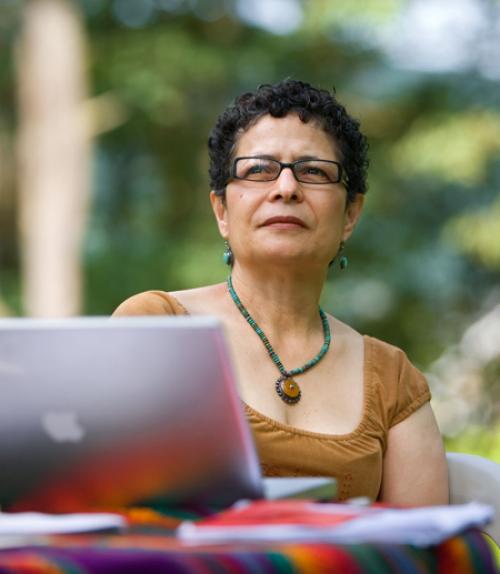
Goldwin Smith Professor of English Helena María Viramontes brings people and places erased from history to life again. For years, she has focused her lens on the Latino experience in the United States, writing award-winning fiction that draws from her own heritage as a Chicana from Los Angeles. Viramontes is featured in this Cornell Research story.
In her latest novel-in-progress, The Cemetery Boys, she explores the experiences of three generations of East Los Angelenos mired in three different wars. During this exploration, she highlights the mix of ethnicities and marginalized communities that flourished and then faded away in the California of the early-to-mid twentieth century.
“Erasure has always been a concern for me,” she says. “I started thinking about the idea for The Cemetery Boys when my aunt gave me a box of letters that my uncle wrote to her and to his parents while he was in World War II. I thought of how Ken Burns [television documentarian] did not include a single Latino, Chicano, or Hispanic in his documentary on World War II. And there were thousands and thousands of them who served in that war. It really broke my heart.”
Read the full story on Cornell Research.
More News from A&S

Jazz master Chucho Valdés birthday celebration opens concert series Oct. 23
Music