
“Benchmark,” a play by Information Science Ph.D. student Anna Evtushenko about a woman who relies on technology to preserve her memories, will stream online March 26 and 27.
An original solo performance, “spit fire, drink gasoline (repeat),” created and presented by Levi Wilson ’21, will have its YouTube premiere on March 25, available to view anytime until April 25. The event includes a Q&A with internationally acclaimed performance artist Tim Miller.
In 24 hours, donors raised a record-breaking $10,040,921 to support Cornell students, programs and research on the university’s seventh Giving Day, March 11. Gifts from 14,411 donors poured in steadily throughout the day, with support from all 50 U.S. states, plus Puerto Rico and Washington D.C., as well as nearly 80 countries.
As instructors and students are still adjusting to the online format imposed on them at the outbreak of the pandemic a year ago, the Cornell Online Learning Community asked speakers and participants at its 7th annual event, “What Works and What’s Next in online teaching and learning?” Over 100 participants gathered virtually on March 9 to look back on a year of online teaching to understand successful strategies to adapt as they continue developing this relatively new learning space.
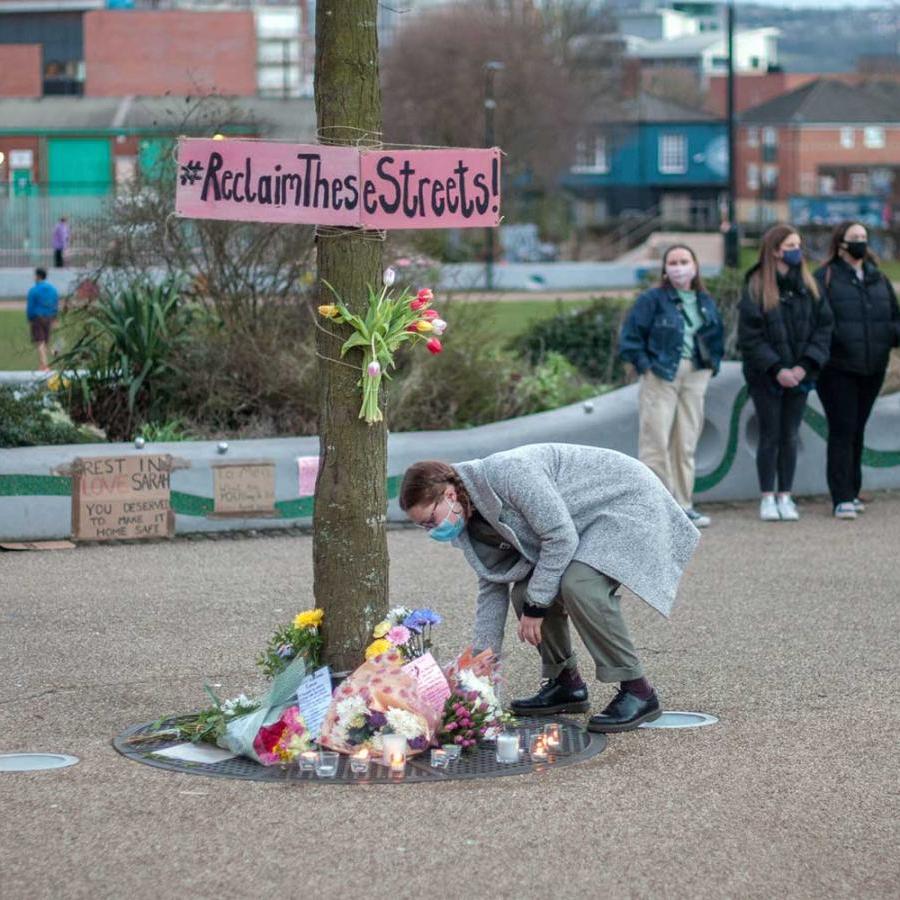
Writing in The Atlantic, Kate Manne, associate professor of philosophy, argues that we must consider why the Sarah Everard's murder case has attracted so much attention, to the exclusion of many others.
Eight people were shot and killed Tuesday night at Atlanta-area massage parlors, six of whom were of Asian descent. Christine Bacareza Balance, director of the Asian American Studies Program and professor of performing & media arts at Cornell University, says such violent acts are a part of the white supremacist systemic violence against Black, indigenous, and all other communities of color.
Top officials from the U.S. and China will meet in Anchorage on Thursday and Friday for the first high level summit after President Biden took office. Cornell College of Arts and Sciences faculty experts Allen Carlson discusses the political and economic implications of the summit.
Using light from the Big Bang, an international team led by Cornell and the U.S. Department of Energy’s Lawrence Berkeley National Laboratory has begun to unveil the material which fuels galaxy formation. Lead author is Stefania Amodeo, a Cornell postdoctoral researcher in astronomy, who now conducts research at the Observatory of Strasbourg, France.
Yehonathan Indursky, director and writer of Netflix hit “Shtisel,” will talk about the series during an online event hosted by Cornell’s Jewish Studies Program on March 24.
President Bill Clinton will join former U.S. Rep. Steve Israel on March 18 for a conversation about the future of democracy in America. The program launches the new Milstein State of Democracy Addresses.
The Vatican’s orthodoxy office has issued a formal response to a question about whether Catholic clergy have the authority to bless same-sex unions, saying the Catholic Church won’t bless same-sex unions since God “cannot bless sin.” Professors Landon Schnabel (sociology) and Kim Haines-Eitzen (religious studies) comment.
A team of scientists at the Center for Bright Beams – a National Science Foundation Science and Technology Center led by Cornell – are working on the next generation of superconducting materials that will greatly reduce the costs associated with operating large particle accelerators and lessen their environmental impact. The research could also make it easier for smaller institutions and industry to use these critical tools.