NASA/JPL-Caltech/ESA/CXC/Univ. of Ariz.
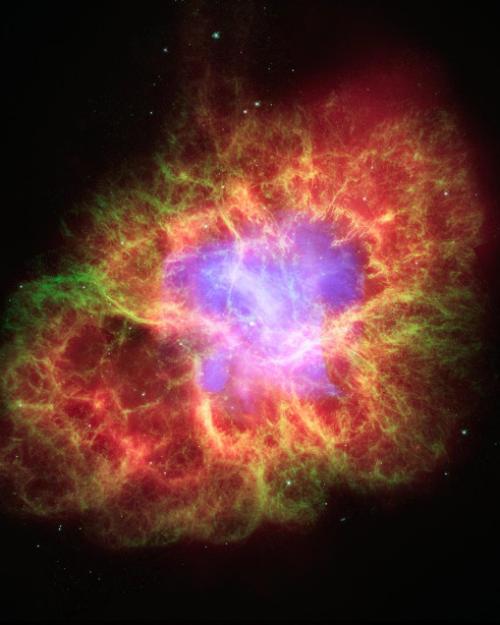
A superdense neutron star is spewing out a blizzard of extremely high-energy particles into the expanding debris field known as the Crab Nebula.
Provided
Conference co-hosts Laurent Saloff-Coste, the Abram Rogers Bullis Professor of Mathematics in Cornell’s Department of Mathematics and Gennady Samorodnitsky, the Charles W. Lake, Jr. Professor in Productivity in Cornell’s School of Operations Research and Information Engineering.
Sreang Hok/Cornell University.
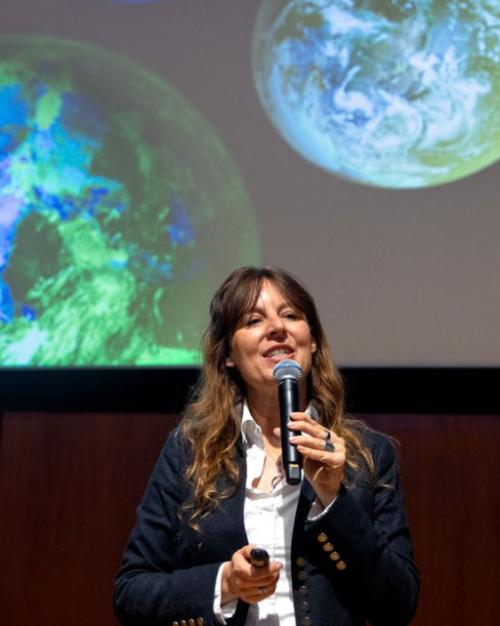
Lisa Kaltenegger, director of the Carl Sagan Institute, associate professor of astronomy and author of “Alien Earths: The New Science of Planet Hunting in the Cosmos,” said the thousands of exoplanets detected to date suggest there are “billions and billions” of possibilities for life beyond Earth.