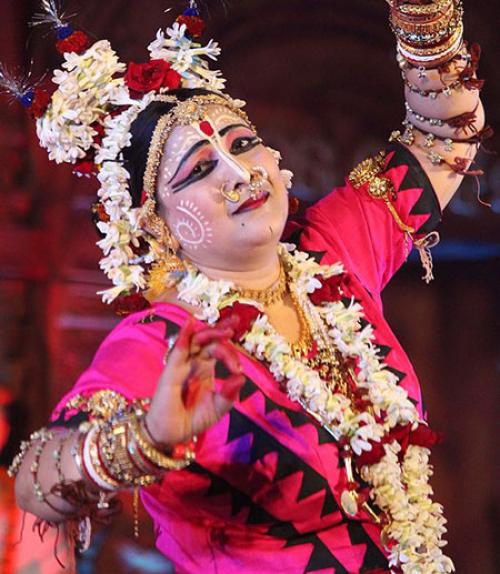
“Love and the Goddess” a new episode of the “What Makes Us Human” podcast series, explores marriage between girls and a goddess in South India. The podcast series’ third season -- "What Do We Know about Love?" -- showcases the newest thinking across academic disciplines about the relationship between humans and love.
“Love must be given freely, we imagine. Authentic love should have ‘no strings attached.’ But the record of human practice across cultures offers a different answer: love is always intertwined with material concerns. The question is how,” says Lucinda Ramberg, associate professor of anthropology and feminist, gender and sexuality studies, in her podcast episode.
A medical and sociocultural anthropologist, Ramberg works at the intersection of feminist, postcolonial and queer theories; religion and secularism; medicine and the body; and South Asia. Her research is engaged with the politics of sexuality, gender and religion and has focused in particular on the body as an artifact of culture and power in relation to questions of sexual subjectivity, social transformation and citizenship projects. She is the author of “Given to the Goddess: South Indian Devadasis and the Sexuality of Religion.”
The “What Makes Us Human?” podcast is produced by the College of Arts and Sciences in collaboration with the Cornell Broadcast Studios and features audio essays written and recorded by Cornell faculty. New episodes are released each Tuesday through the fall semester, airing on WHCU and WVBR. The episodes are also available for download n iTunes and SoundCloud and for streaming on the A&S humanities page, where text versions of the essays are also posted.
More News from A&S