Visiting Assistant Professor, CALS Biological and Environmental Engineering
Carl Sagan Institute
Provided
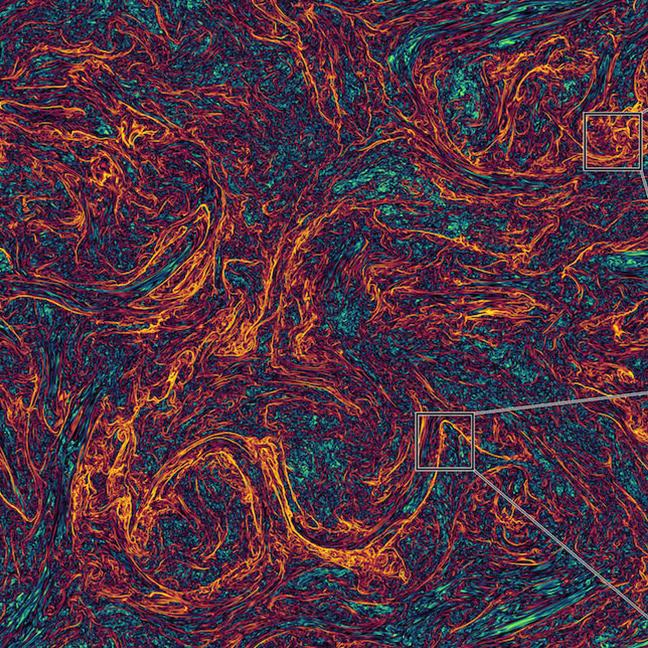
a two-dimensional slice through the three-dimensional simulations Fielding and his collaborators are running on Frontier. The color shows the magnitude of the electric current, or curl of the magnetic field, which is a measure of how much the magnetic field "swirls." The two zoom-in panels demonstrate the small scale complexity that these unprecedentedly high resolution simulations are able to capture in great detail.
“We are going to run the largest simulations of the magnetized gas that pervades the space between stars, with the aim of understanding a crucial missing piece in our models for how stars and galaxies form."
Cornell researchers have discovered a pathway by which E. coli regulates zinc levels, an insight that could advance the understanding of metal regulation in bacteria and lead to antibacterial applications such as in medical instruments.
Ox1997cow/Creative Commons license 3.0
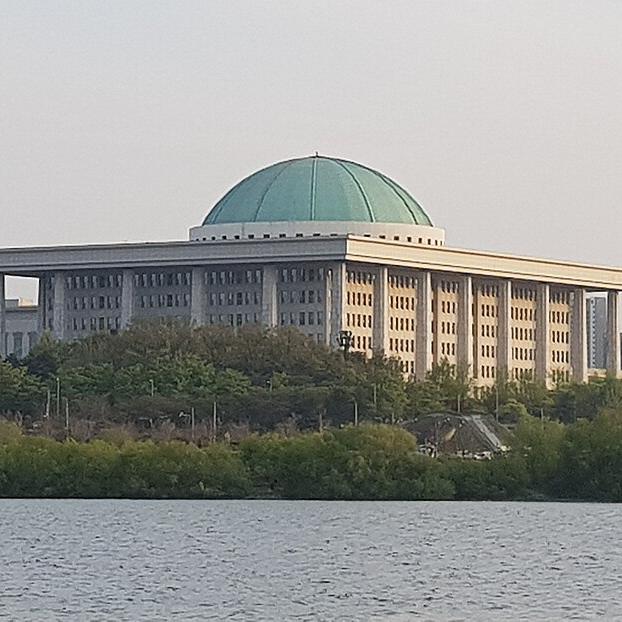
Han River and National Assembly Building of South Korea
Calls for impeachment are following South Korean President Yoon Suk Yeol’s declaration and subsequent lifting of martial law. Cornell University experts provide insight on what other democracies should take away from the events of the last two days.
South Korean President Yoon Suk Yeol says he will lift the declaration of martial law he had imposed overnight; his actions could reinvigorate South Korea’s tradition of expressing political dissent through candlelight rallies, says Sidney Tarrow, an emeritus professor of government.
A girl who attends a school with classmates whose mothers work is more likely to be in the workforce when she has a child herself than a girl who grows up in local circles where most mothers stay at home, Cornell researchers have found.
Olga Verlato's dissertation, “Languages of Power and People: Multilingualism, Politics, and Resistance in Modern Egypt and the Mediterranean,” received the Malcolm H. Kerr Award from the Middle East Studies Association of North America.
Hanning Jiang
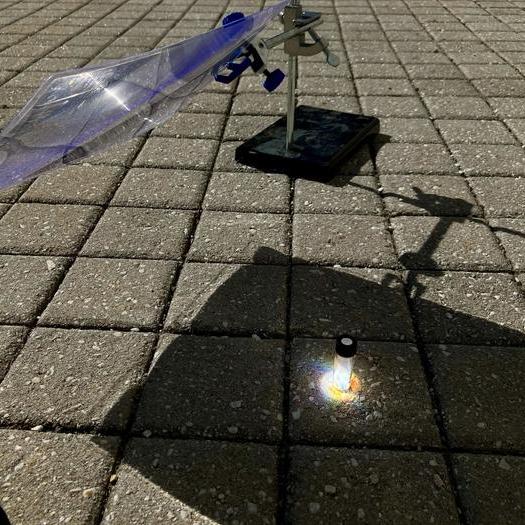
Inside this reaction vial, spotlit by concentrated sunlight, a piece of black polystyrene from a foam tray breaks down into a recyclable material.
The researchers say that their method could create a closed-loop recycling process for this type of plastic.
Jason Koski/Cornell University
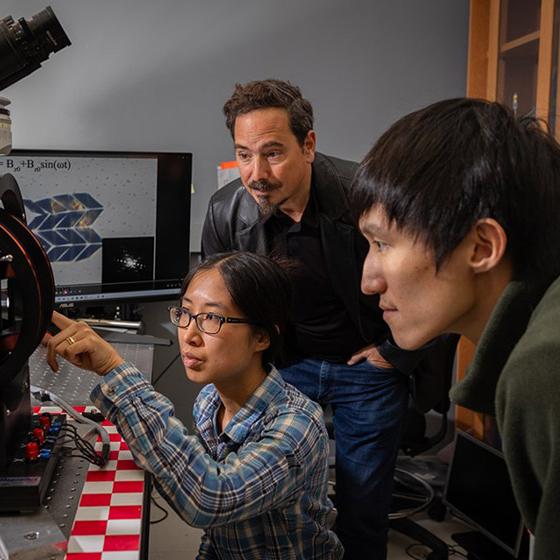
Itai Cohen, center, professor of Physics and Design Tech, works with Melody Lim, left, and Zexi Liang, right, at Cohen’s lab in the Physical Sciences Building.
Cornell researchers in physics and engineering have created the smallest walking robot yet. Its mission: to be tiny enough to interact with waves of visible light and still move independently, so that it can maneuver, and take images and measurements.