A new episode of the “What Makes Us Human” podcast asks whether the environmental issues we face are really urban problems and whether cities can have a positive impact on climate change.
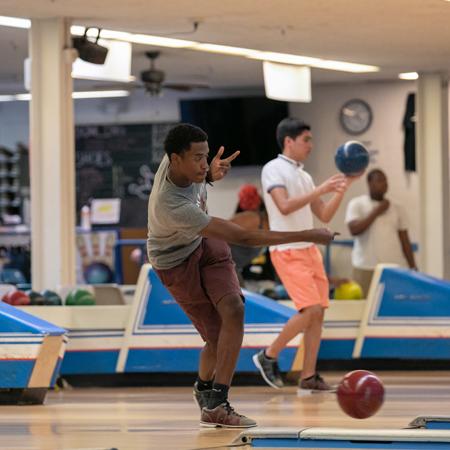
As Ololade Olawale ’18 and Amir Patel ’18 graduate from Cornell this Sunday, they say they’re heading out into the world with a deeper understanding of who they are and what they want to do with their lives.Olawale and Patel are two of six members of Cornell’s second Posse class, who will be graduating this weekend.
When Carisa (Triola) Steinberg ’97 was growing up, no one in her family had attended college. They didn’t expect her to, either. Her grandfather had college funds only for the boys in the family.She applied to Cornell anyway and was accepted – with full funding.
This story in Science Daily talks about the work of Steven Strogatz, the Jacob Gould Schurman Professor of Applied Mathematics and Stephen H. Weiss Presidential Fellow, related to a new taxi dispatching approach, which could cut the number of cars on the road while meeting rider demand.
This story is the last in a series, checking in with some of our seniors as they plan for life after Cornell. From medical school to exciting jobs to a time of discovery, the five seniors we profiled earlier this year are moving on to new adventures after they graduate this weekend.
Cornell faculty members and academic staff participating in the Knowledge Matters Fellowship presented their projects, including comics, videos and websites, at a showcase wrapping up the yearlong transmedia training program May 10 at A.D. White House.
A newly arrived collection of Jewish books containing fables, with around 400 volumes spanning six centuries, will enrich Jewish studies at Cornell and cast light on the depth and breadth of Jewish civilization.The collection, which includes a 15th-century Torah scroll and six volumes from the first complete printing of the Babylonian Talmud, was delivered to the Cornell University Library’s Division of Rare and Manuscript Collections (RMC) earlier this month by Jon Lindseth ’56.
This is an episode from the “What Makes Us Human?” podcast's second season, "Where Is the Human in Climate Change?" from Cornell University’s College of Arts & Sciences, showcasing the newest thinking from across the disciplines about the relationship between humans and the environment. Featuring audio essays written and recorded by Cornell faculty, the series releases a new episode each Tuesday through the spring.
This Cornell Research story focues on the work of Chih-chun Lin, Cornell Presidential Postdoctoral Fellow in the in the lab of Andrew G. Clark, professor of molecular biology and genetics.
When Carole Boyce Davies, professor of Africana studies and English, first began studying African and African diaspora literature and culture, the field was dominated by male scholars and writers—both as teachers and subjects of study, according to this story on the Cornell Resarch website. Boyce Davies arrived at just the right moment to make significant contributions.
Internationally known artists Carrie Mae Weems and Xu Bing will join participants from across the university this fall in the Cornell Council for the Arts (CCA) 2018 Biennial.
Recently awarded Engaged Graduate Student Grants will support 21 Cornell doctoral students and their community partners researching a range of topics, including arts and agriculture, education and the environment, health and history.Grant recipients come from both the Ithaca and Cornell Tech campuses and represent 15 fields of study – the most since the program launched in 2016, with a particular increase in projects from the social sciences.