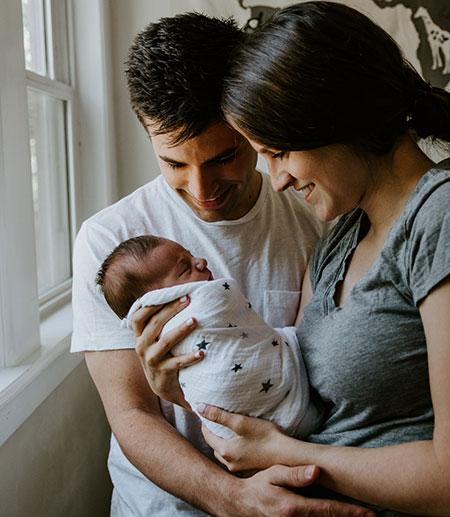
“Unequal Parenting,” a new episode of the “What Makes Us Human?” podcast series, examines persistent inequalities in parenting and the earnings penalties that go along with them. The podcast’s fifth season – “What Do We Know about Inequality?” – showcases the newest thinking across academic disciplines about inequality.
Angelika Kraemer, Director of the Language Resource Center at Cornell and an affiliated senior lecturer in the Department of German Studies, received the Michigan World Language Association’s (MIWLA) Barbara Ort-Smith Award Oct. 24 at MIWLA’s annual conference in Lansing, Michigan.
Goldwin Smith Professor of Ecology and Evolutionary Biology Kelly R. Zamudio studies amphibians, especially frogs, combining field work and observation of behavior with genetics and genomics to glimpse the genetic processes underlying species traits. Recently her lab has turned that expertise to studying two virulent fungi of the genus Batrachochytrium, commonly called chytrids, that affect frogs and salamanders.
Scholars from Germany and the UK, as well as numerous U.S. universities, will visit campus Nov. 7-9 for the first media studies conference sponsored by CIVIC (Critical Inquiry into Values, Imagination and Culture), the provost’s Radical Collaboration initiative focused on the humanities and the arts.
Teaching at Cornell is in the midst of a transformation, with faculty applying the latest research and technologies across disciplines to excite and engage students.
Lehmann and Klinck sounded out two other Cornell scientists – associate professor of entomology Kyle Wickings and assistant professor of civil and environmental engineering Greg McLaskey – to join in a project to listen to the Earth. Wickings is the principal investigator on “Sounds of Soil,” a project to develop inexpensive acoustic sensors to detect, monitor and study populations of soil-dwelling organisms – in particular, disruptive insects that feed on roots, affecting both plant and soil health. The project received a Venture Fund grant from the Cornell Atkinson Center for Sustainability in June 2018.
Cornell researchers have put a new spin on measuring and controlling spins in nickel oxide, with an eye toward improving electronic devices’ speed and memory capacity.
On October 3-4, 2019, Cornell CIS (Computing and Information Science) celebrated its 20th anniversary. To mark the event, CIS hosted a symposium showcasing the game-changing impact of computing on a breadth of disciplines.
Nilay Yapici, assistant professor in the Department of Neurobiology and Behavior in The College of Arts & Sciences and a Nancy and Peter Meinig Family Investigator, recently received a $2 million grant to fund her research on taste perception and hunger in the neural system.
Assistant Professor and Mills Family Faculty Fellow Malte Ziewitz studies the changing role of governance and regulation in, of, and through digitally networked environments – the dynamics at work, the values at stake, the design options at hand.
Lawrence B. Glickman, the Stephen and Evalyn Milman Professor of American Studies in the Department of History, recently wrote an opinion piece in The Washington Post discussing the historical origins of President Trump's use of the phrase "lynching" in a recent tweet concerning the impeachment inquiry.
New cellular and molecular processes underlying communication between gut microbes and brain cells have been described for the first time by scientists at Weill Cornell Medicine and Cornell’s Ithaca campus.
Explore treasures of Sephardic Jewish music culture at Book of J’s performance of “LA Archivera” on Monday, Nov. 11, at 8 pm in Cornell University’s Barnes Hall Auditorium. The free event will feature mid-century Los Angeles and 20th-Century Jewish Ottoman music traditions. The public is invited.