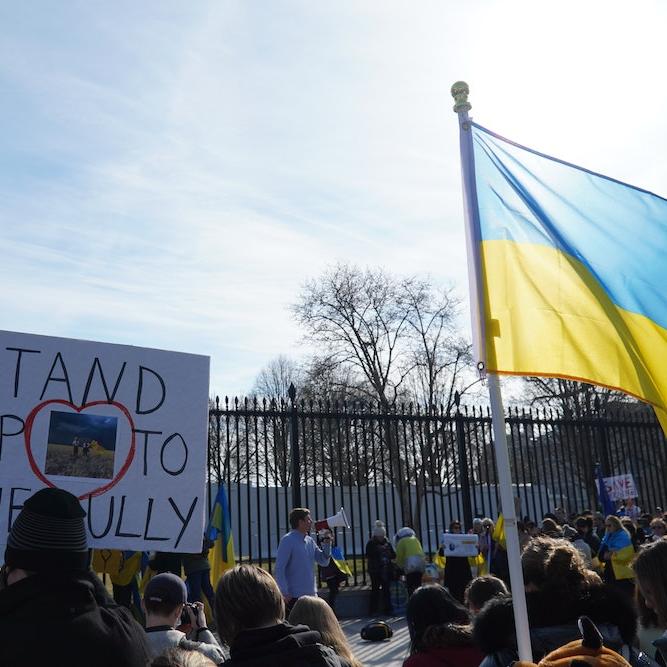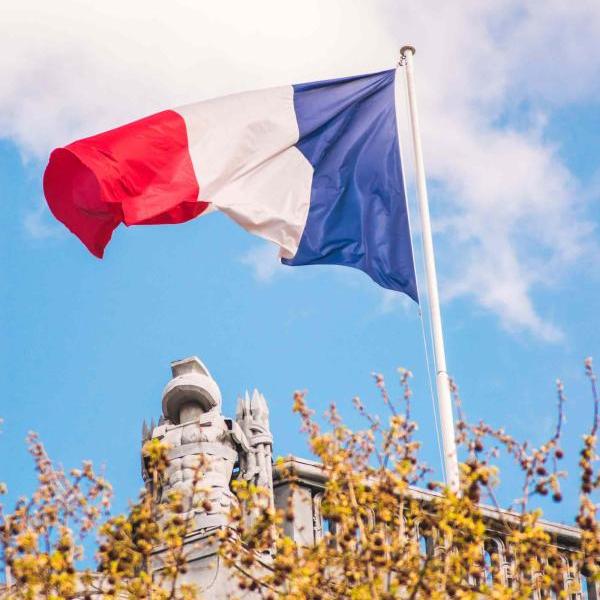
At a Cornell event on Feb. 22, former U.S. Ambassador to Ukraine Bill Taylor said Russian President Vladimir Putin appears intent on provoking a “horrific conflict,” but that he holds out hope for a diplomatic path that would avert all-out war.
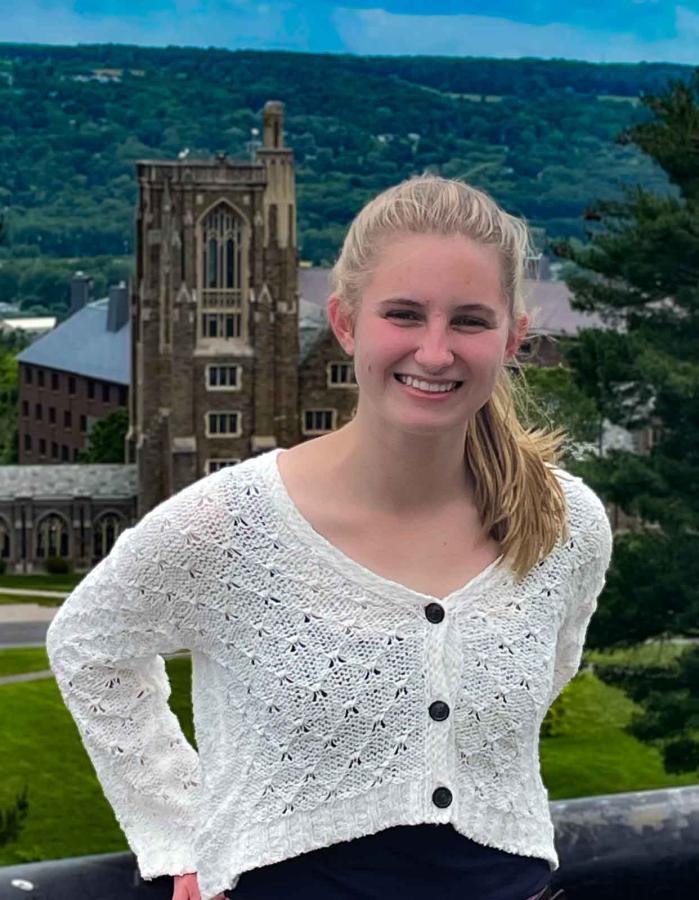
A Cornell-led collaboration used electrochemistry to stitch together simple carbon molecules and form complex compounds, eliminating the need for precious metals or other catalysts to promote the chemical reaction.
Language emerges from a continual flow of creative improvisation, not biologically evolved genes or instincts, argue authors of a new book.
Photo by Ed Reed/Mayoral Photography Office
Furnas speaking at a December 2021 event in which then-NYC Mayor Bill de Blasio signed a law that will eventually ban fossil fuel combustion in newly constructed buildings, among other provisions.
Fresh from sustainability success in New York City, environmental advocate Ben Furnas ’06 directs a new University initiative to marshal its resources to protect the planet.
For the past year, two Cornell doctoral students have been living, thinking and working on the red planet Mars, digitally commuting from our own blue world.
Matthew Meiselman/Provided
Dorsal neurons (green) express AstC peptide (magenta) in the female fly brain.
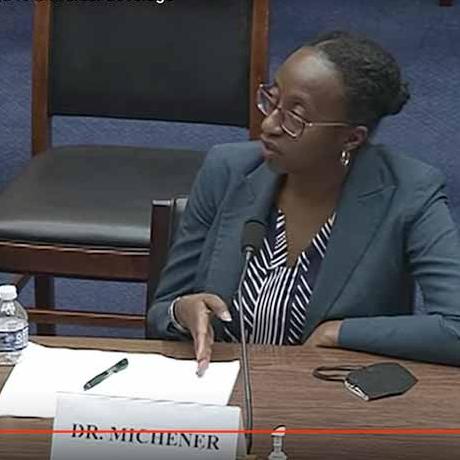
Journalistic fact checks are a more effective counter to COVID-19 misinformation than the false news tags commonly used by social media outlets, according to new Cornell research.
Maya Phillips, a critic at large for The New York Times, has been named winner of the 2020-21 George Jean Nathan Award for Dramatic Criticism. The award committee comprises the heads of the English departments of Cornell, Princeton and Yale Universities.
Provided
Aisha Conte, whose app, Auset’s Cabinet, provides information on holistic and natural remedies
The Cornell Center for Social Sciences grant program, which supports social science research by Cornell faculty members, has awarded $85,000 to 10 professors for their 2022-23 CCSS Faculty Fellows program.