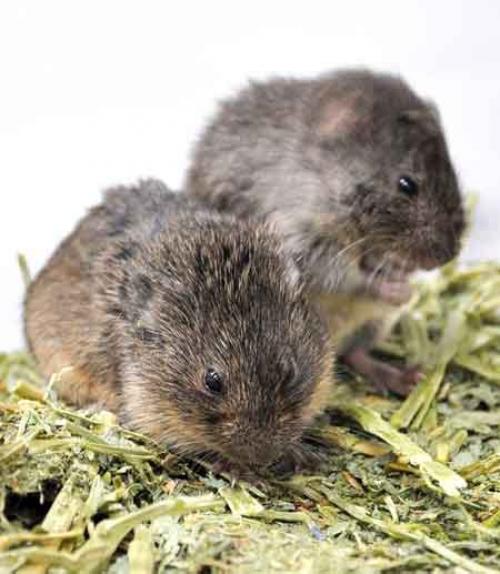
This National Geographic story about how mate selection changes the brains of male prairie voles features research by Assistant Professor of Psychology Alexander Ophir. He discovered that while single male prairie voles could recognize other males, all single females seemed to look and smell alike to them. After bonding with a mate, male prairie voles seemed to distinguish female prairie voles as individuals.
“There’s something about forming a pair bond that changes these male prairie voles’ ability to recognize others. So there’s sort of a change in cognitive capacity,” says Ophir, who works in the field of behavioral and evolutionary neuroscience. Read more.
Science News also featured Ophir's research.
More News from A&S


Trump's triumphal arch revives a symbol of empire rule, says Cornell expert
Classics
A&S Communications