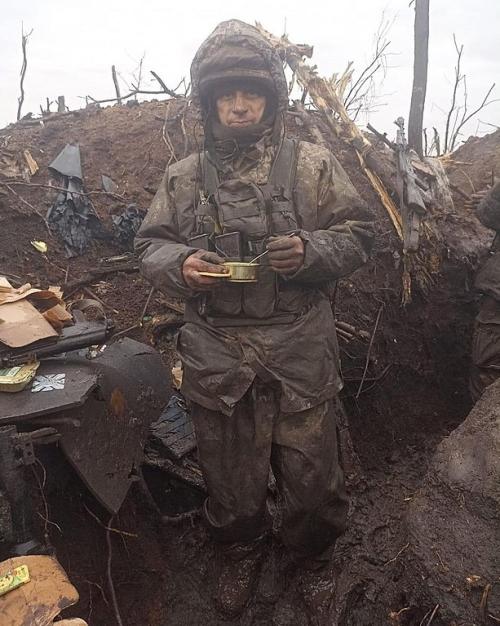
For seven months, Russian forces have been fighting to capture Bakhmut in eastern Ukraine. Much of the city has been destroyed and both sides have endured severe losses, leading some Western analysts to question whether holding the city was worth the cost.
David Silbey is an associate professor of history at Cornell University where he specializes in military history, defense policy and battlefield analysis. He says talk of a Ukrainian counter-offensive in Bakhmut may be part of broader strategy.
Silbey says: “Bakhmut by itself is not a particularly valuable piece of land for either side. But Ukrainian control of it prevents a more general Russian advance northwest and so the two sides have been hammering each other for weeks in the small city — drawing in increasing numbers of Russian units.
“The oddity here is that militaries do not normally telegraph their attacks, so announcing a Ukrainian counter-offensive seems counter-productive. Unless, of course, the counter-offensive is planned for somewhere else.
“The Russian forces in Bakhmut have to come from somewhere — thinning their defensive lines — and it is possible that the Ukrainians are deliberately focusing Russian attention on Bakhmut while preparing an attack in a more vulnerable spot.”
For interviews contact Adam Allington, cell: 231-620-7180, adam.allington@cornell.edu.
Image: Viktor Borinets/Ministry of Defense Ukraine, Creative Commons license 4.0.
More News from A&S


Annetta Alexandridis commemorated through installation, Oct. 31 memorial
History of Art and Visual Studies
Shakespeare’s 'Twelfth Night:' Mad Love, Mad Music
Performing and Media Arts