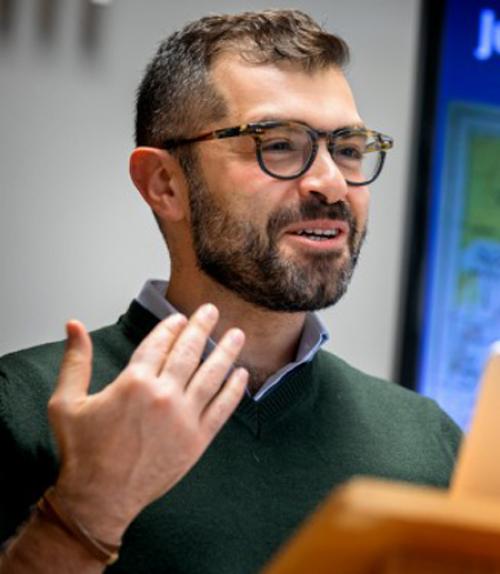
Mostafa Minawi, associate professor of history in the College of Arts & Sciences and director of the Center for Critical Ottoman and Post-Ottoman Studies, has been honored with the Albert Hourani Book Award for “Losing Istanbul: Arab-Ottoman Imperialists and the End of Empire.”
The award, given by the Middle East Studies Association, recognizes a work that exemplifies scholarly excellence and clarity of presentation in the tradition of Albert Hourani, a leading historian of the Middle East.
“This is a very meaningful award for me,” Minawi said. “It is a book I wrote to focus on the experience of events, rather than the events themselves. How they felt, what they meant to people, and how they were handled.”
Minawi said he approached this book with a sense of empathy for the characters he wrote about — people who were members of the Ottoman state that was completely dissolved, and found themselves stolen of a sense of selfhood.
“I was drawn to this story of belonging, rejection, and loss,” he said. “As the son of Palestinian refugees, I understood how major global changes can render one eternally disoriented, your loyalties forever suspect, and your very existence the subject of debate and controversy."
More News from A&S


Annetta Alexandridis commemorated through installation, Oct. 31 memorial
History of Art and Visual Studies
Shakespeare’s 'Twelfth Night:' Mad Love, Mad Music
Performing and Media Arts