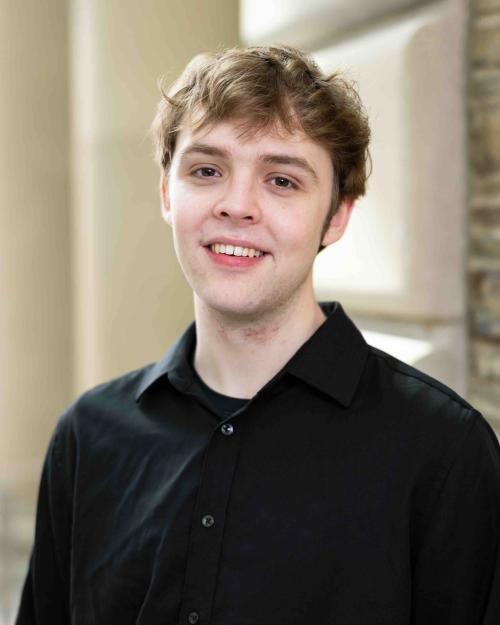
Owen Wetherbee
Physics, Mathematics & Computer Science
Philadelphia, Pa.
What is your main extracurricular activity and why is it important to you?
My main extracurricular activity was Science Olympiad where I helped to supervise science competitions at various invitationals across the country. This was important to me as a way to give back to the community that first inspired me to pursue science.
What have you accomplished as a Cornell student that you are most proud of?
I am most proud of my research endeavors and specifically my contributions to understanding the stability of insect flight and finding new ways to process encoded quantum information in a fault tolerant way.
How have your beliefs or perspectives changed since you first arrived at Cornell?
I have discovered that there will always be people better and worse than you at everything you do, so just do what you want and don't worry about the bell curve.
What are your plans for next year?
Next year I am planning to pursue a physics Ph.D. at UC Berkeley studying condensed matter physics.
Every year, our faculty nominate graduating Arts & Sciences students to be featured as part of our Extraordinary Journeys series.Read more about the Class of 2025.
More News from A&S

Society for the Humanities Fellows to Explore “Survival” at Fall Conference
Society for the Humanities