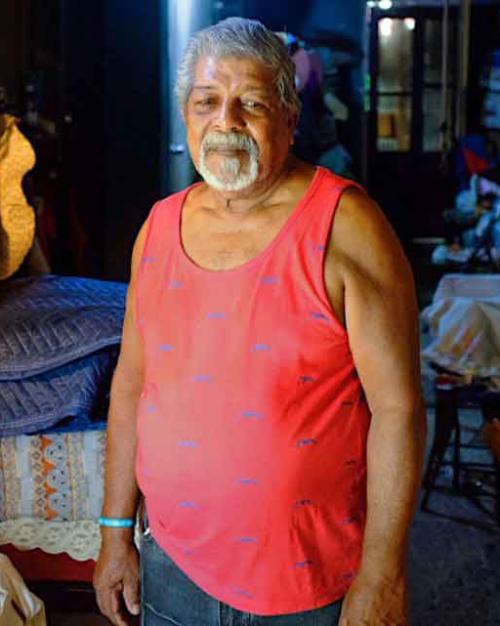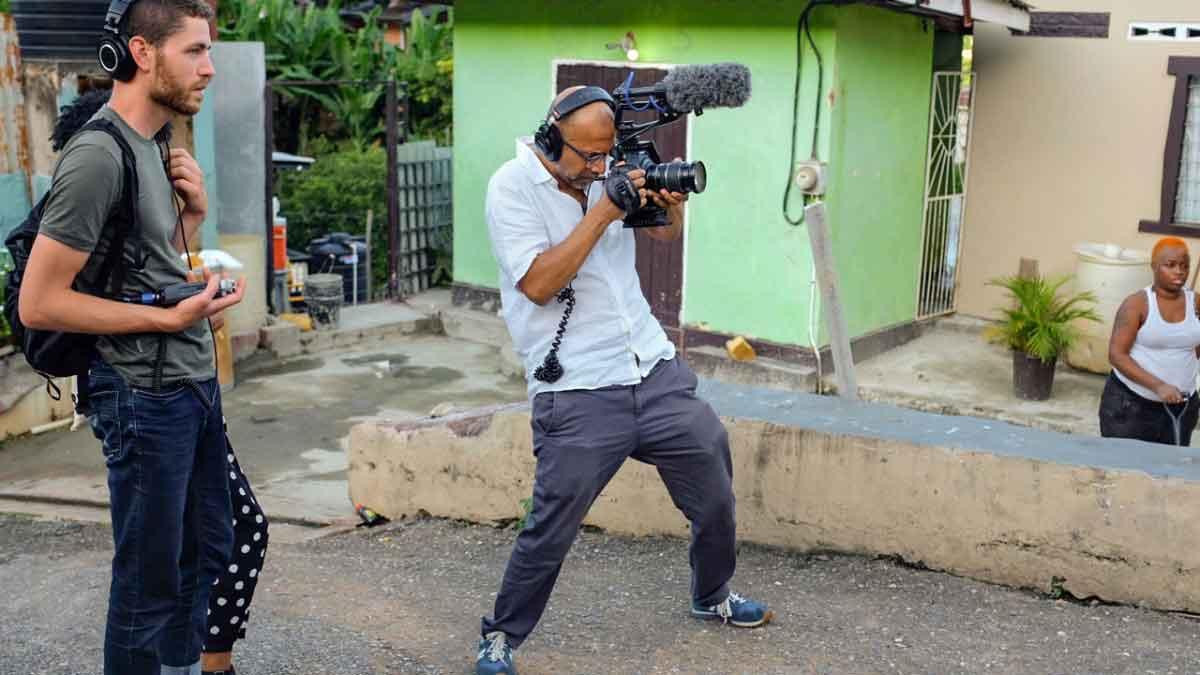
The Award for Film and Video from the Society of Architectural Historians has been given to the film “We Love We Self Up Here,” produced by Natalie Melas, associate professor of comparative literature in the College of Arts and Sciences and Tao DuFour, assistant professor of architecture in the College of Architecture, Art and Planning. The documentary short was directed by filmmaker Kannan Arunasalam.
The film explores narratives of lived experiences of urban, agricultural, and industrial landscapes tied to colonial and postcolonial legacies of sugar production and hydrocarbon extraction in Trinidad & Tobago. It grew out of a Mellon Expanded Practice Seminar co-taught by Melas and DuFour in fall 2019: Atmospheric Pressures: Climate Imaginaries and Migration in the Caribbean. The course included a week long field trip to Trinidad.
The film is a truly interdisciplinary project, Melas told the Cornell Chronicle in 2021, bringing three very different viewpoints to the project, each of which transformed the film in different ways: “That of an architect and spatial theorist attuned in a particular way to the landscape of the island because he grew up there, that of a student and critic of Caribbean literature and thought in comparative context and finally that of the fine-hewed aesthetic and technical expertise of the filmmaker.”
More News from A&S
Cornell biologist named Blavatnik Award finalist for work with rewilded mice
Neurobiology and behavior
Cornell mathematicians win grants to ensure AI safety, research integrity
Mathematics
Jazz master Chucho Valdés birthday celebration opens concert series Oct. 23
Music