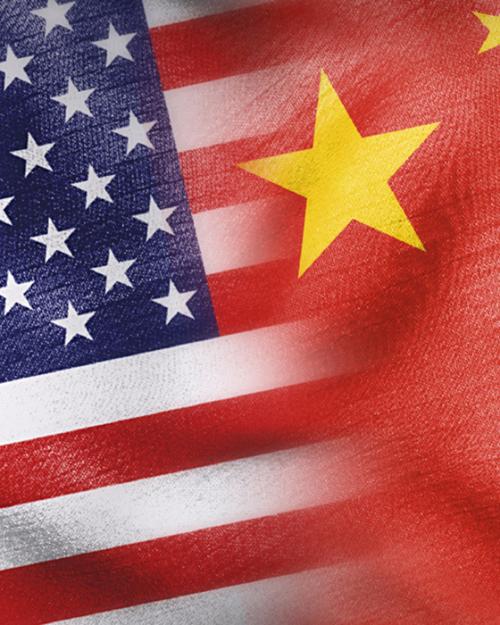
President Joe Biden will meet face-to-face with his Chinese counterpart, Xi Jinping, in San Francisco on Wednesday. The meeting breaks a yearlong silence marked by rising tensions that increasingly tough rhetoric.
Allen Carlson, an associate professor of government at Cornell University and an expert on Chinese foreign policy, says a key factor for the meeting will be how much the two heads of state are able to publicly agree to disagree.
Carlson says: “This is not to say that both do not reserve big levels of ‘negative’ thoughts on the other side, but rather to the extent the meeting is a ‘success’ both will refrain from putting their differences on full display.
“Maybe they will make some sort of an announcement about cooperating more over diplomacy for Israel and Gaza, maybe something on Russia too, perhaps more mil to mil cooperation. But really, I think it is all about the optic of pulling back from the brink and reassuring markets that no conflict (even over Taiwan) is imminent.
“In other words, I am deeply suspect that there will be any big deliverable from the meeting (maybe on climate change, but I doubt it), but rather what both leaders seem to be interested in is the optics of them meeting.”
Adam Allington, cell (231) 620-7180; adam.allington@cornell.edu.
More News from A&S