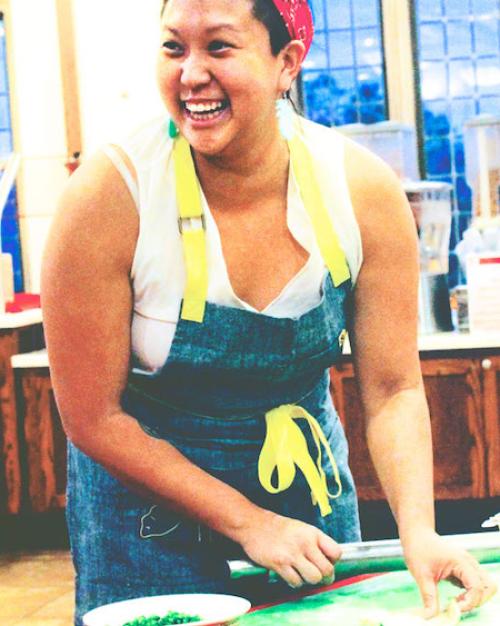
Irene Li ’12, BA ’15, is a chef and a restaurateur, but her interests have long gone beyond cuisine. On the Hill, she was a College Scholar who focused much of her studies on criminal justice reform and prison education, including teaching at a maximum-security facility in nearby Auburn.
When she and her siblings founded a Boston food truck and Chinese-inspired eatery, Li became a strong proponent of using pasture-raised meats and locally sourced ingredients—and adhering to fair labor practices, including financial transparency with their workers.
For five years in a row (2015–19), the Arts & Sciences alum was a semifinalist for the “rising star chef” award from the James Beard Foundation, which bestows what are considered the Oscars of the food industry. In March, the foundation recognized her with its coveted Leadership Award—given, it says, to “visionaries for their work in creating a better food world”—which she’ll accept at a gala ceremony in Chicago in June.
“I’m surrounded by people who are intent on making the industry a livable and amazing place to work,” says Li, contemplating the current state of U.S. restaurants. “The amount of energy from new operators makes me really optimistic—and on top of that is what we’re seeing from people who are organizing, whether through unions or other initiatives, to improve their workplaces. There’s so much energy.”
Read the full story in Cornellians.
More News from A&S


Soprano Dawn Upshaw visits campus as A.D. White Professor-at-Large
A.D. White Professors at Large
A&S Career Development gets facelift, joins new collaborations across campus
Career development