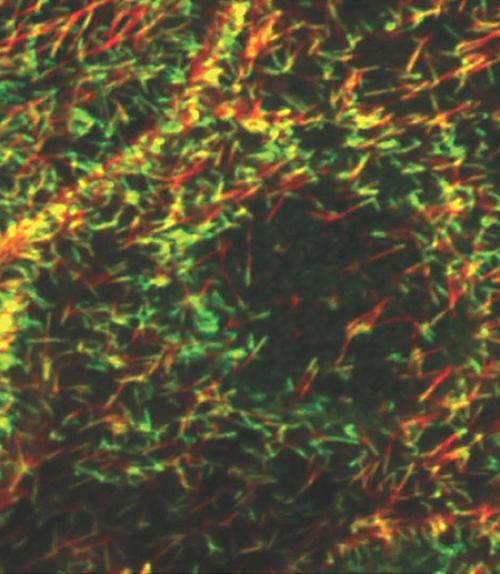
This Cornell Research story focuses on Anthony P. Bretscher, professor of molecular biology and genetics in the College of Arts & Sciences and a member of the Weill Institute for Cell and Molecular Biology.
Bretscher's research, funded in part by funding from the National Institutes of Health, works to understand how cells organize their plasma membrane—morphology and abundance of specific proteins— and how molecular motors pick up, transport and deliver different specific cargos.
Read the entire Cornell Research piece.
More News from A&S


Annetta Alexandridis commemorated through installation, Oct. 31 memorial
History of Art and Visual Studies
A&S Communications

Shakespeare’s 'Twelfth Night:' Mad Love, Mad Music
Performing and Media Arts
Department of Performing & Media Arts

Pinkham’s ‘The Oak and the Larch’ wins Pushkin House Book Prize
Comparative literature
A&S Communications