Xianwen Mao, a postdoctoral researcher in the Department of Chemistry and Chemical Biology, has been recognized for his innovations in imaging nanoscale systems by the New York Academy of Sciences and the Blavatnik Family Foundation.
Ruth Bader Ginsburg ’54, whose legal career in the fight for women’s rights, equal rights and human dignity culminated with her ascent to the U.S. Supreme Court, and who – as an octogenarian – became a cultural hero and arguably the most beloved justice in American history, died Sept. 18 in Washington, D.C. She was 87. Ginsburg died from complications of cancer, according to a statement from the Supreme Court.
The Cornell Center for Historical Keyboards (CCHK) presents a full program of virtual events for the fall 2020 semester, comprised of two distinct series: "Music as Refuge," beginning Sept. 23; and "Beethoven and Pianos: Off the Beaten Path," beginning Oct. 2.
The Oct. 8 event is the fourth in the College of Arts & Sciences’ Arts Unplugged series, which brings artistic, scientific and creative works into the public sphere for discussion and inspiration.
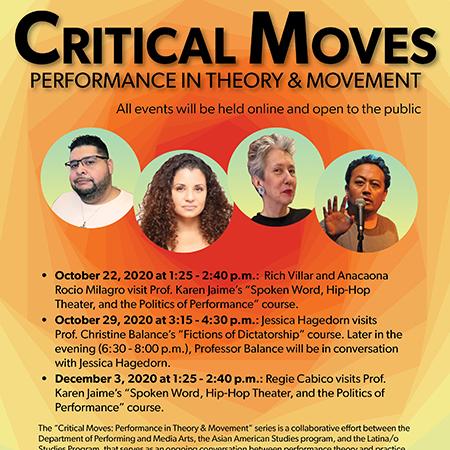
There isn’t one unified Asian American vision of California, argues Christine Bacareza Balance, associate professor of Performing and Media Arts in the College of Arts and Sciences, in “California Dreaming: Movement and Place in the Asian American Imaginary,” a new multi-genre collection she co-edited.
"I have had such good friendships with faculty and staff and have been universally impressed by the caliber of people I’ve had the chance to work with,” said Katherine Gemmell.
Since arriving in Washington with a promise to “drain the swamp,” President Donald Trump has often called out the “deep state” for blocking his political goals. The fourth event in the Democracy 20/20 webinar series will examine how the capacity and professionalism of the federal government has fared over the past four years.
When stars like our sun die, all that remains is an exposed core – a white dwarf. A planet orbiting a white dwarf presents a promising opportunity to determine if life can survive the death of its star, according to Cornell researchers. In a study published Sept. 16 in the Astrophysical Journal Letters, they show how NASA’s upcoming James Webb Space Telescope could find signatures of life on Earth-like planets orbiting white dwarfs.
Cornell-based startup Ascribe Bioscience, which applies the emerging field of metabolomics to the soil microbiome to develop new products for agriculture, has won a $750,000 National Science Foundation (NSF) Small Business Innovation Research (SBIR) Phase II award to field test its unique pathogen-fighting technology.