Faculty members say the change from the Department of English to the Department of Literatures in English better reflects the world and the department’s diverse fields of study.
After earning an undergraduate degree from New York University, David Dunham, doctoral student in Germanic studies from Springfield, Virginia, chose to pursue further study at Cornell due to the strength of the Germanic studies field and the university’s location in Ithaca.
Cornell University Library’s Grants Program for Digital Collections in Arts and Sciences is seeking applications to create online collections that will support teaching and scholarship at Cornell and beyond.
In a Washington Post op-ed, Cornell government professors Rachel Beatty Riedl and Kenneth Roberts write that Republican leaders’ response to the armed insurrection at the U.S. Capitol and other recent events suggested that some are unwilling to accept the legitimacy of free and fair elections, a problem not just for the Republican Party but for U.S. democracy more broadly.
Little is known about how higher cortical areas in the brain develop after the primary areas are in place. A new study by Cornell and Yale researchers, including professor emerita of psychology Barbara Finlay, uses computer modeling to show that the development and evolution of secondary visual cortical areas can be explained by the same process.
Mary Beth Norton will discuss her book, “1774: The Long Year of Revolution,” in the next “Book Breaks” discussion, hosted Jan. 31 by the Gilder Lehrman Institute of American History in New York City.
New research by Harry Greene, professor emeritus of ecology and evolutionary biology, suggests that for some cobras, the venom evolved additional complexity to deter potential enemies– possibly including bipedal, larger-brained hominins like Homo erectus, our extinct close relative.
National Park Service
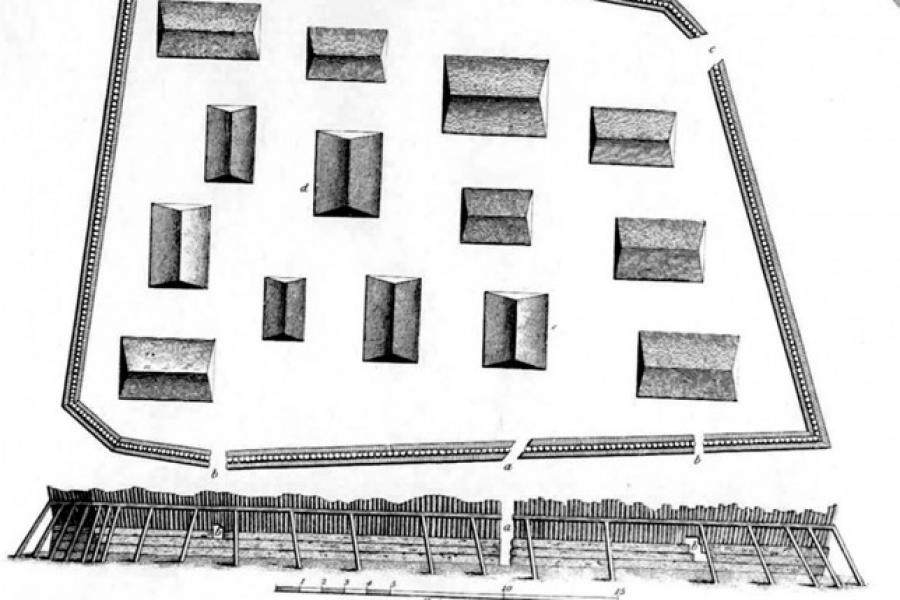
Russian Commander Iurii Lisianskii’s 1804 outline drawing of the Tlingit fort used to defend against Russia’s colonization forces. Cornell and U.S. National Park Service researchers have pinpointed the fort’s exact location in Sitka, Alaska.