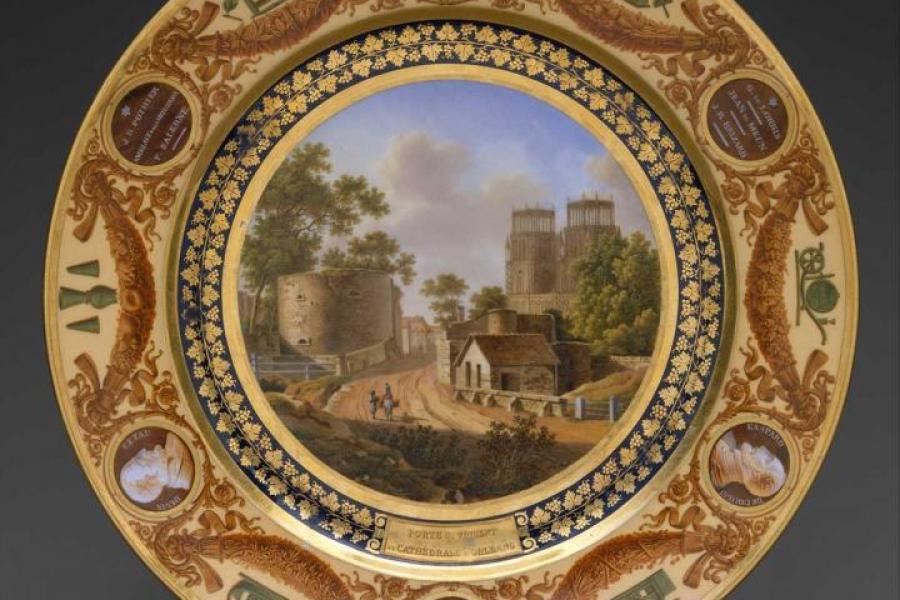
In a new essay, Kelly Presutti describes the ultimate failure of a set of Sèvres porcelain dessert plates, 1824-32, to represent all of France.
Davis lab/provided
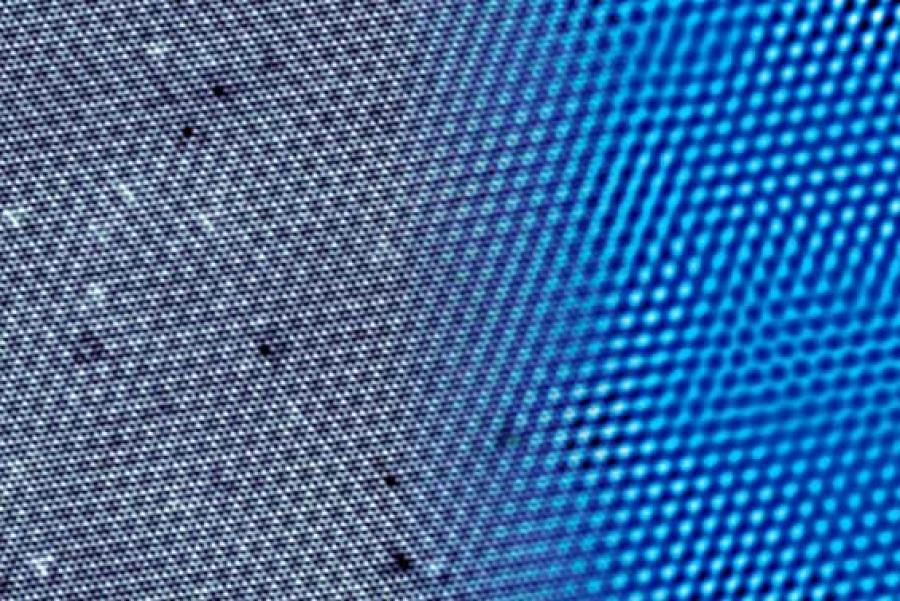
This composite image shows where the selenium atoms reside in the crystal of niobium diselenide, a transition metal dichalcogenide, using conventional scanned tunneling microscopy (left, in grey) and where the electron pairs are observed using scanned Josephson tunneling microscopy (right, in blue).
In an op-ed on CNN, Lisa Kaltenegger explains how she and other astronomers look for life beyond Earth – and how technologically advanced extraterrestrials might look for us.
OpenSpace/American Museum of Natural History
Artistic view of the Earth and sun from thousands of miles above our planet, showing that stars can enter and exit a position to see Earth transiting the sun.
Astronomers have identified 2,034 nearby star-systems – within 326 light-years – that could find life on Earth by watching our pale blue dot cross our sun.
Six graduate students were awarded 2021 Hsien and Daisy Yen Wu Scholarships. These scholarships recognize graduate students for their academic ability, performance and character as well as financial need.
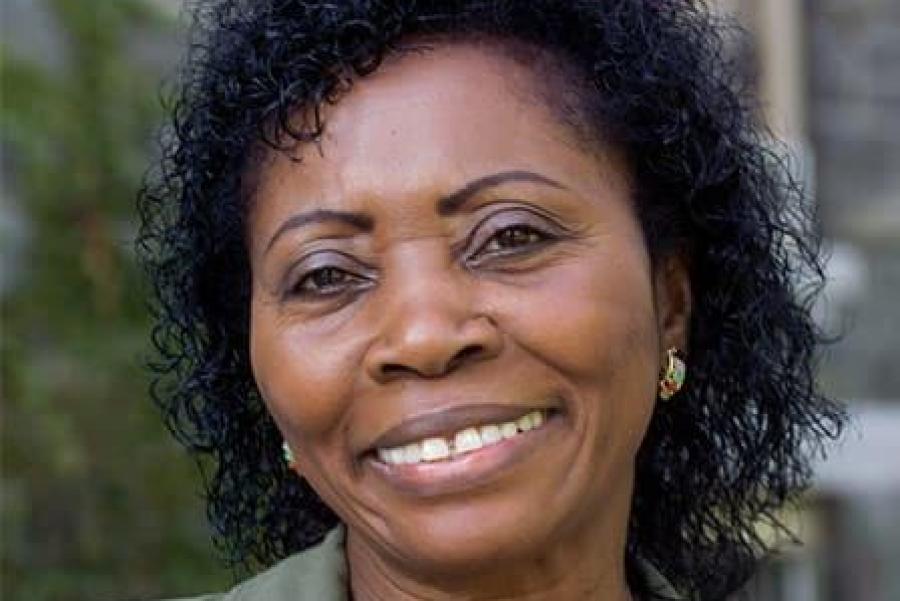
Doctoral students Monique Pipkin and Ama Bemma Adwetewa-Badu have been selected to receive 2021 Ford Foundation Fellowships. Honorable mentions were awarded to nine additional Cornell graduate students.
Brianna Johnson ’21, who has had her own battles with diseases caused by microscopic organisms, found a passion for trying to understand their impacts and intricacies through biological sciences research.
A new episode of “The Humanities Pod” explores the language and materiality of belief through literary and anthropological methods of humanities research.
On June 15, the "All Things Equal" podcast featured Cornell Arts & Sciences Professor of American History Margaret Washington for a discussion of Juneteenth.