Jack Szostak, Ph.D. ’77, shared decades of research into one of biology’s most puzzling mysteries – the origins of life – during the 2025 Ef Racker Lecture.
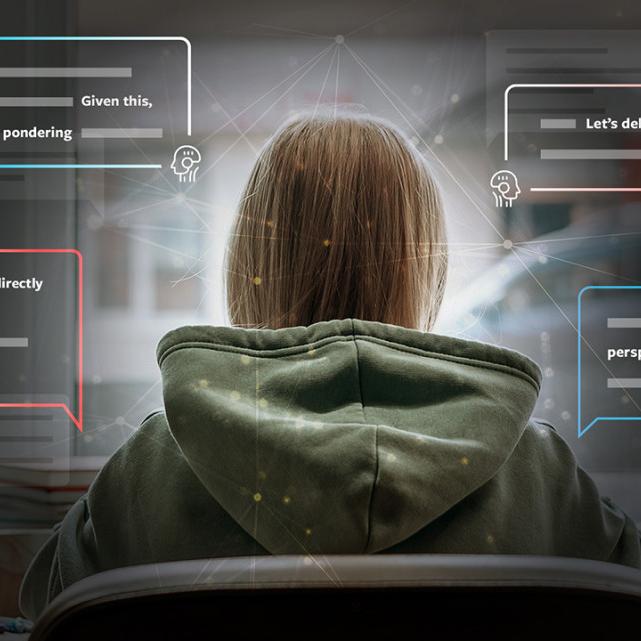
Cornell physicists and computer scientists have developed a machine learning architecture inspired by the large language models (LLMs) behind ChatGPT to help them study the vastly complicated interactions that happen when nature's smallest particles interact.
Uriel Abulof, a visiting professor in Cornell University’s government department, calls it “a survival pact for leaders who thrive on conflict and enmity."
Olúfémi Táíwò, professor of Africana studies at Cornell University, said the move is another coup d’etat that Madagascar, and the African continent, does not need.
Trump has turned U.S. foreign policy into a tool for petty corruption and insider deal-making instead of supporting U.S. national interests, says a Cornell government faculty member.
Thomas Hartman is a professor in the Department of Physics in the College of Arts & Sciences.
Kate Blackwood/College of Arts and Sciences
Tanenhaus conversing with Dean Peter John Loewen during “The Man Who Built a Movement: How William F. Buckley Invented Modern Conservativism" on Oct. 9
This October, Cornell Cinema will celebrate the 100th anniversary of the silent movie “The Phantom of the Opera,” with live musical accompaniment by The Invincible Czars.
David Fucsku/Unsplash
The ancient Agora of Athens, Greece
In a new paper, Klarman Postdoctoral Fellow Davide Napoli argues that public speeches in ancient Greece aimed not to express personal views, but to undermine entrenched ideas and challenge common-sense conclusions.
Professor Debra Castillo, Stephen H. Weiss presidential fellow and Emerson Hinchliff professor of Hispanic Studies in the College of Arts & Sciences, died Oct. 5 at the age of 72.
Orpheus Chamber Orchestra with violin soloist James Ehnes will perform a program entitled “Postcards from Paris” in the next Dallas Morse Coors Concert Series (DMCCS) production of the 2025-26 season.