… Sciences instead. “I came to Cornell and the subjects I was best at were history and English, but for some reason, I …
Patrick Shanahan
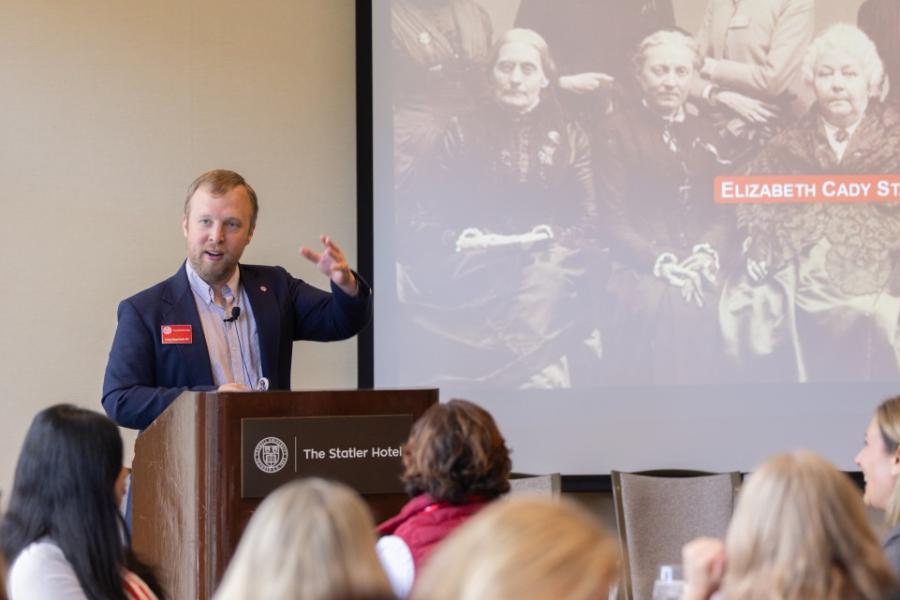
Cornell historian Corey Earle shared stories of remarkable women throughout Cornell’s history during an Oct. 25 brunch as part of the Trustee Council Alumni Meeting.
… in American studies—covered the early history of the first women to attend Cornell all the way to the present, … right.” Cornell’s proximity to Seneca Falls, home of the first women’s rights convention, also held some sway, Earle … grandchildren to Cornell. Still, it took two years for the first woman to enroll and several more years for the …
… toying with his friends, or his readers. And one of his best-known works may be his grandest joke of all, as … toying with his friends, or his readers. And one of his best-known works may be his grandest joke of all, as …
Sreang Hok/Cornell University.
The A.D. White House
This semester, visiting A.D. White Professors-at-Large will explore themes of democracy, reparatory justice and Latin American narratives during public talks.
Associate Chair & Marie Underhill Noll Professor of History
History, Latina/o Studies Program, Romance Studies
… intersections of space, politics, and everyday practice. My first book, Cartographic Mexico: A History of State … book stresses the importance of anarchism in Chile in the first two decades of the 20 th century and argues that the …
Cornell University
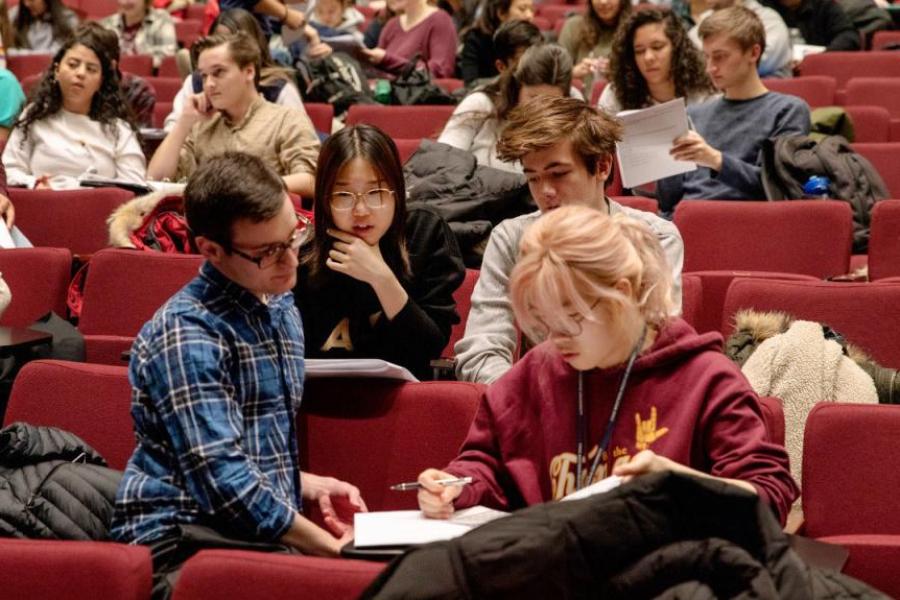
Students engage in Active Learning
… situation to improve and learn," said Glickman. At first, some professors were concerned about participating in … deliberately about what my teaching goals are and how I can best achieve them. The most helpful aspect of our work …
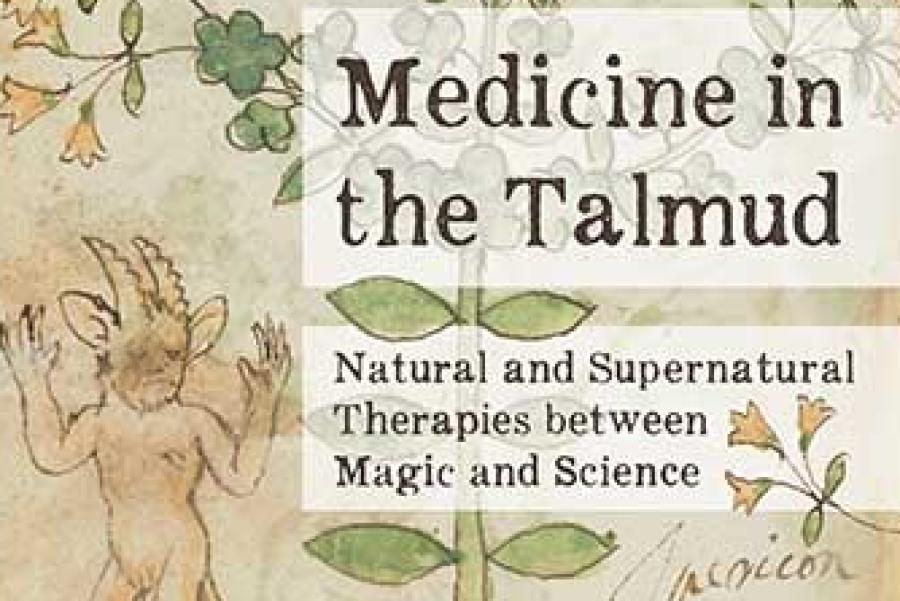
The Babylonian Talmud, a collection of rabbinic writings produced in ancient Persia, contains a great deal of medical knowledge, according to a recent book by the new director of the Jewish Studies Program.
Blaine Friedlander
Projected colors onto a 3D screen conveys a captivating intersection of the arts and sciences, at an exhibit last October at the Soil Factory.
A new Cornell study suggests that solving societal problems such as climate change could require dismantling rigid academic boundaries, so that researchers from varying disciplines could work together collaboratively.