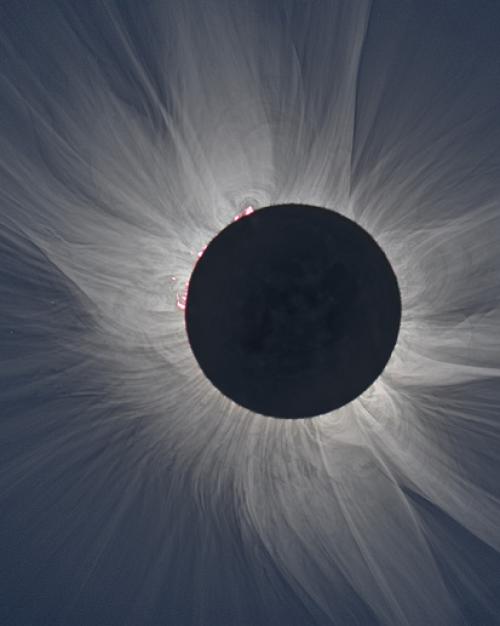
In this USA Today opinion piece, astronomy Professor Philip Nicholson writes that Monday's solar eclipse could have impacts beyond a one-day event.
"Hundreds of thousands of people will witness a once-in-a-lifetime celestial event," Nicholson writes. "What impact will it have on these multitudes? Hopefully, people witnessing this total solar eclipse will understand the value of scientific predictions. Even better, it can inspire bright young Americans to pursue careers in science — and, if we’re lucky, it can also motivate our jaded elected representatives to give scientific research the support it deserves."
Read the entire USA Today piece here.
More News from A&S


Annetta Alexandridis commemorated through installation, Oct. 31 memorial
History of Art and Visual Studies
A&S Communications

Shakespeare’s 'Twelfth Night:' Mad Love, Mad Music
Performing and Media Arts
Department of Performing & Media Arts

Pinkham’s ‘The Oak and the Larch’ wins Pushkin House Book Prize
Comparative literature
A&S Communications