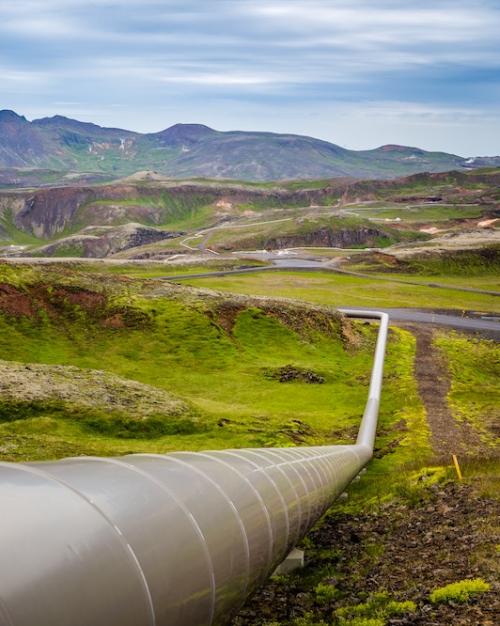
Russia has cut off gas supplies to Poland and Bulgaria after both refused to meet a demand by Moscow to pay in rubles – and is now threatening to do the same to other countries.
Cristina Florea is an assistant professor and historian of Central and Eastern Europe. She says this move reflects a similar moment in history, offering an opportunity for European economies to break away from dependency on Russian gas and oil.
Florea says: “In the short term, Russia’s decision to cut off gas supplies to Poland and Bulgaria will negatively impact Europe’s economic development. But history provides another way of looking at this.
“When the Arab-Israeli conflict broke out in 1973 and oil prices skyrocketed, the Soviet Union – by then a major supplier of oil – experienced a windfall. More than 90% of their hard currency between 1973 and 1985 came from energy exports. Europe was negatively affected in the short term; but when the situation changed a few years later, and oil prices dropped again, the Soviets still had an unreformed economy that was heavily dependent on oil – whereas the Europeans had by then restructured.
“In the long term, the crisis of 1973 turned out to be an opportunity for European economies to reform. The current crisis might do the same over the longer term. It could be an opportunity for European economies to break away from their dependency on Russian gas and oil. It will inevitably hurt Russia as well, particularly over the long term.”
For interviews contact: Becka Bowyer, cell: (607) 220-4185, rpb224@cornell.edu.
More News from A&S