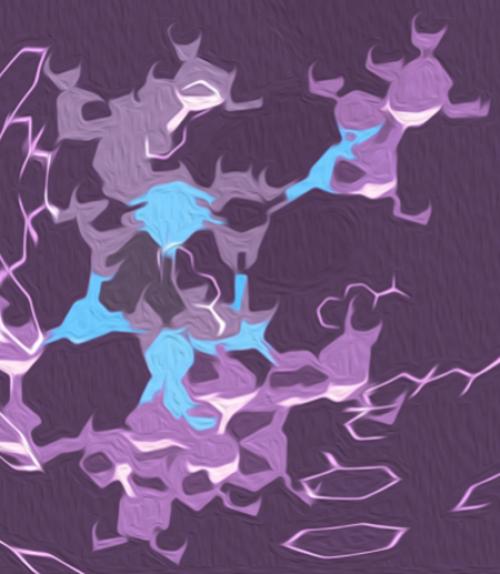
Professor of Chemistry and Chemical Biology David B Collum's lab recently received a $2.79 million grant from the National Institutes of Health to fund his research on alkali metals reactivity and selectivity. These metals play a vital role in academic and industiral laboratories' development of medical compounds.
Collum's lab emphasizes the role of non-covalent auxiliaries and focusing on two subsets of alkali metal chemistry that have proven virtually impenetrable to careful scrutiny: lithium enolates and sodium amides. The studies are focused on non-covalent auxiliaries—stoichiometrically formed mixed aggregates of lithium enolates and catalytically active triamines in organosodium chemistry.
Read the full anouncement on Cornell Research.
More News from A&S


‘The New Population Problem’ examined in Phi Beta Kappa lecture Oct. 28
Phi Beta Kappa
A&S Communications


Soprano Dawn Upshaw visits campus as A.D. White Professor-at-Large
A.D. White Professors at Large
A&S Communications