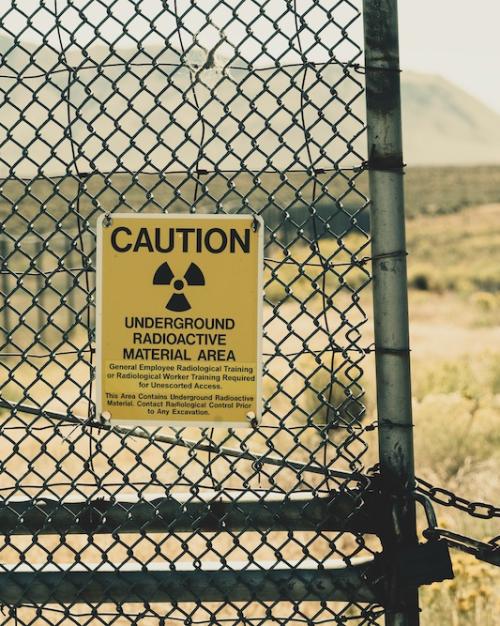
President Trump said Wednesday he had instructed the Defense Department to “immediately” start testing nuclear weapons "on an equal basis" with other nations. The last confirmed nuclear test by the United States was in 1992, when President George H.W. Bush announced a moratorium on underground nuclear testing.
David Silbey, a Cornell University professor specializing in military history, defense policy, and battlefield analysis, says the question is where and how the tests will happen.
Silbey says: “If they are underground tests in Nevada, where such tests were previously, then the dangers are relatively minimal. The Nevada test site is a well-known space, the ground absorbs the blast, and it won’t do much more damage than the thousands of tests that happened there during the Cold War. But if Trump decides he wants an above ground test for drama purposes, then we start getting into radioactive fallout spreading somewhat unpredictably.
“Above ground tests at Nevada spread fallout across parts of the western United States in the 1950s, leading to raised rates of cancer and other illnesses (and likely killing John Wayne, who filmed a movie in 1956 downwind of the nuclear test site and died of lung cancer). If they want to avoid doing an air burst in the United States, then where? Bikini Atoll is now uninhabitable because of American nuclear tests and I doubt very many countries would be excited to have US nuclear weapons going off on their territory.”
More News from A&S


Annetta Alexandridis commemorated through installation, Oct. 31 memorial
History of Art and Visual Studies
Shakespeare’s 'Twelfth Night:' Mad Love, Mad Music
Performing and Media Arts