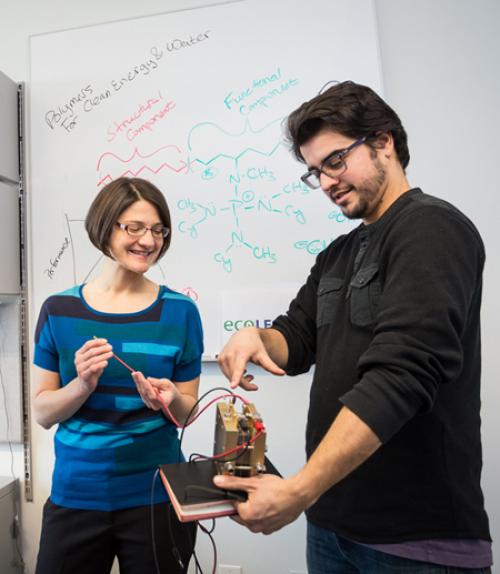
Fuel cells convert energy cleanly and efficiently, but fabrication costs are prohibitive. This Cornell Research article talks about a breakthrough polymer invented at Cornell that could change that.
The article features the work of chemistry professors Héctor D. Abruña, Geoffrey W. Coates and Francis DiSalvo and recent PhD student Gabriel G. Rodríguez-Calero, now chief executive officer of his company Ecolectro.
Read the full story here.
More News from A&S