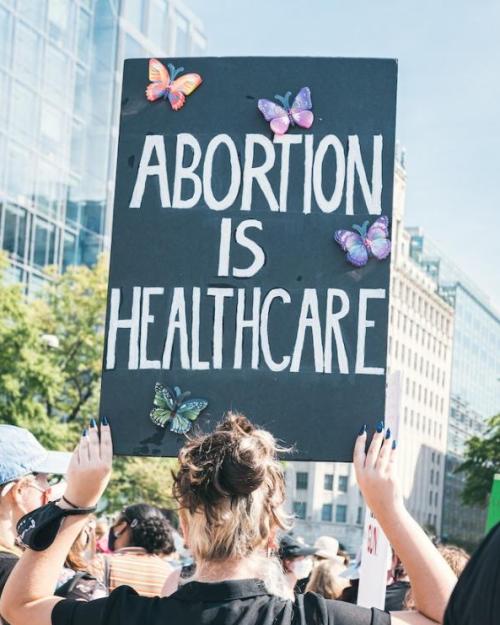
On Monday evening, a draft opinion was leaked suggesting that the U.S. Supreme Court could be poised to overturn the landmark 1973 Roe v. Wade case that legalized abortion nationwide.
Kate Manne is a professor of philosophy at Cornell University and author of the book “Down Girl: The Logic of Misogyny,” which explores the social dynamics of misogyny, even in the seemingly post-patriarchal contexts of the U.S., UK and Australia.
Manne says: “The leaked Roe decision is a heartbreaking step back for the rights of women, and anyone who can get pregnant, in America today. While this attack on reproductive rights has been ramping up for over a decade—with clinics overregulated and forced to close, the imposition of mandatory waiting periods, and so-called heartbeat laws—this is a new level of misogyny.
“And misogyny it is indeed: the attempt to police and enforce a patriarchal order, wherein women are forced to bear and birth and care for children against our will. Anti-abortion activists show little to no interest in improving maternal mortality, protecting Black lives, or regulating guns. This decision has nothing to do with protecting life: it is about controlling women. And it will cost the life and freedoms of thousands of us, even millions, if implemented.”
For interviews contact: Rachel Rhodes, cell: (585) 732-1877, rer252@cornell.edu.
More News from A&S