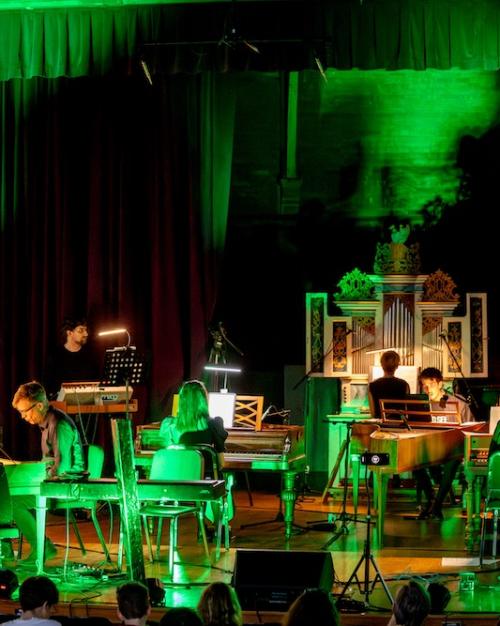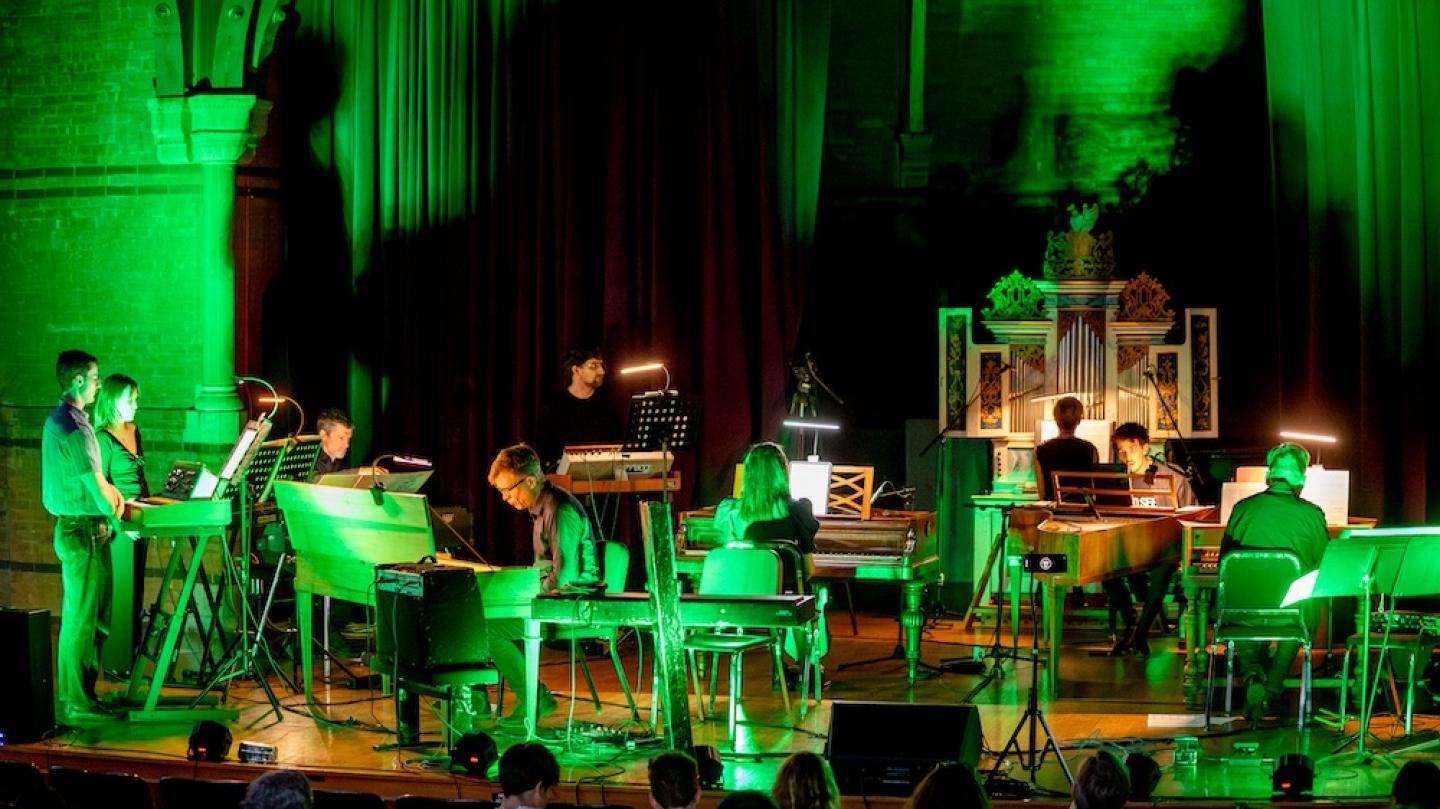
In a high-voltage sequel to last semester’s Keyboard Energies concert, Cornell faculty and graduate students unleash a genre-bending program across seventeen keyboard instruments, from the delicate whisper of the clavichord to the analog punch of the Roland Juno-60. “Keyboard Energies II: The Keyboards Strike Back” will be presented by the Cornell Department of Music and the Center for Historical Keyboards on Oct. 9 at 7:30 p.m. in Barnes Hall.
This sonic odyssey features music from baroque to techno by Alkan, Bach, Beethoven, Bizet, Couperin, Debussy, Kapustin, Mills, Orff, Pärt, Southam, Summer and more. The event is free and open to the public with no tickets required.
The Cornell Center for Historical Keyboards fosters original and imaginative approaches to the performance and study of keyboard instruments, their technological underpinnings, their intersections with other arts, and their participation in the global currents of cultural and social history. Vehicles for the exploration of the repertoires, performance traditions, and sound worlds of the past, the Center’s collection of instruments inspires new ideas, new approaches, and new music while fostering imaginative collaborations and thought-provoking confrontations.
More News from A&S


Soprano Dawn Upshaw visits campus as A.D. White Professor-at-Large
A.D. White Professors at Large
A&S Career Development gets facelift, joins new collaborations across campus
Career development