Cheryl Engelhardt ’02 was in the midst of a meditation retreat when the nominees for the 2023 Grammy Awards were scheduled to be announced. A musician and composer, she was hopeful that her album The Passenger would be a contender in the category of New Age, Ambient, or Chant Albums.
Resisting the temptation to ditch the session—as it happened, a meditation on miracles—she turned off her phone.
But just minutes before it was to start, a fellow attendee rushed up and shared the news: Engelhardt was nominated. She made a quick, ecstatic call to her mother before the lights dimmed and she and 2,000 others took their seats.
“And then I had to just be with myself for two hours,” recalls Engelhardt, who lives in New York’s Hudson Valley. “It was crazy.”
The Passenger is Engelhardt’s third foray into the new age genre, and her seventh album overall. Notably, it had a strong connection to the Grammys even before it was nominated.
Read the full story on the Cornellians website.
More News from A&S

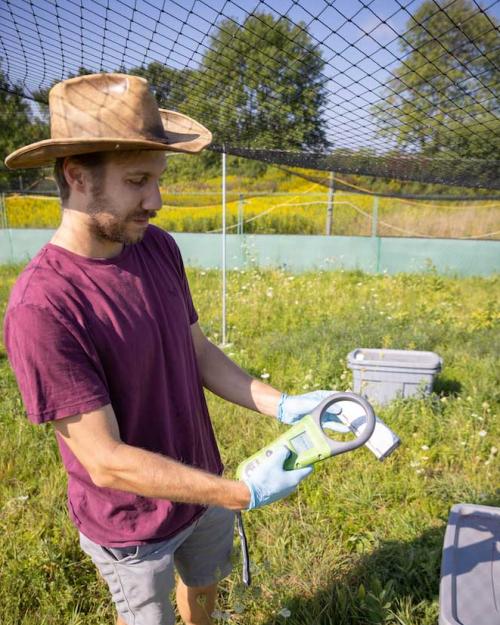
Cornell biologist named Blavatnik Award finalist for work with rewilded mice
Neurobiology and behavior
Cornell mathematicians win grants to ensure AI safety, research integrity
Mathematics