The deaths of George Floyd, Ahmaud Arbery, Breonna Taylor and Rayshard Brooks have stoked strong denunciations and calls for justice and change, writes Olúfẹ́mi Táíwò, professor and chair of the Africana Studies and Research Center, in an op-ed in the Washington Post.
"But to date, there has been very little interest in real change from the highest levels of political leadership," he writes in the piece. "Through executive order, the president has issued modest police reforms, and congressional legislation has already stalled. To create lasting change in the United States, we must do more than reform the police. We must reconcile with our history — with race and with racism. And to do that, there is no better model to guide us than South Africa’s."
Read the article in the Washington Post.
More News from A&S

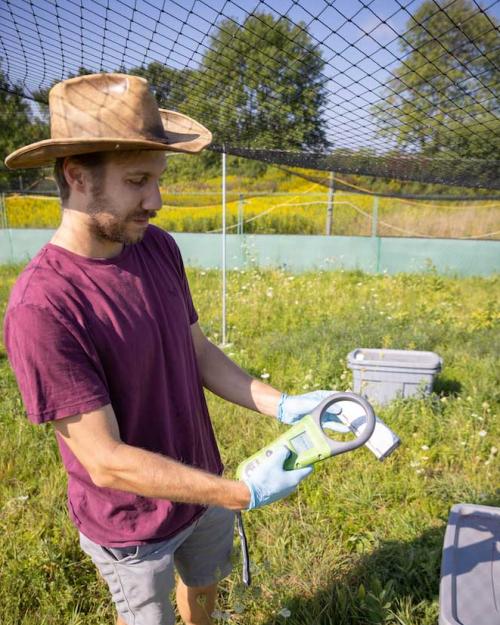
Cornell biologist named Blavatnik Award finalist for work with rewilded mice
Neurobiology and behavior
Cornell mathematicians win grants to ensure AI safety, research integrity
Mathematics