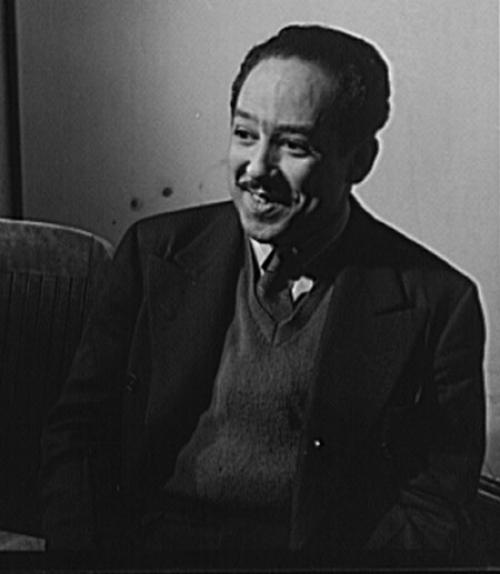
Poet Langston Hughes, courtesy Library of Congress
Joanie Mackowski, associate professor of English, writes in this Time opinion piece that our country needs to support the National Endowment for the Arts not because of its financial benefits, though that's the argument some arts organizations are encouraging their constituents to use with members of Congress.
"So, no poem, and no work of art, can be undertaken for profit: Art is not instrumental," she writes.
"So, passionate as I am about the value of the arts, I will not call my representatives to tell them about the jobs and profits produced by the art industry. And I’m a poet at a university. I don’t earn a salary for writing poetry: I earn one for teaching people how to read and write poetry — economically irrelevant activities. To do what’s economically irrelevant is a basic right: It is freedom. Some are trying to turn a profit on this, but still others want to share it."
Read the entire Time piece here.
More News from A&S

Cute robots, historical chatbots: AI in the classroom grows more sophisticated
Artificial intelligence
Society for the Humanities Fellows to Explore “Survival” at Fall Conference
Society for the Humanities