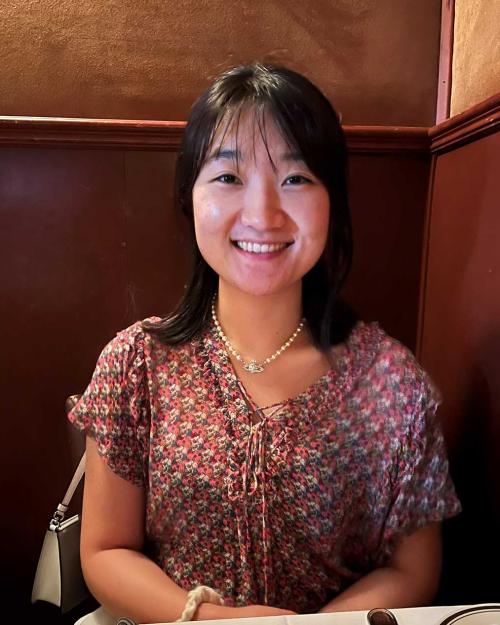
Poet and essayist Elisa Gabbert kicks off the Fall 2024 Barbara & David Zalaznick Reading Series on Sept. 19 at 5 p.m. in Hollis E. Cornell Auditorium, Goldwin Smith Hall 132. Books by the author will be available for purchase thanks to Buffalo Street Books; a book signing and reception will follow the reading.
“Elisa Gabbert's work is searching and thought-provoking, able to link desperate topics, playful and philosophical. She is an accomplished poet and essayist and writes a wildly popular ‘On Poetry’ column for The New York Times,” said Valzhyna Mort, associate professor of literatures in English and director of the Creative Writing Program in the College of Arts and Sciences (A&S). “Gabbert has managed to create a life out of reading books and meeting her would be absolutely eye-opening for our students.”
Gabbert is the author of seven collections of poetry, essays, and criticism, including “Any Person Is the Only Self,” “Normal Distance,” “The Unreality of Memory & Other Essays,” “The Word Pretty,” and “The Self Unstable.” In addition to her column in the New York Times, her work has appeared in Harper’s, The Atlantic, The Paris Review, The New York Review of Books, The Believer, The Yale Review, American Poetry Review and elsewhere. She lives in Providence, Rhode Island.
The Zalaznick Reading Series is hosted by the Department of Literatures in English and the Creative Writing Program (A&S). More information about the event is available on the University Events Calendar.
More News from A&S