A husband and father on a supernatural journey to find his missing family. A sane man locked in a mental institution where a buffalo-headed monster terrorizes patients. A down-and-out janitor who learns he’s destined to join a group of paranormal researchers.
They’re just a few of the protagonists Victor LaValle ’94, BA ’95, has created in his more than two decades as a writer.
Having gained a following among readers and critics for his ethereal horror novels, he has delved into other media—with a TV show set for 2023.
LaValle has even joined the legendary Marvel Universe, with his five-issue comic series Sabretooth: The Adversary. The gory character study of the classic X-Men villain was released in 2022 (along with the first two issues of its sequel, Sabretooth & the Exiles).
In the series, LaValle brings depth and clarity to Sabretooth—an incarcerated mutant killer-for-hire historically written off as one-dimensional—by viewing his wickedness through the lens of his lifelong imprisonment.
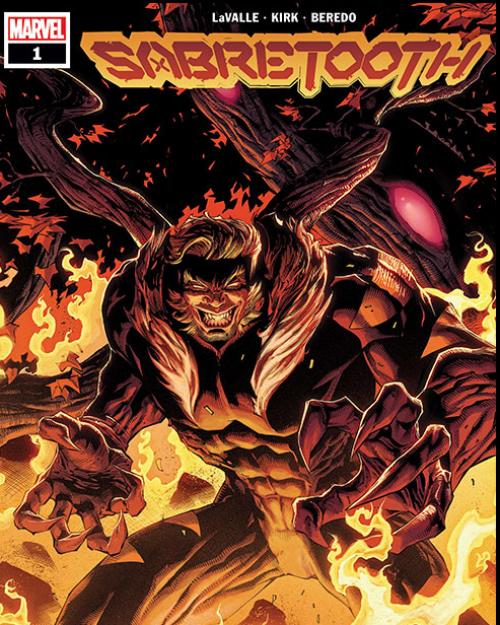
“He’s often portrayed as brutal and animalistic—and that often means stupid,” says LaValle. “Which, to me, is a sign of somebody who doesn’t know animals very well, because animals are not stupid. They’re often cunning. They can be clever.”
While penning a comic about a feral mutant may seem a departure for LaValle, Sabretooth shares some notable traits with the author’s other protagonists: they’re intelligent antiheroes forced to make morally suspect choices in order to survive.
Serge Petchenyi/Cornell University
From left, Xi Yang, PhD '10, senior lecturer of finance in the SC Johnson College of Business; Christine Ye; Christine Ye Award recipient Margaret E. Foster, doctoral candidate in communication; Cornelia Ye Award recipient Naman Agrawal, doctoral candidate in neurobiology and behavior; Cornelia Ye; and Derina Samuel, associate director of graduate student development at the Center for Teaching Innovation.
NASA, ESA, CSA, Ralf Crawford (STScI)
Artist concept of the gas giant planet WD 1856 b orbiting a white dwarf star. The planet is 7 times larger than the Earth-sized white dwarf it orbits. WD 1856 b has methane and hazes in its atmosphere, which would give it a similar color to Saturn's moon Titan. The white dwarf formed from a star that died 5 billion years ago, and has been cooling ever since, giving it an orange colour similar to the Sun.