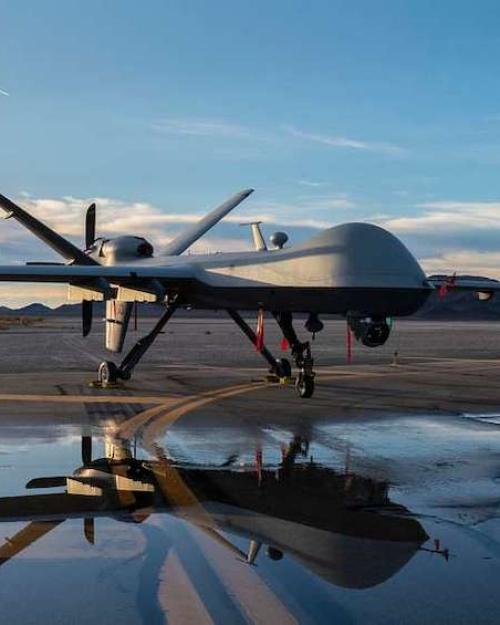
The U.S. Army has laid out plans for its largest overhaul since the end of the Cold War, with plans to equip each of its combat divisions with approximately 1,000 drones, according to a Defense Department memo released today.
Sarah Kreps, professor of government and law, and founding director of the Tech Policy Institute says the idea of supplementing or replacing heavy equipment with unmanned systems isn’t new.
Kreps says: “What’s changed is the urgency. Ukraine’s war offered a proof of concept: cheap, networked drones can disrupt expensive platforms and reshape battlefield awareness with far less risk than manned systems. The Army’s move isn’t surprising—it’s a long-overdue response. But buying 1,000 drones per division doesn’t guarantee success.
“Ukraine’s effectiveness came from improvisation, asymmetry, and deep civilian tech integration—factors that don’t map neatly onto the U.S. military. The Army can’t just replicate Ukraine. The more important story may be institutional: a $36 billion pivot signals not just what the Army is buying, but what it’s willing to cut. The real fight may be internal—between entrenched interests and organizational culture and the pressure to modernize.”
Adam Allington, cell: (231) 620-7180, aea235@cornell.edu.
More News from A&S