Jason Koski/Cornell University
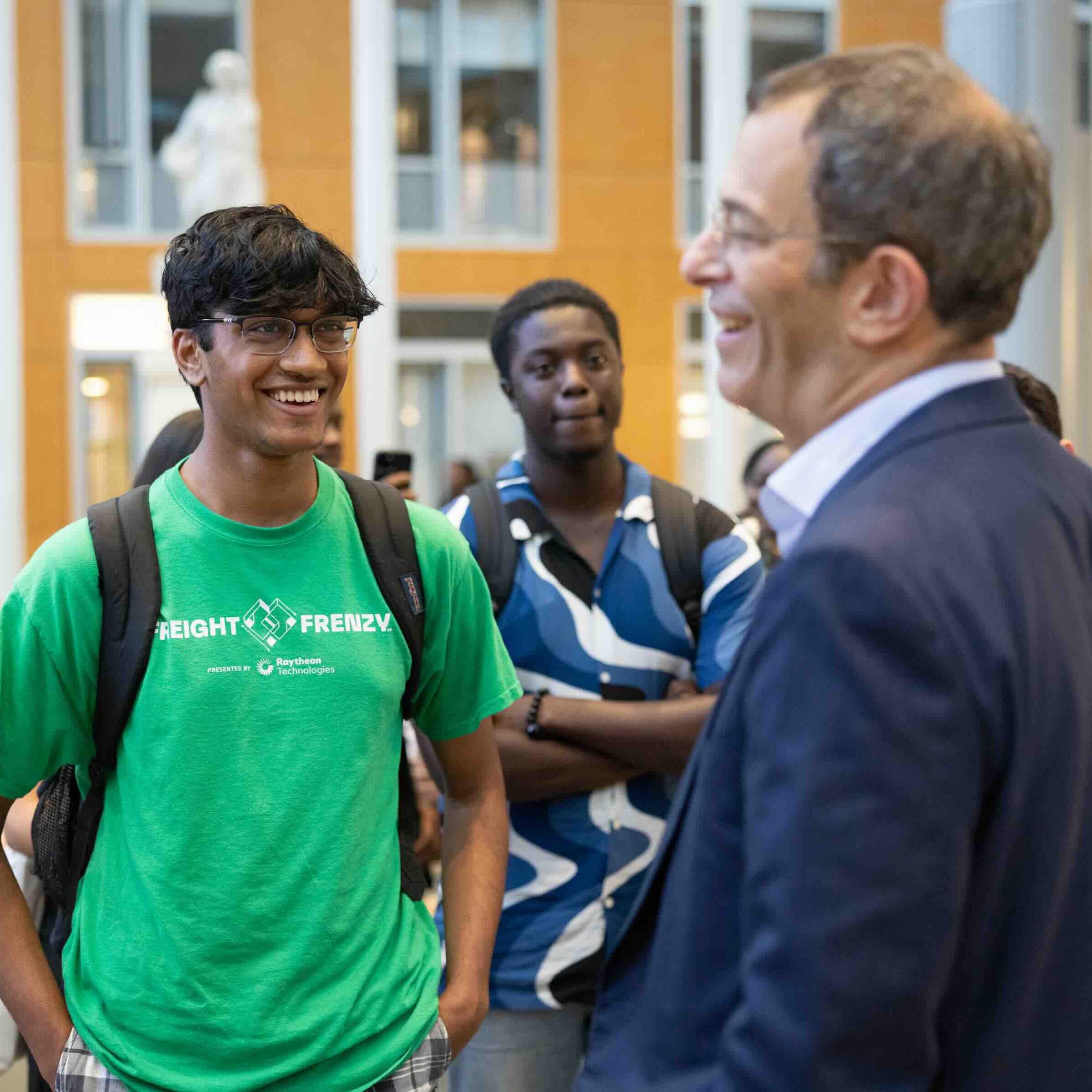
Navy veteran Tyler Parker said the Warrior-Scholar Project’s two-week academic boot camp at Cornell, which included coursework in humanities and in science, technology, engineering and math, had helped advance his goals to pursue neuroscience research.
A group of military service members and veterans spent two weeks at Cornell as part of the Warrior-Scholar Project, which helps participants build skills and navigate transitions to higher education.
Michael Goldstein/B.A.B.Y Lab/Provided
Cornell researchers designed this remote-controlled car to study the importance in early development of contingency – caregivers’ responses close in time to a baby’s behavior. Babies formed strong expectations that the car would be responsive, showing they are highly flexible in what they will learn from contingently, even including machines that lack human features.
The timing of others’ reactions to their babbling is key to how babies begin learning, Cornell developmental psychologists found – with help from a remote-controlled car.
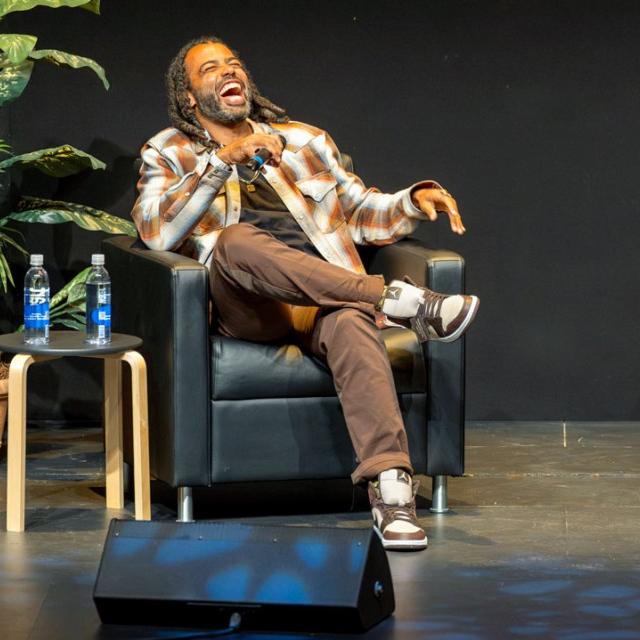
Directed by College of Arts and Sciences (A&S) faculty in psychology and philosophy, the NEH-funded institute featured presentations from many leading figures in moral psychology, which studies human thought and behavior in ethical contexts
The researchers have developed a technique to purify certain rare earth elements at room temperature without relying on the toxic and caustic compounds currently used for the task.
Can an increase in knowledge ever be a bad thing? Yes, says economics professor Kaushik Basu and a colleague – when people use it to act in their own self-interest rather than in the best interests of the larger group.