Expansion of the Child Tax Credit gives researchers a unique example of a universally praised social good that disproportionately benefited some populations.
Cornell researchers have discovered a way for ammonia oxidizing archaea, one of the most abundant types of microorganisms on Earth, to produce nitrous oxide, a potent and long-lasting greenhouse gas.
Provided
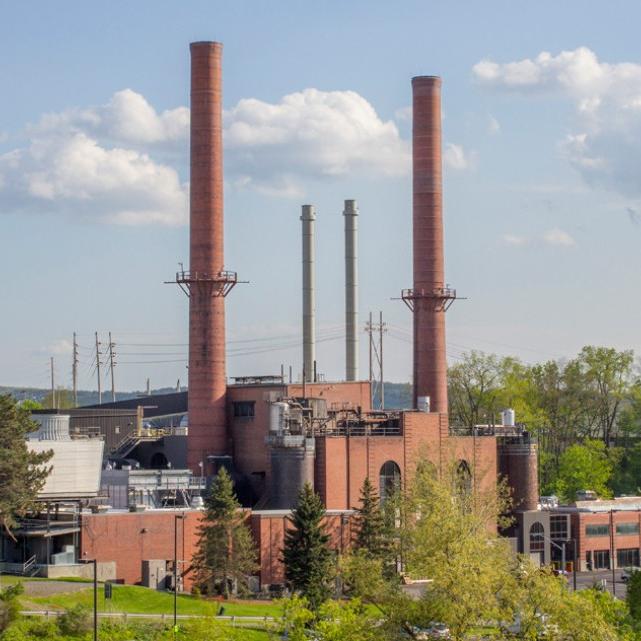
Cornell's Combined Heat and Power Plant will provide researchers access to real-world flue gas emissions as home to the CAPTURE-Lab, an experimental facility that will explore carbon capture and industrial decarbonization.
Cornell researchers Greeshma Gadikota, Phil Milner and Tobias Hanrath discuss their carbon capture research, including a new experimental CAPTURE-Lab at Cornell’s Combined Heat and Power Plant.
With the U.S. Supreme Court upholding a federal law that would effectively ban TikTok in the U.S., Sarah Kreps, professor of government and law, discusses possible paths forward for the popular app.
Fulginiti’s novel, “Il dolore degli altri” (“The Pain of Others”), was chosen from among 114 competing manuscripts and will be published soon by Italian publisher ExCogita.
Nianpo Su, doctoral candidate in linguistics, studies how syntactic principles determine the structure of sentences in human languages.
Weill Cornell Medicine
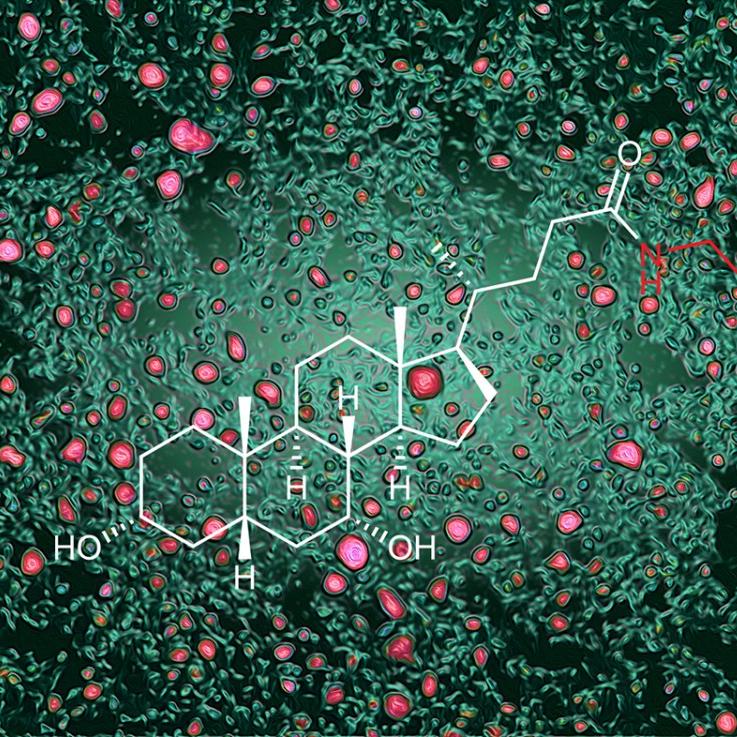
Lipid accumulation in a murine model of fatty liver disease, visualized by color-enhanced lipid droplets (pink) in liver tissue (green). Superimposed chemical structure of a newly discovered bile acid conjugate.
Beneficial gut microbes and the body work together to fine-tune fat metabolism and cholesterol levels, according to a new preclinical study by investigators from Weill Cornell Medicine and the Boyce Thompson Institute at Cornell’s Ithaca campus.