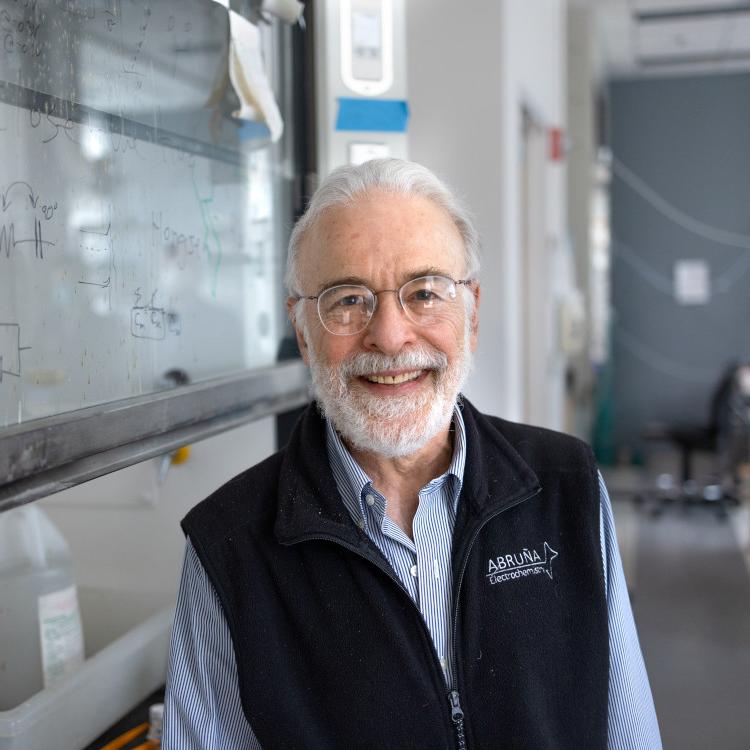
The biennial prize, announced May 15, “recognizes an individual for exceptional and original research in a selected area of chemistry that has advanced the field in a major way.”
Ryan Young/Cornell University
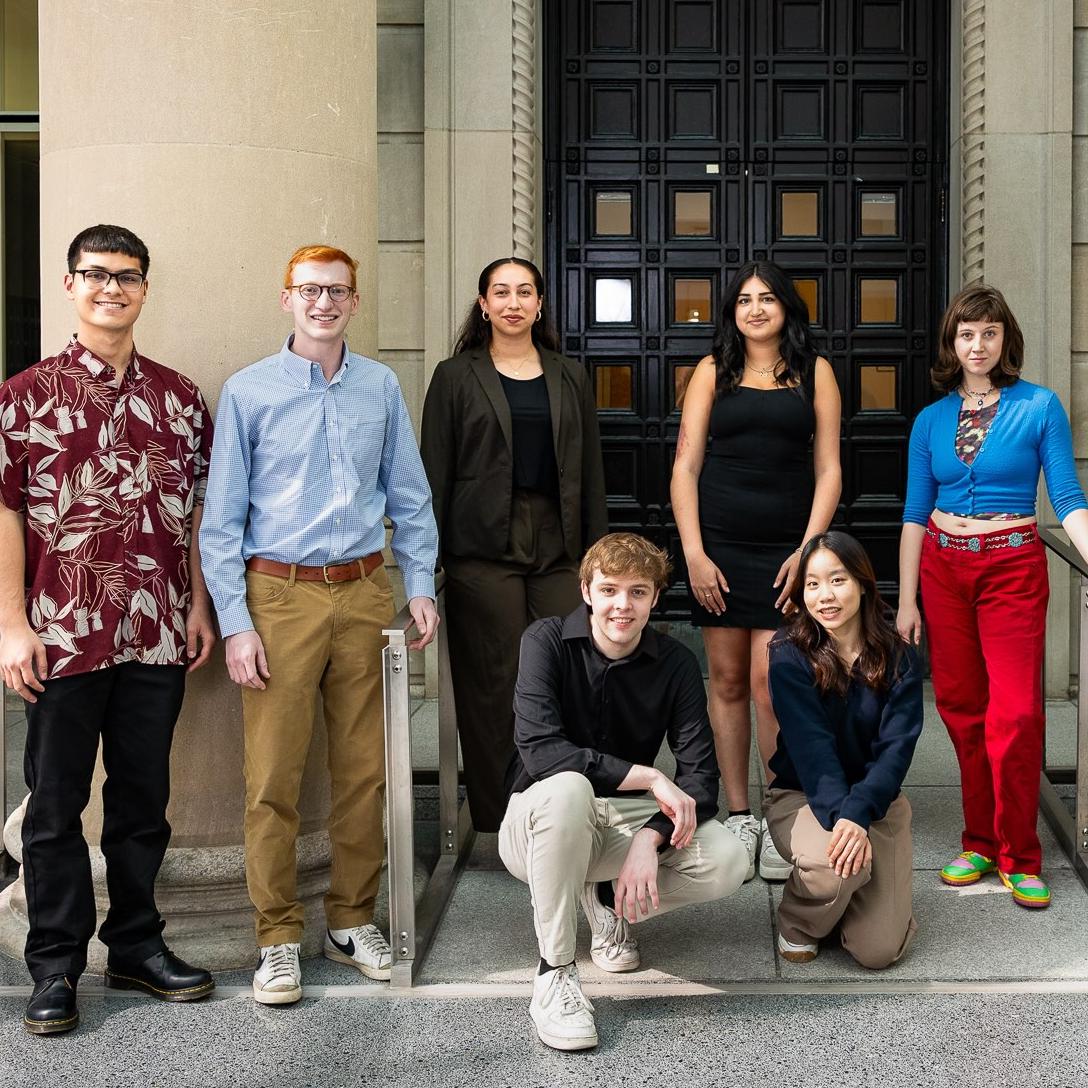
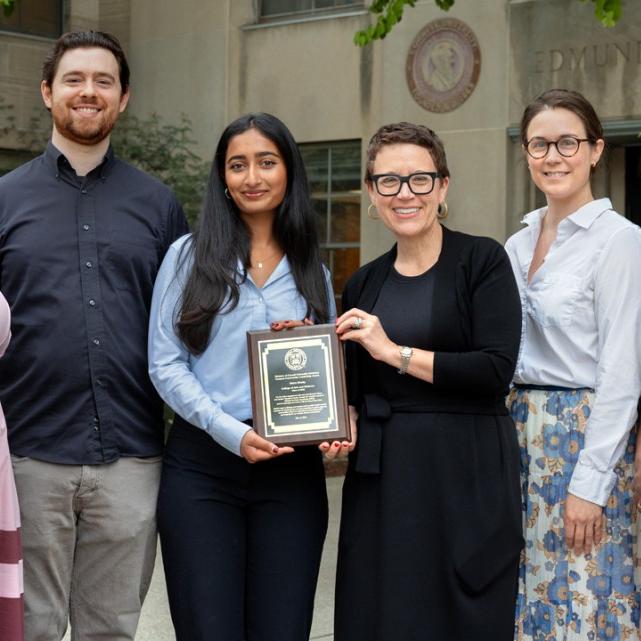
Campus Community Leadership Award winner Netra Shetty ’25 (center-left) poses with (from left) Marla Love, the Robert W. and Elizabeth C. Staley Dean of Students; Alec Brown, program manager of the Hunter R. Rawlings III Cornell Presidential Research Scholars Program; Monica Yant Kinney, interim vice president for university relations; Sarah Bartlett, volunteer and outreach manager at the Ithaca Free Clinic; and Taili Mugambee, lead program coordinator of Ultimate Reentry Opportunity, outside of Day Hall
For her work supporting the Ithaca community and people struggling with incarceration and drug addiction across New York, Netra Shetty ’25 earned the 2025 University Relations Campus Community Leadership Award.
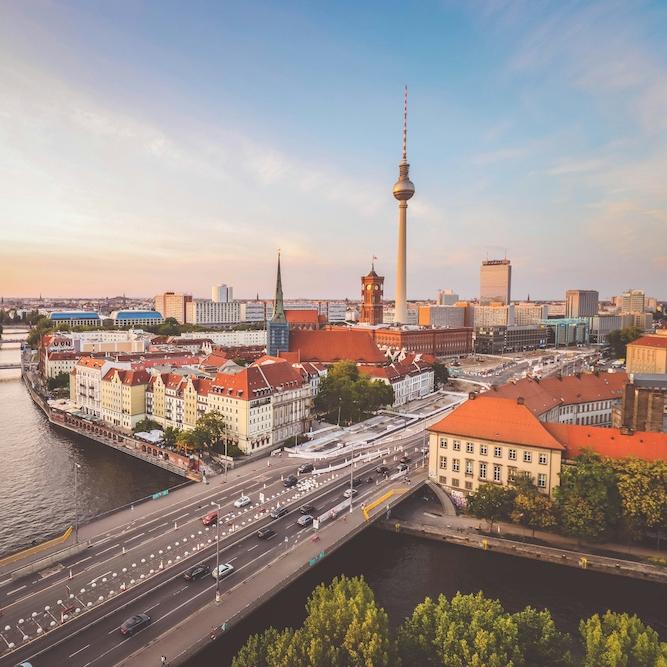
The highly competitive Berlin Prize is awarded annually to U.S.-based scholars, writers, composers and artists who represent the highest standards of excellence in their fields.
Jason Koski/Cornell University
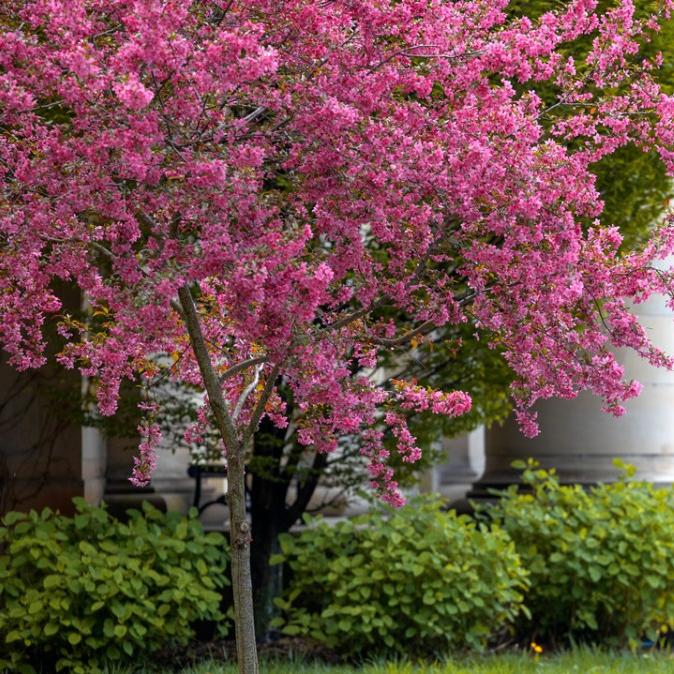
Spring flowers blossom outside Goldwin Smith Hall.
Among those being recognized for exceptional teaching and mentorship this year are faculty members Begüm Adalet, Claudia Verhoeven, and Marcelo Aguiar.
The Class of 2025 leaves campus at a time of global uncertainty, but they say they feel prepared for the challenges that will come their way. In this feature, we celebrate their Cornell journeys.
Inspired by the mechanisms plants use to store carbon, researchers found that sunlight can power the capture and release of carbon dioxide, which could vastly lower costs and net emissions.
The nomination of Dr. Casey Means is the latest example of the administration’s disregard for scientific expertise and evidence-based policy, says a Cornell University expert.
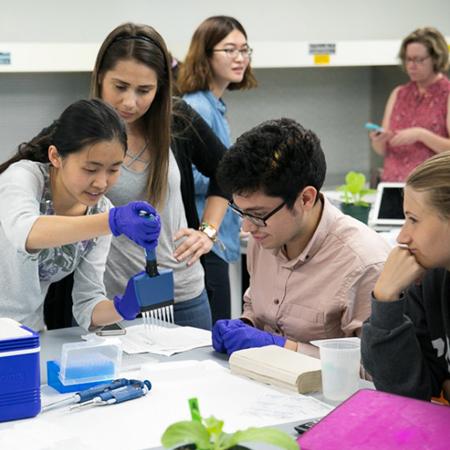
Cornell undergraduate students diagnosing wine grape diseases in a plant pathology laboratory in Chile in 2018.
"Students across the country are going to miss out on innovative improvements to their science education – innovations that would have critically prepared them for the competitive 21st century technological workforce."
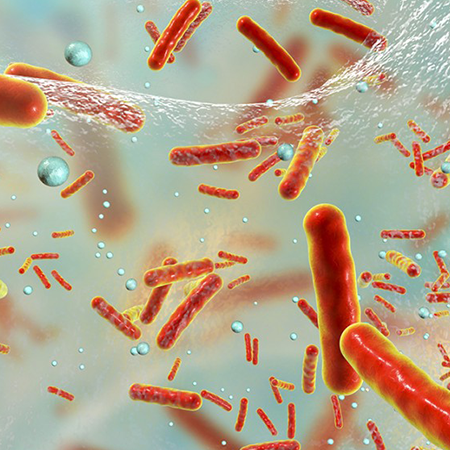
A new computational method developed by researchers at Cornell sheds light on how going dormant – sometimes for multiple generations – has affected the evolution of the tuberculosis bacterium and other organisms that can temporarily drop out of the gene pool.
Cornell University File Photo
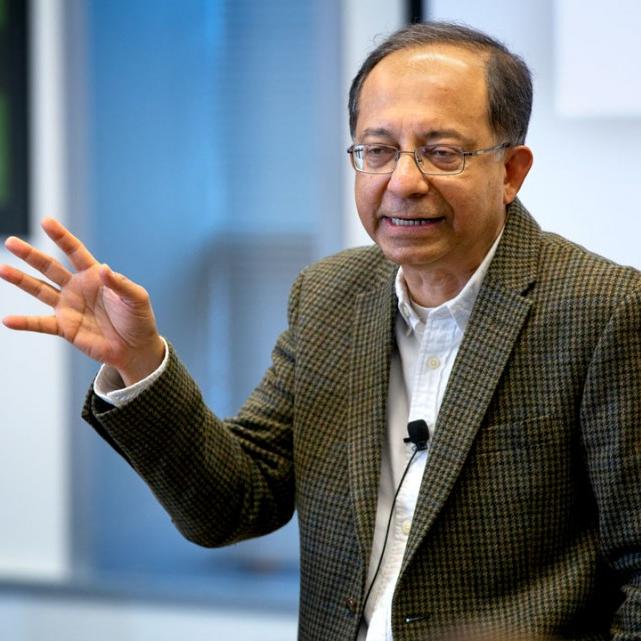
Kaushik Basu at a 2016 Chats in the Stacks talk about his book “An Economist in the Real World.”
The historic selection of Cardinal Robert Prevost, a Chicago-born U.S. citizen and naturalized Peruvian, reflects Catholicism's evolving global identity.
Simon Wheeler
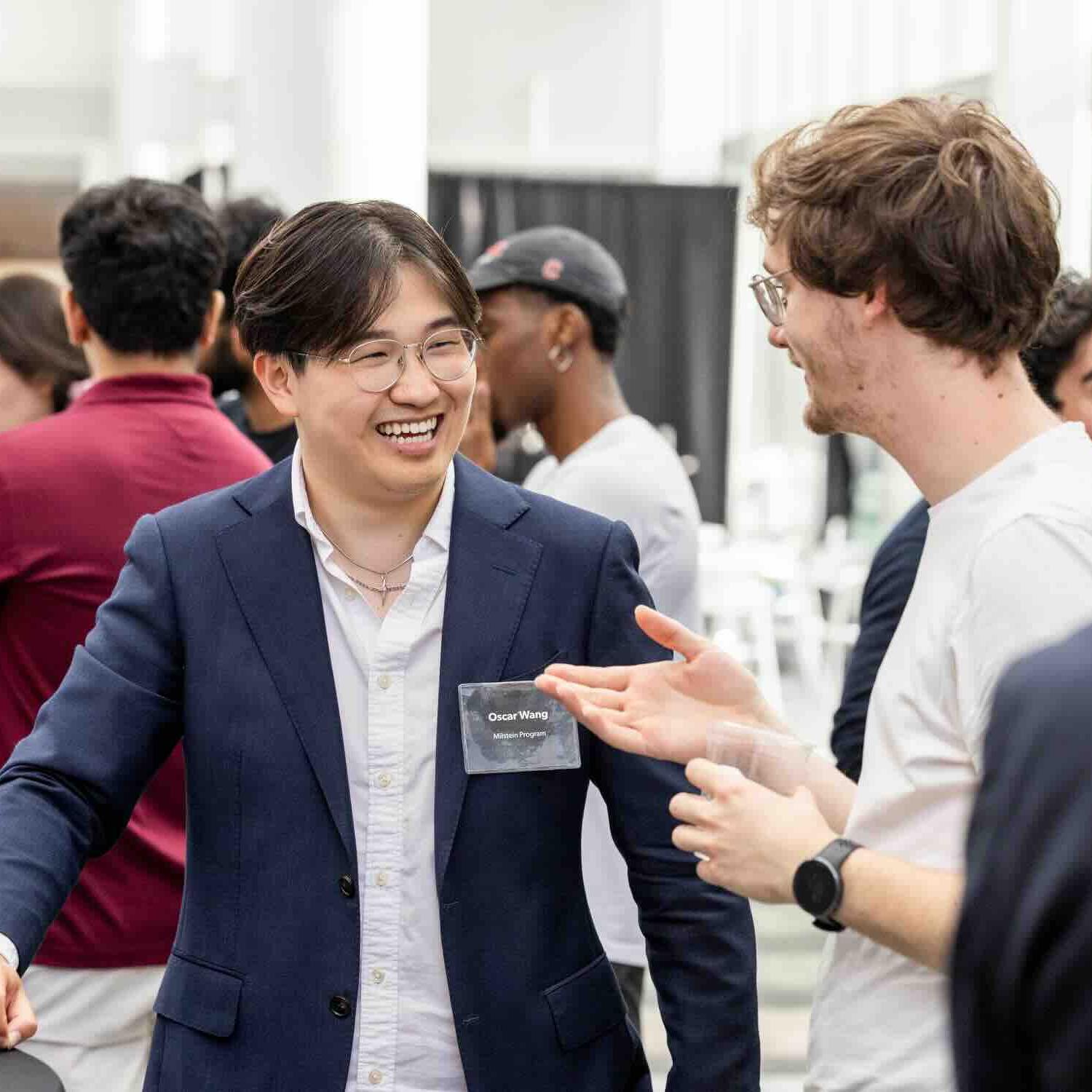
Milstein student Oscar Wang, left, explains his project to another student at the Milstein Expo.
… program funding and mentorship. Simon Wheeler Participants visit displays during the Milstein Expo 2025. Sean McInnis … of things like running our own diffusion model.” Visiting Milstein Professor Andrew Piper said he was struck …
Dan Rosenberg/Provided
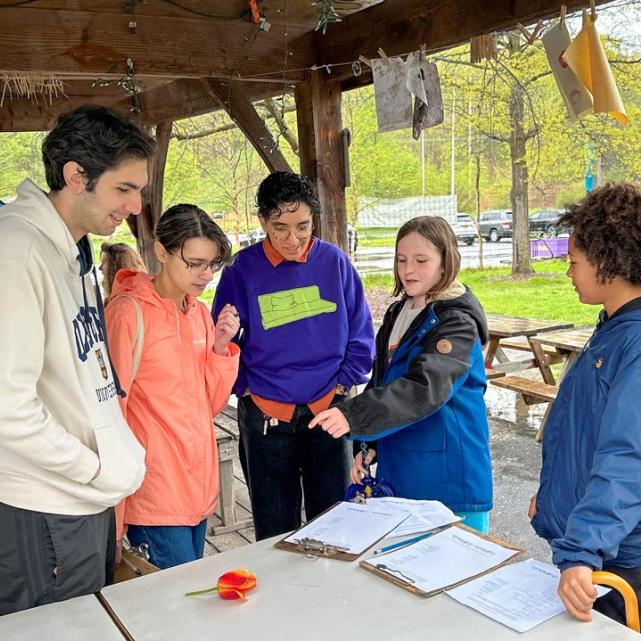
From left, MFA students Gerardo Iglesias, Sarah Iqbal and Aishvarya Arora listen to observations by two young poets at the Ithaca Children’s Garden.
A crew of Cornell creative writers lent their time and experience to guide young poets during Nature Poetry in the Garden, an event held May 3 at the Ithaca Children’s Garden.
Ryan Young/Cornell University
Semiconductors are at the core of the economy and national security. Their importance makes them a target. Sarah Kreps, director of the Tech Policy Institute in the Cornell Jeb E. Brooks School of Public Policy, discusses how Cornell is helping to keep the semiconductor supply chain safe.