John Tomasi, the inaugural president of Heterodox Academy, will speak on “The University at a Crossroads – and How We Can Build Cultures of Open Inquiry” as part of a series of events organized by the Provost’s Committee on the Future of the American University.
The two-day event features performances of Farrenc’s chamber music on historical instruments, a reimagining of the salon culture in collaboration with the Johnson Museum of Art, and scholarly presentations.
The $5 million gift from Joseph Lubeck ’78 offers the Jewish Studies Program foundational support for the future.
Photo illustration by Ashley Osburn/Cornell University
A student chronicled her life in the ’50s and ’60s—then shared those memories with her daughter and granddaughter
A student chronicled her life in the ’50s and ’60s—then shared those memories with her daughter and granddaughter – who's now an A&S alumna.
Simon Wheeler for Cornell University
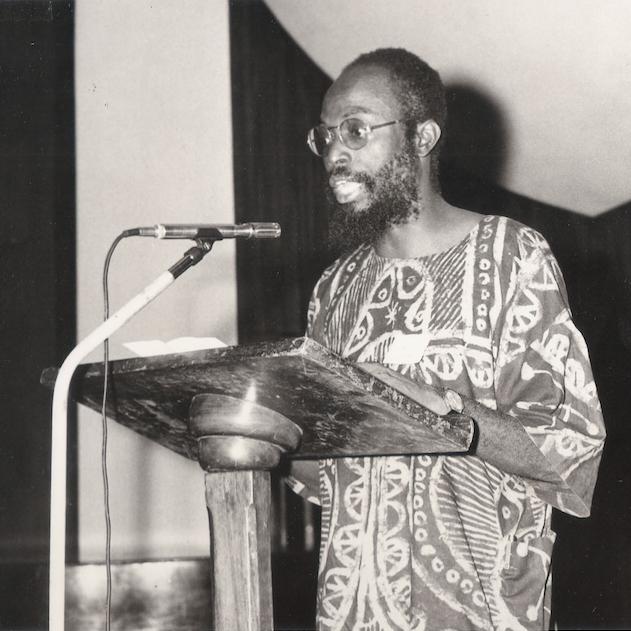
Muna Ndulo, right, speaks as Chris Barrett, left, and moderator Paul Kaiser listen at the Einaudi Center’s Lund Critical Debate.
Author and historian Kevin Baker will examine the paradox at the heart of modern American sports: while there are more games and sports than ever before, access has become increasingly limited and costly.
Professor, Professor of Marketing and Management Communications, S.C. Johnson Graduate School of Management, and Professor of Information Science, A.S. Bowers College of Computing and Information Science
Psychology
Watt Family Photographs/McNeese State University
“Woods workers” posing with a large crane near Carson, Louisiana, 1920.
Klarman Fellow Kendall Artz wants to push beyond the assumption – one replicated by scholars – that company rosters and state records hold all there is to know about racial expression.
Seiberg, professor in the School of Natural Sciences at the Institute for Advanced Study, will explore string theory and other aspects of scientific progress.
Stacey Langwick, associate professor of anthropology in the College of Arts & Sciences, will speak on "Healing in a Toxic World: Reimagining the Times and Spaces of the Therapeutic."
Provided
Bryce Brownfield, Ph.D. ’23 (left) and Cameron Kitzinger ’22 work in their lab for Forage Evolution, which was recently admitted into Cornell’s Center for Life Science Ventures incubator.
A new study explores how people feel about sharing their good deeds.
Sunwoo Lee/Provided
A neural implant developed at Cornell rests on a grain of salt. About 300 microns long and 70 microns wide, it’s the smallest neural implant capable of wirelessly transmitting brain activity data.
Cornell researchers and collaborators have developed a neural implant so small that it can rest on a grain of salt, yet it can wirelessly transmit brain activity data in a living animal for more than a year.