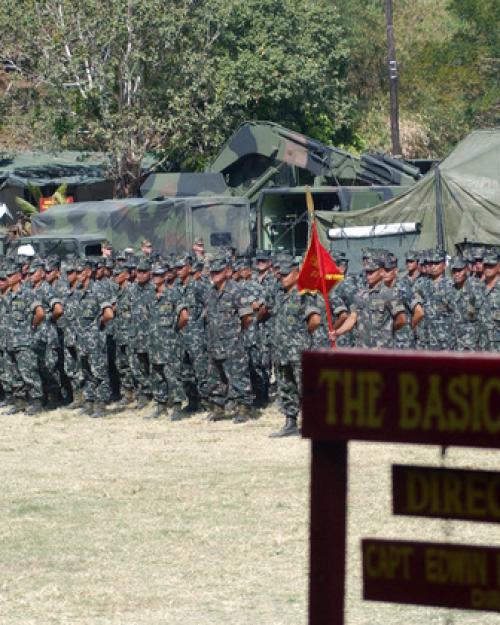
The United States is expanding its presence in Southeast Asia with an agreement to establish four bases in the Philippines, as part of an Enhanced Defense Cooperation Agreement (EDCA). The move is widely viewed as a means to deter China’s influence in the region.
Tom Pepinsky is a professor of government and director of the Southeast Asia Program at Cornell University. Pepinsky says the deal is a major development in U.S. Indo-Pacific strategy: “The recent military agreement between the Biden and Marcos administrations, which establishes new military presence in the Philippine islands for the first time in three decades, is a major development in the U.S. Indo-Pacific strategy.
“It also has significant implications for Philippine politics, representing a return to closer government ties with a former colonial power and treaty ally.
“The administration of Ferdinand Marcos Jr. looks to establish itself as a reliable partner of the United States, representing a break from his predecessor Rodrigo Duterte whose uneven political style and repressive domestic policies created significant headaches for U.S. foreign policy.”
For interviews contact Adam Allington, cell: 231-620-7180, adam.allington@cornell.edu.
More News from A&S