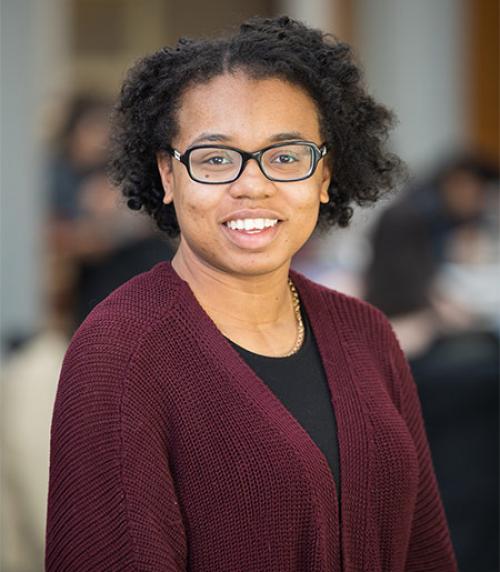
Rebecca Joseph
Africana Studies & American Studies
Brooklyn, NY
Why did you choose Cornell?
I chose Cornell because of the vast opportunities available for an undergraduate student. I was always interested in becoming an American studies and Africana studies double major and Cornell offered a lot of courses that I was particularly interested in, such as Popular Culture in the United States and American Political Thought from Madison to Malcolm X.
What is your main extracurricular activity — why is it important to you?
The extracurricular activity that has been most meaningful to me as a Cornell student is the Black Ivy Pre-Law Society. Black Ivy’s mission to empower Black pre-law students resonated with me, prompting me to apply in Spring 2017. My time as secretary and now president of Black Ivy has truly taught me what it takes to be a leader of an organization that is meant to empower those like me.
What have you accomplished as a Cornell student that you are most proud of, either inside the classroom or otherwise?
My proudest accomplishment has been my ability to learn to ask for help when I need it. I learned that receiving criticism is instrumental for anyone’s improvement, regardless whether it is good or bad. That criticism has allowed me to improve every aspect of myself.
More News from A&S

Jazz master Chucho Valdés birthday celebration opens concert series Oct. 23
Music