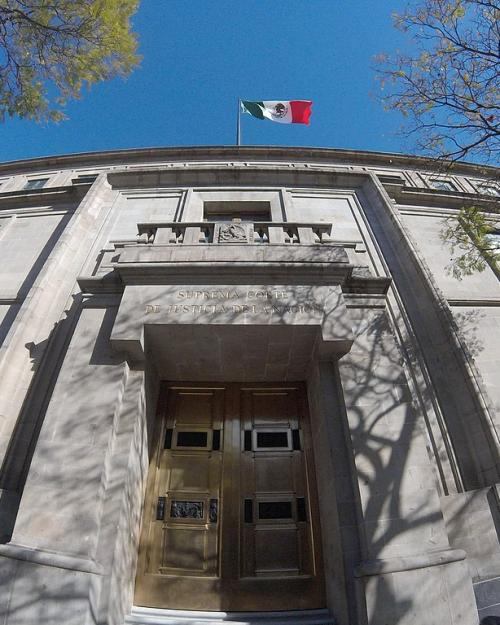
Mexico is putting relations with the United States and Canadian embassies “on pause” after the two countries voiced concerns over President Andrés Manuel López Obrador’s sweeping plans to overhaul the judiciary in ways that critics claim could undermine the independence of the courts.
Gustavo Flores-Macias is a professor of government at Cornell University and an expert in Latin American politics. With close to a super majority in both chambers of Congress, he says the Mexican government's reform is likely to receive enough support in the legislature to pass.
Flores-Macías says: “The reform seeks to elect the country's judges, including Supreme Court Justices by popular vote, arguing that the change will make the judiciary more responsive to constituents instead of special interests and will contribute to reducing pervasive corruption.
“This represents a high stakes gamble, as a potential downside of the reform is that inexperienced judges may reach the bench through party machines rather than merit. The ‘pause’ of relations with the U.S. embassy is not an official diplomatic term, but rather a way for the Mexican government to send a strong message to the U.S. State Department without asking the U.S. ambassador to leave.”
For interviews contact Adam Allington, cell (231) 620-7180, adam.allington@cornell.edu.
More News from A&S

Annetta Alexandridis commemorated through installation, Oct. 31 memorial
History of Art and Visual Studies
Shakespeare’s 'Twelfth Night:' Mad Love, Mad Music
Performing and Media Arts
Pinkham’s ‘The Oak and the Larch’ wins Pushkin House Book Prize
Comparative literature