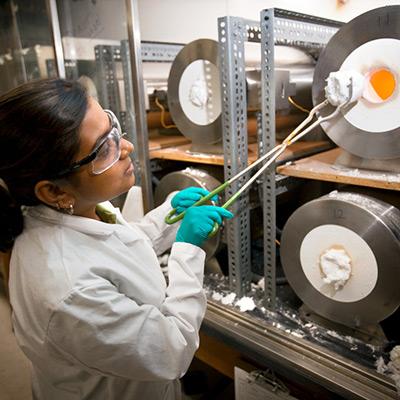
As a chemistry major, you’ll learn logical thinking and creative problem solving and can either dive deep following a traditional curriculum or pursue a flexible program that may be ideal for those with alternative career goals. The department’s research areas include inorganic, materials, organic, analytical and physical chemistry, as well as chemical biology.
Requirements
Want to start right away? Here are some basic requirements for students wanting to major in chemistry. Keep in mind this isn’t the complete list of formal requirements — that list can be found on the Courses of Study page.
Earning the chemistry degree involves completing 60 credits of required courses:
- Core courses cover:
- Introductory Chemistry (combined lecture and laboratory),
- Organic Chemistry (lecture and one core laboratory course),
- Inorganic Chemistry (lecture course),
- Physical Chemistry (lecture and one core laboratory course),
- Calculus (lecture), and
- Physics (combined lecture and laboratory);
- Upper-level laboratory courses; and
- Upper-level electives in chemistry, chemical biology, and related areas
Sample classes
- Entrepreneurship in Chemical Enterprise
- Introduction to Quantum Chemistry
- Information Literacy for the Physical Scientist
- Chemistry of Natural Products: Combinatorial Chemistry
Outcomes
Click here for detailed reports on career outcomes for individual majors. If you would like more information or need accessible versions of any of these documents, please contact us.