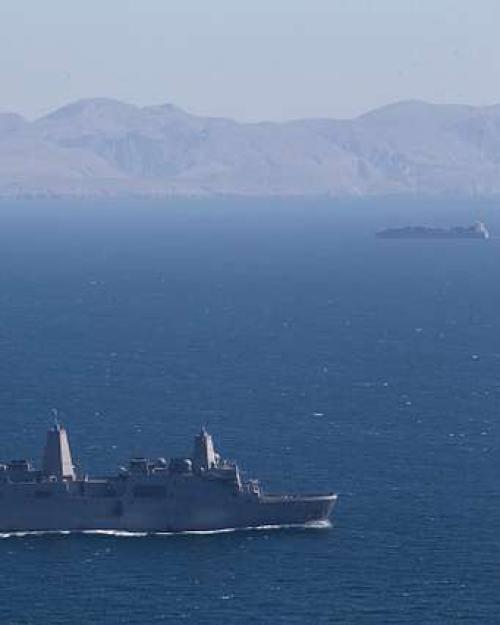
President Trump’s request that China help secure the Strait of Hormuz has gone unanswered, with Beijing instead calling for an end to hostilities with Iran and Washington confirming that Trump will not travel to China for trade talks.
Allen Carlson, associate professor of government at Cornell University and an expert on Chinese foreign policy, says China sees the crisis as U.S.-made and has little reason to help.
Carlson says: “Trump’s request that Xi provide support for breaking this partial blockade has fallen on deaf ears in Beijing. While both Trump and Xi have an interest in seeing a quick end to the conflict with Iran, they do not see eye to eye on either the necessity of the war, or on how to end it.
“Rather than acting, Beijing is content for now to remain on the sidelines of the conflict, watching intently to see which way the wind is blowing and whether the war will leave the United States stronger or weaker. At the same time, the oil clock for China ticks louder with each day that the Gulf oil disruption continues. The outstanding question for Xi and Trump is whether time is more on the side of China or the U.S.
“It was unclear even before the conflict ignited whether Beijing and Washington would be able to find common ground on the trade and security issues that divide them. After the bombing started, the prospects for a productive summit grew even dimmer.”
More News from A&S

Cornell mathematicians win grants to ensure AI safety, research integrity
Mathematics
Jazz master Chucho Valdés birthday celebration opens concert series Oct. 23
Music