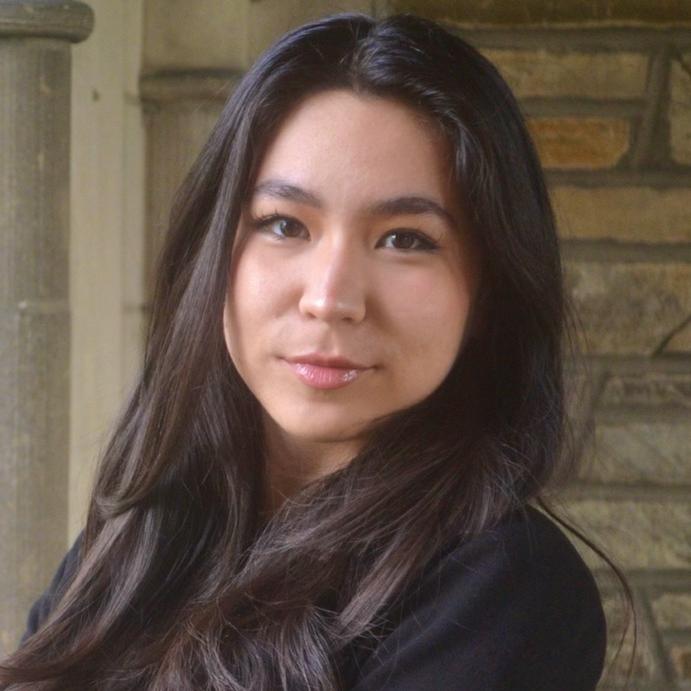
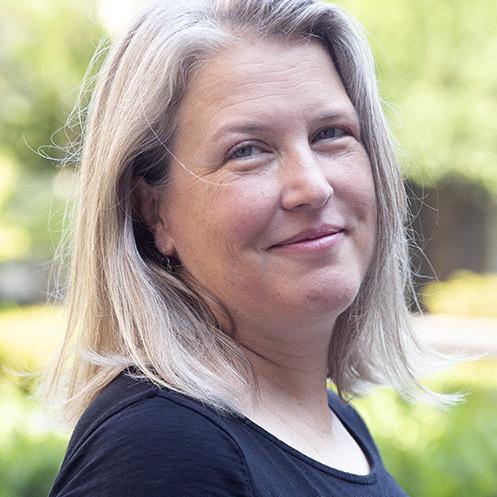
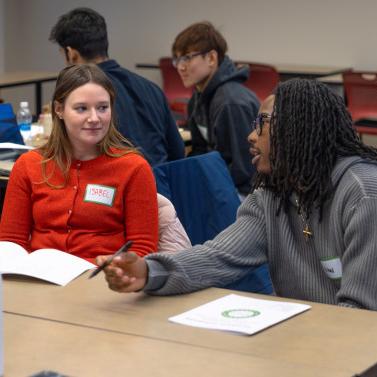
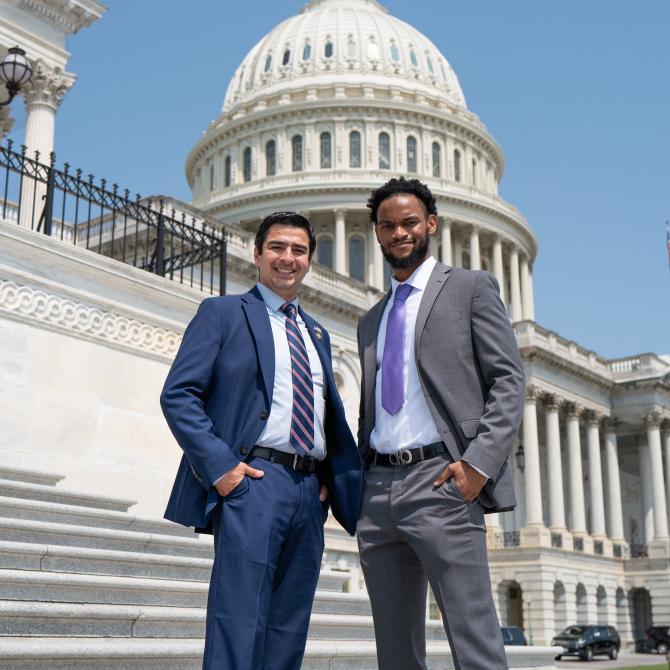
Zilala Mamat ’26, government major in Cornell's College of Arts and Sciences, is among three recipients of 2026 Robinson-Appel Humanitarian Awards from the Einhorn Center for Community Engagement. Mamat advocates for Uyghurs and will develop a digital archive.
Brad Ramshaw, associate professor of physics in Cornell's College of Arts and Sciences, led a team measuring the movement of soundwaves rather than the flow of heat in Majorana fermions. The team discovered the thermal Hall effect in these particles was caused by chiral phonons.
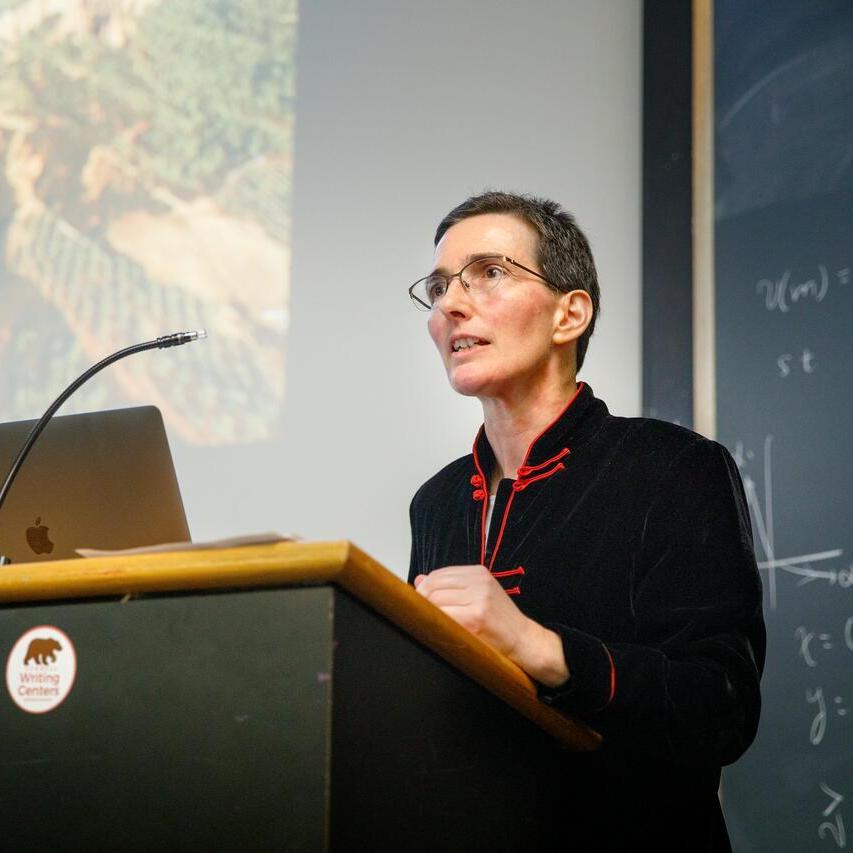
Cornell College of Arts and Sciences professors Cathy Caruth and Francesca Molinari are among four Cornell faculty, including Cornell President Michael Kotlikoff, elected in 2026 to the American Academy of Arts and Sciences for their excellence and leadership. The academy announced 252 new members April 22.
Provided
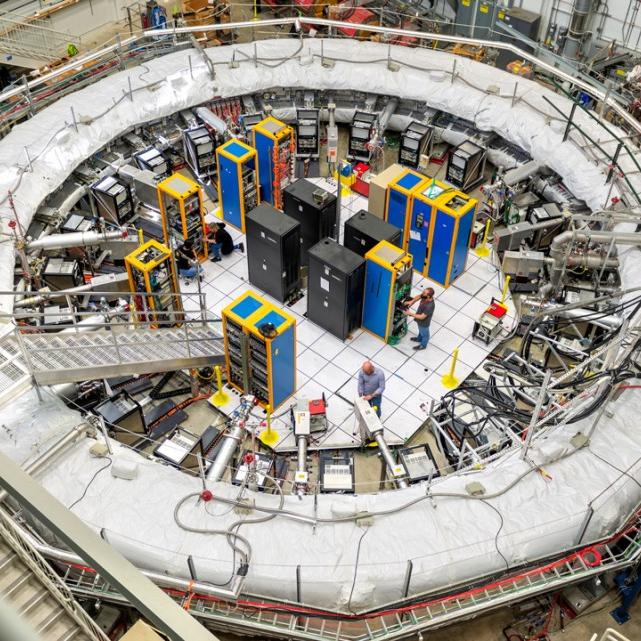
The muon g-2 ring sits in its detector hall amidst electronics racks, the muon beamline and other equipment at the Fermi National Accelerator Laboratory.
Lawrence Gibbons, professor of physics in Cornell's College of Arts and Sciences, is among muon g-2 researchers awarded the 2026 Breakthrough Prize in Fundamental Physics. Working with Fermilab, Gibbons led measurements of a particle called the muon with implications for understanding the subatomic world.
Kate A. Manne, professor of philosophy in Cornell's College of Arts and Sciences, is one of two Cornell faculty members named 2026 fellows by the John Simon Guggenheim Memorial Foundation. Manne's research focuses on moral, feminist and social philosophy.
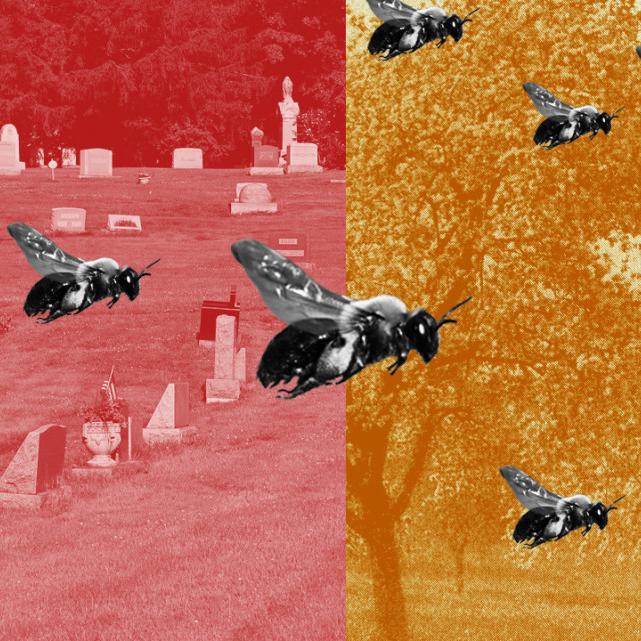
Research by Steve Hoge '24, an alumnus of Cornell's College of Arts and Sciences, reveals that a cemetery in Ithaca, New York is home to one of the largest and oldest recorded aggregations of ground nesting bees in the world with an estimated 5.5 million individual bees. The published April 13 in the journal Apidologie.
Cornell University file photo
Annetta Alexandridis
Annetta Alexandridis, classical archaeologist and art historian in Cornell’s College of Arts and Sciences, died April 13. Known for her hands-on approach, she was associate director of the Harvard-Cornell Exploration of Ancient Sardis, Türkiye and co-curated the Cornell Plaster Cast Collection.
College of Arts and Sciences researchers are on a Cornell team receiving a $250,000 seed grant for AI moonshot restoring trust online. Backed by the Laude Institute, the Cornell team could secure $10 million to build transparent, verifiable AI auditing tools for public discourse.
Alexandra Bayer, Cornell University
The Fred Young Submillimeter Telescope on the summit of Cerro Chajnantor, Chile.
Cornell University celebrates April 9 inauguration of Fred Young Submillimeter Telescope in Chile. President Michael Kotlikoff marked milestone enabling wide-field submillimeter surveys to study dark energy, early universe conditions, and galaxy evolution.
Cornell University alumnus Fred Rubinstein ’52, LLB ’55 endowed a government professorship to strengthen civic engagement. The Susan August Rubinstein Professorship honors his late wife while supporting teaching and public participation in the College of Arts & Sciences.
The first phase of Cornell University’s upcoming reaccreditation process with Middle States Commission on Higher Education is underway, with the naming of a steering committee that includes several College of Arts and Sciences faculty members and an invitation to the community to provide input.
Provided
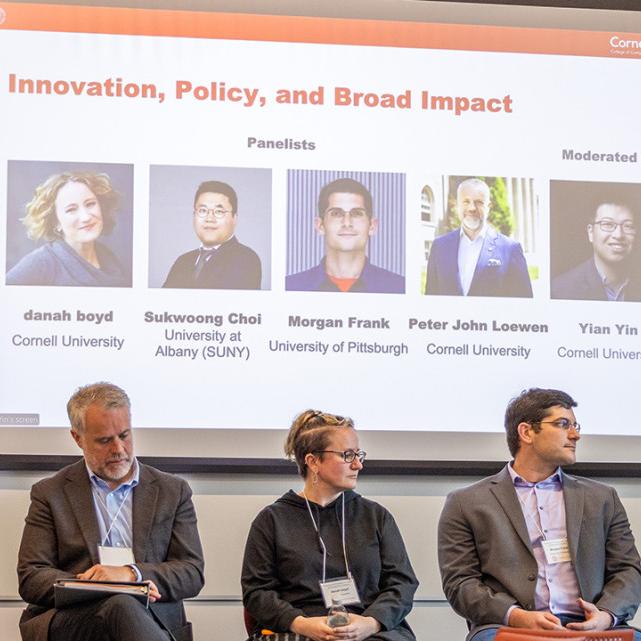
As part of the Assessing and Imagining the Impact of Generative AI on Science Symposium, Yian Yin, Peter Loewen, danah boyd, Morgan Frank and Sukwoong Choi (r-l) field questions on AI innovation and policy during a March 5 panel discussion.
A Cornell symposium examined generative AI’s impact on science, bringing experts together to debate productivity, governance, equity and public trust at Cornell University. The College of Arts & Sciences co-sponsored the event and college dean Peter Loewen participated.
Laila Milevski/Cornell University
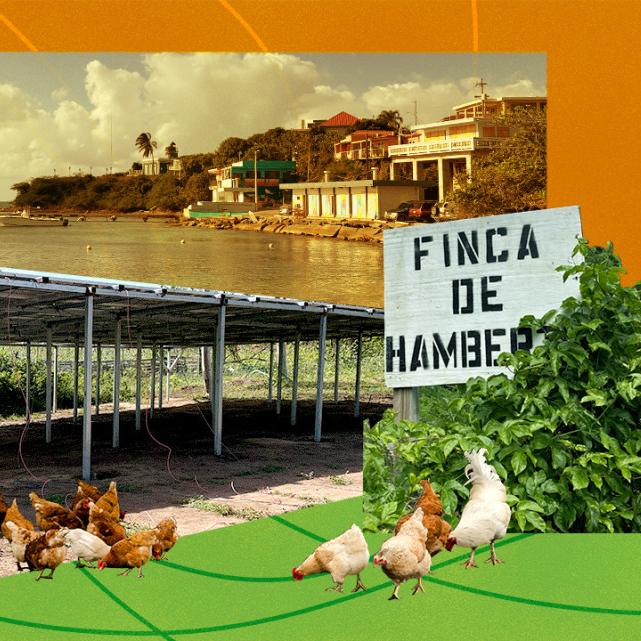
Finca de Hamberto, Edgar Oscar Ruiz's farm and resilience center on the island Vieques
A collaboration with Cornell is bringing relief to Vieques, a Puerto Rican island that still has unreliable power nine years after Hurricane Maria. A solar-powered battery that operates independently of the main island’s grid is the first installment of a project led by Héctor Abruña, chemistry professor in Cornell's College of Arts and Sciences – still to come is a green-hydrogen fuel cell system.
Kathy Hovis/College of Arts and Sciences
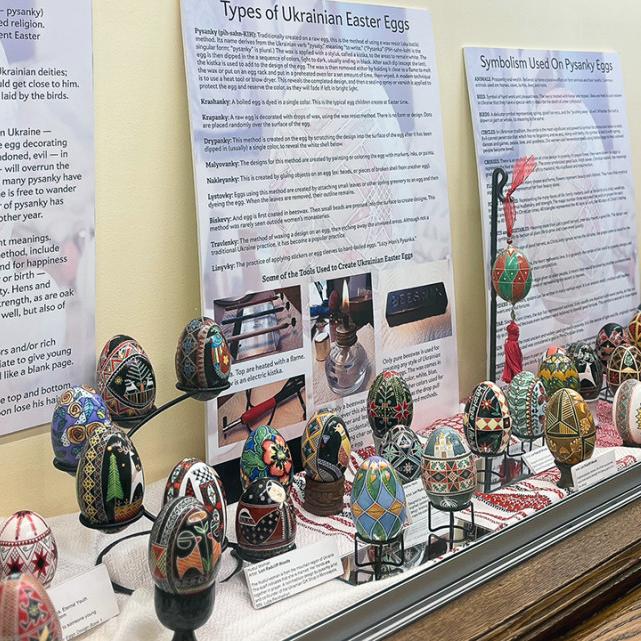
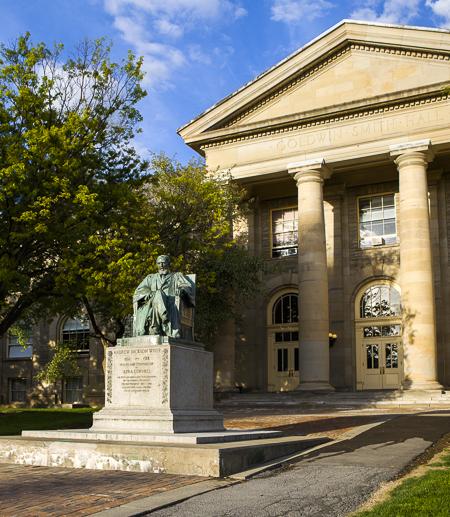
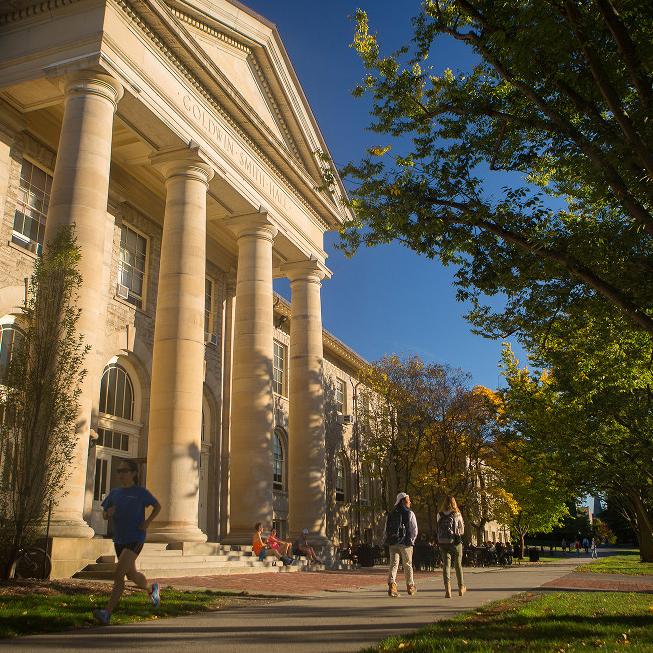
An exhibit of Ukrainian Easter eggs on display in Goldwin Smith Hall
Ukrainian Easter eggs, or pysanky, are on display in Goldwin Smith Hall in Cornell’s College of Arts and Sciences through the end of the spring 2026 semester. The exhibit, displaying work by staff member Lori Radcliff-Woods, is one of several new initiatives Cornell’s Ukrainian Program is undertaking to bring the culture, language and history of Ukraine to the Cornell community.
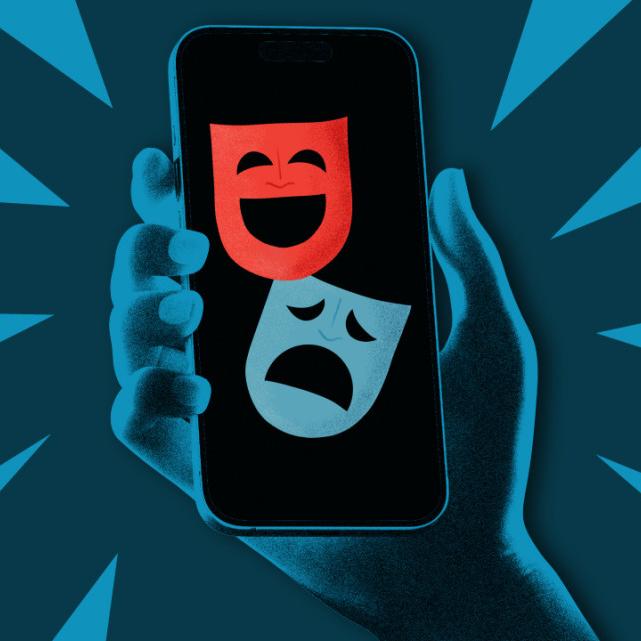
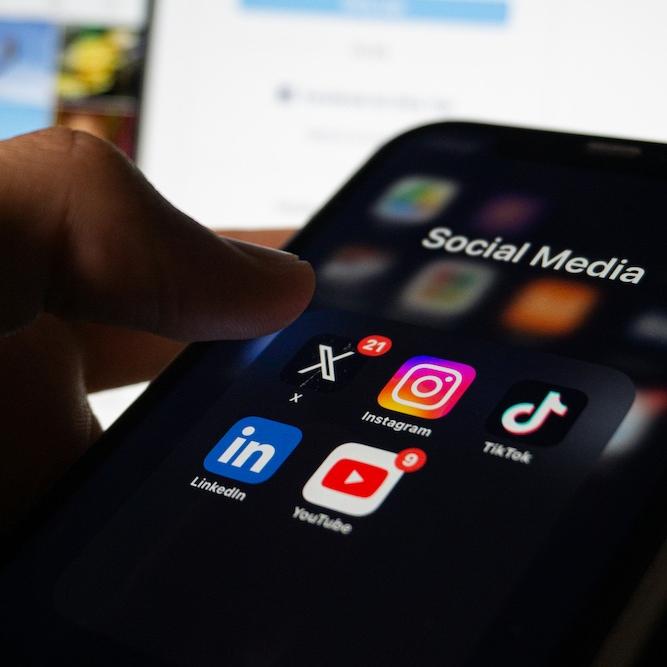
Emotional posts rarely persuade online audiences, Cornell University research finds. Experiments by College of Arts & Sciences scholar Talbot Andrews and collaborators revealed that news and social media audiences view emotional climate change messages as inauthentic, even among allies.
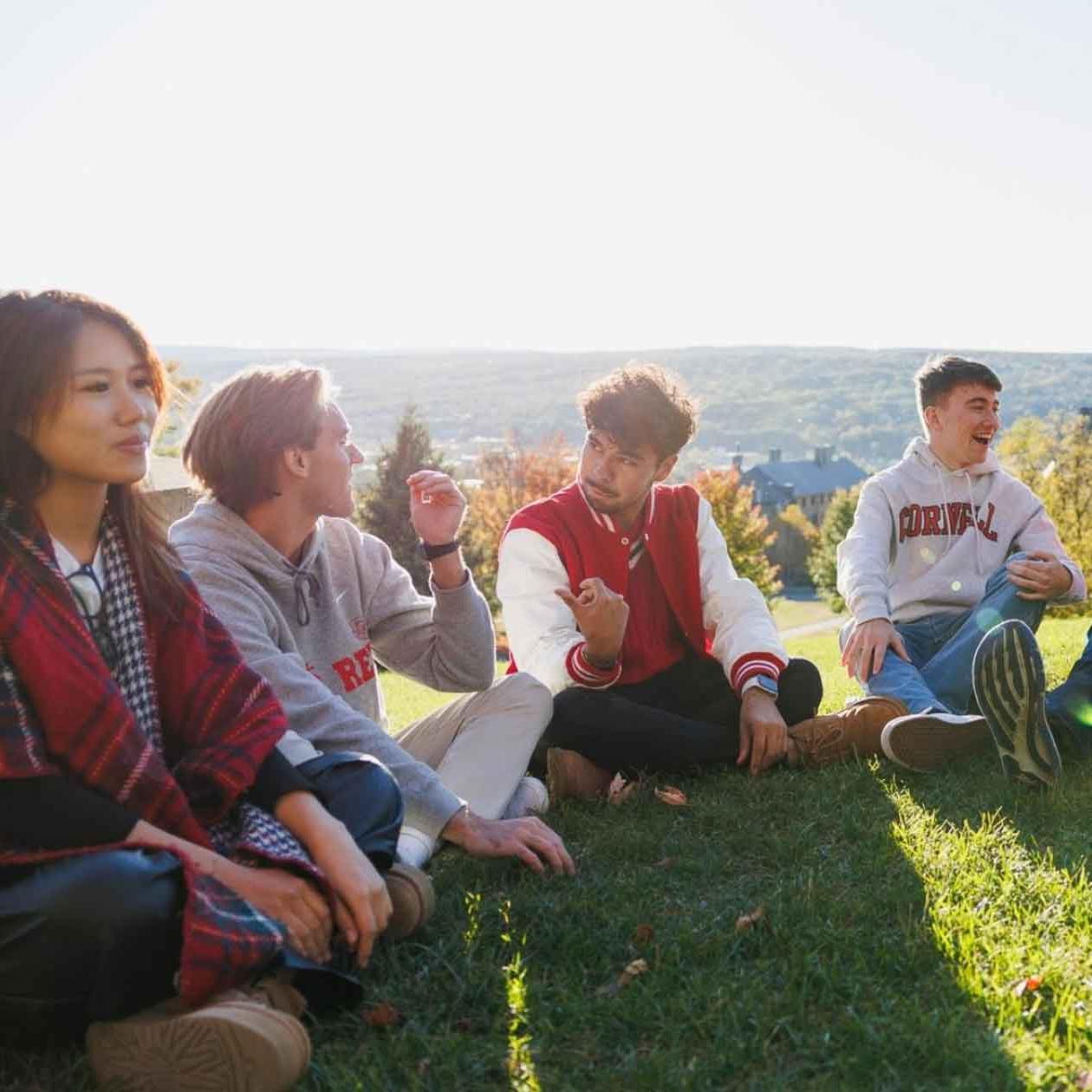
Cornell admits the Class of 2030 emphasizing real-world impact, enrolling 5,776 students from 102 countries.
At Cornell University, the diverse cohort reflects the land-grant mission and applied learning goals across multiple colleges.
The Center for Racial Justice and Equitable Futures at Cornell University has named 5 faculty fellows to its inaugural cohort, including Alexander Livingston and Isabel M. Perera – faculty members in government in Cornell's College of Arts and Sciences. They will receive support and funding from the Center to pursue innovative projects.
Provided
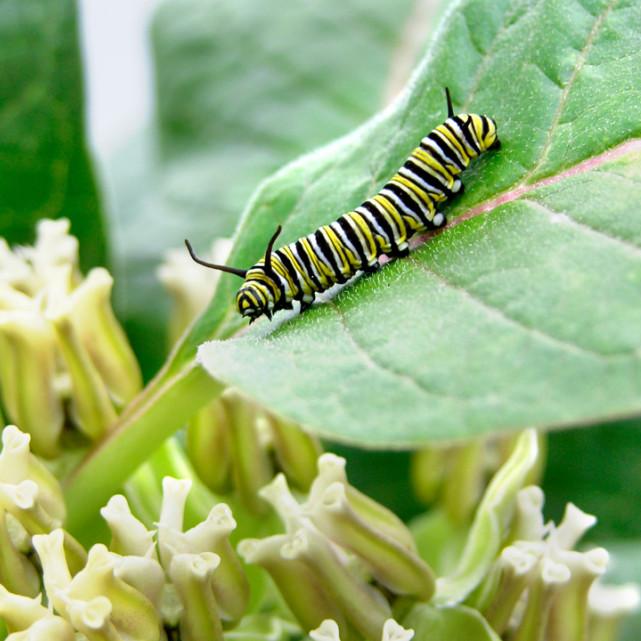
Cornell researchers have uncovered a new strategy milkweed uses to fight monarchs: upgrading the structure of its toxins.
Milkweed evolves upgraded toxins to defeat monarch resistance, a Cornell University study finds, by adding a small structural element containing nitrogen and sulfur. Chemistry researchers from the College of Arts and Sciences helped model how the upgraded toxins bind to enzymes in the monarch’s cells.
Emily Bernhardt, Ph.D. ‘01, the James B. Duke Professor of Biogeochemistry at Duke University, will join Cornell as the Francis J. DiSalvo Director of the Cornell Atkinson Center for Sustainability on Sept. 1. Bernhardt earned a Ph.D. in the Department of Ecology and Evolutionary Biology.
Provided
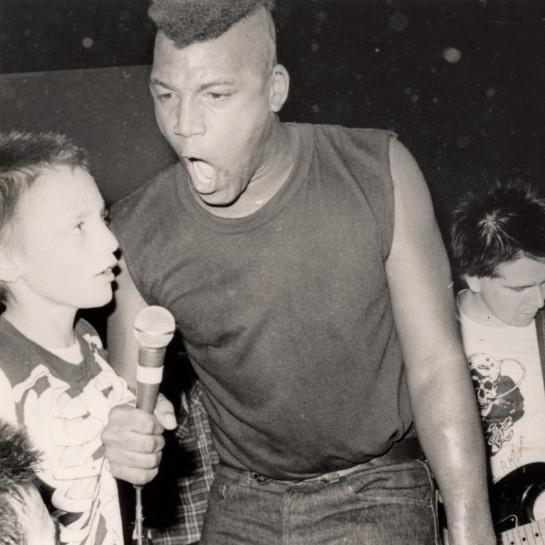
Orlando Xavier performs with the Berkeley hardcore band Special Forces.
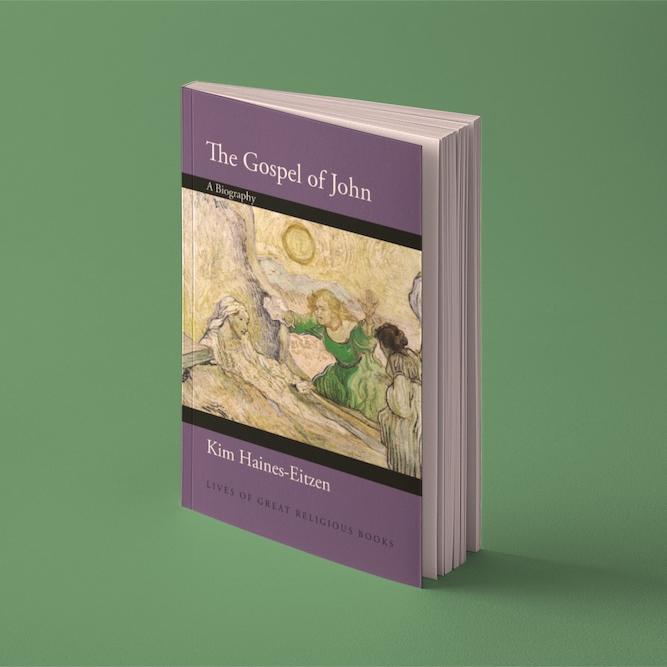
A new book by Judith Peraino, professor of music in Cornell's College of Arts and Sciences, explores the outsider spirit of punk music and culture. "We're Having Much More Fun: Punk Archives for the Present from CBGB to Gilman and Beyond" draws upon Cornell University Library’s archive of punk-related material.
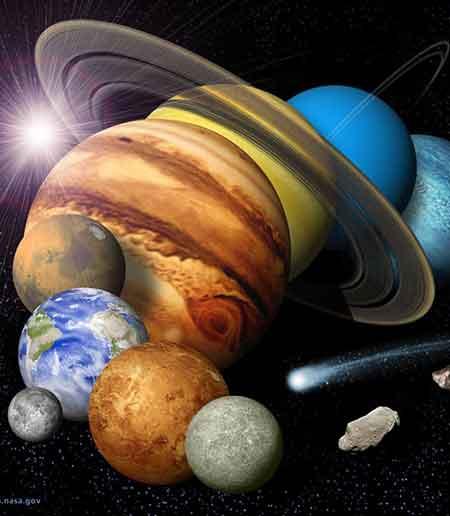
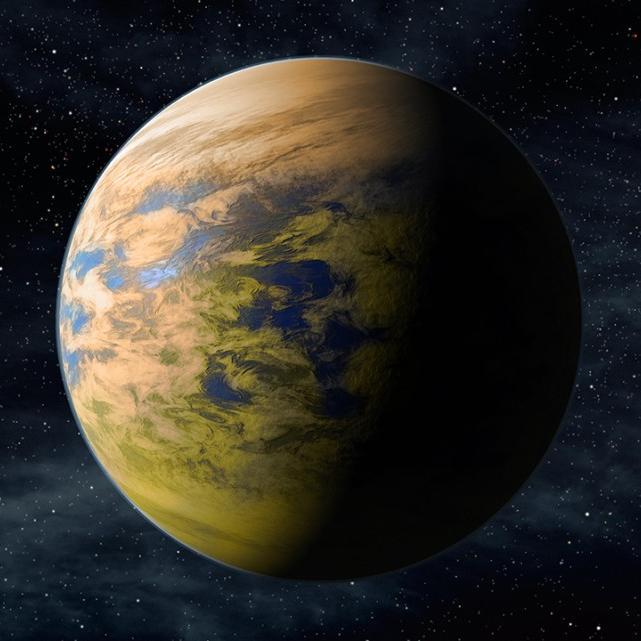
New Cornell research identifies 45 potentially habitable rocky exoplanets using Gaia data and NASA archives, creating a catalog to guide life-search efforts. Authors are an undergraduate, two recent alumni and Lisa Kaltenegger, professor of astronomy and director of the Carl Sagan Institute in the College of Arts and Sciences.
Jason Koski/Cornell University
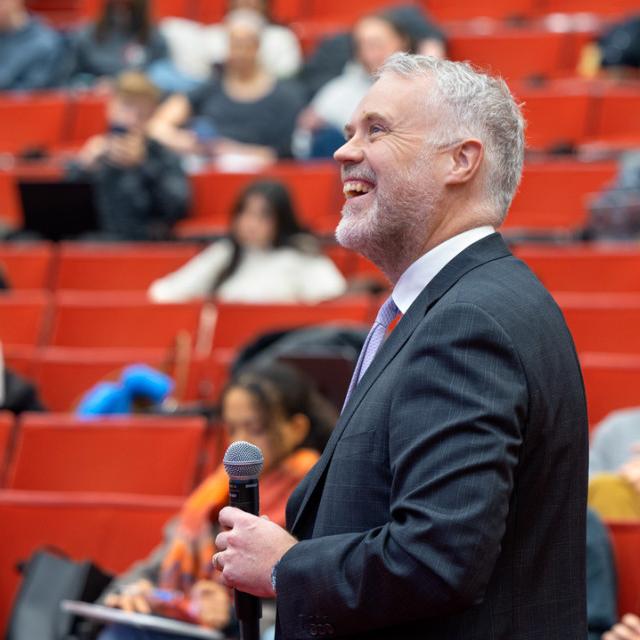
Peter John Loewen, the Harold Tanner Dean of Arts and Sciences, leads his government class, Disagreement.
The new class, dean Peter John Loewen said, for students to be able to confront and move through disagreements at work, at home, in their communities and in society.
Provided
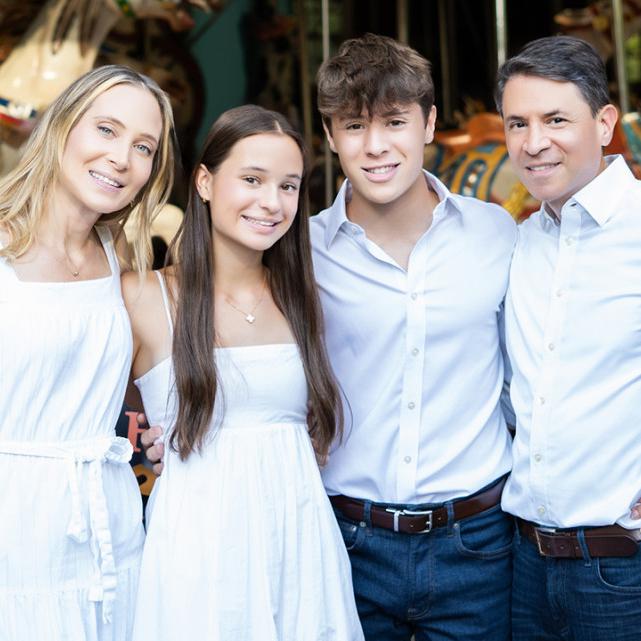
The Uribe family is searching for a stem-cell donor for 15-year-old Max (second from right).
To help the son of an Arts & Science alum and thousands of people in need of life-saving intervention, Cornell is hosting a stem-cell cheek swabbing campaign March 13-20 across the Ithaca campus.
Alexandra Bayer/Cornell University
Seth Klarman ’79 (left) and Bret Stephens discuss the state of journalism and debate in the U.S. March 6 in Klarman Hall.
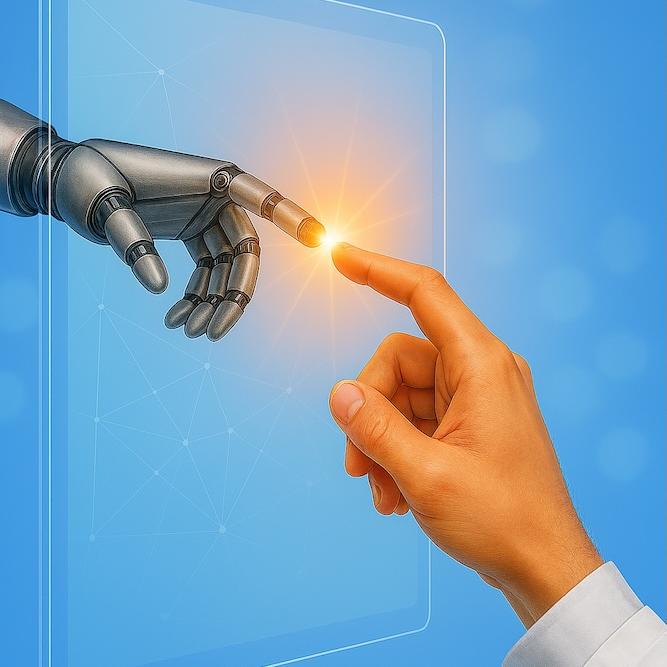
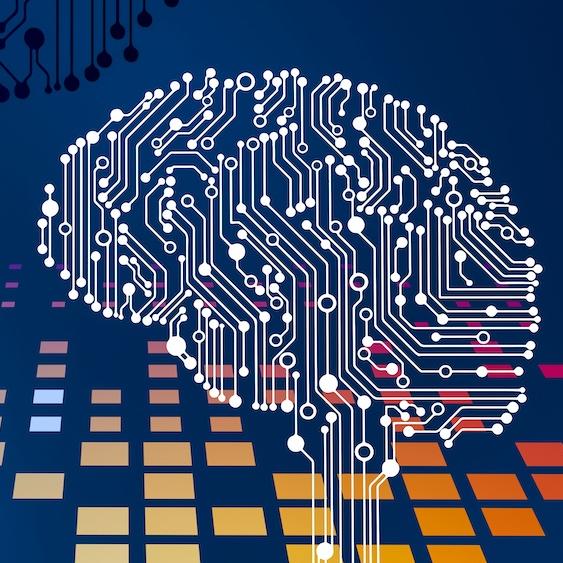
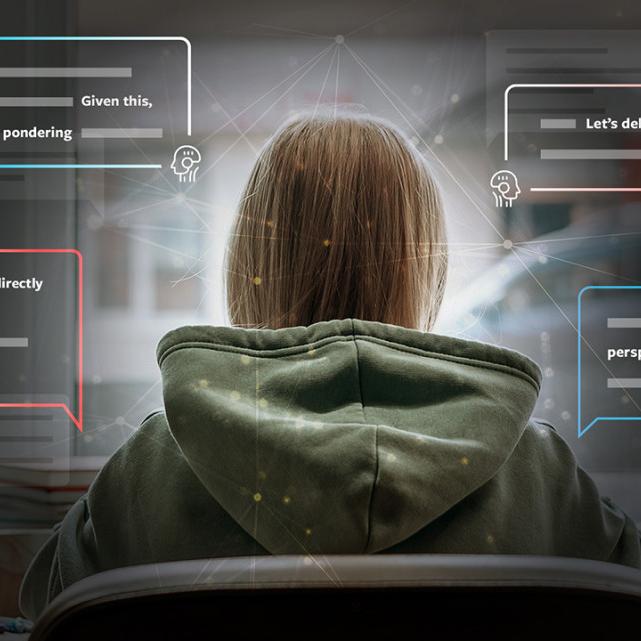
Cornell physicists and Google researchers wondered whether LLMs could understand scientific literature at the level of a specialist.
Ryan Young/Cornell University
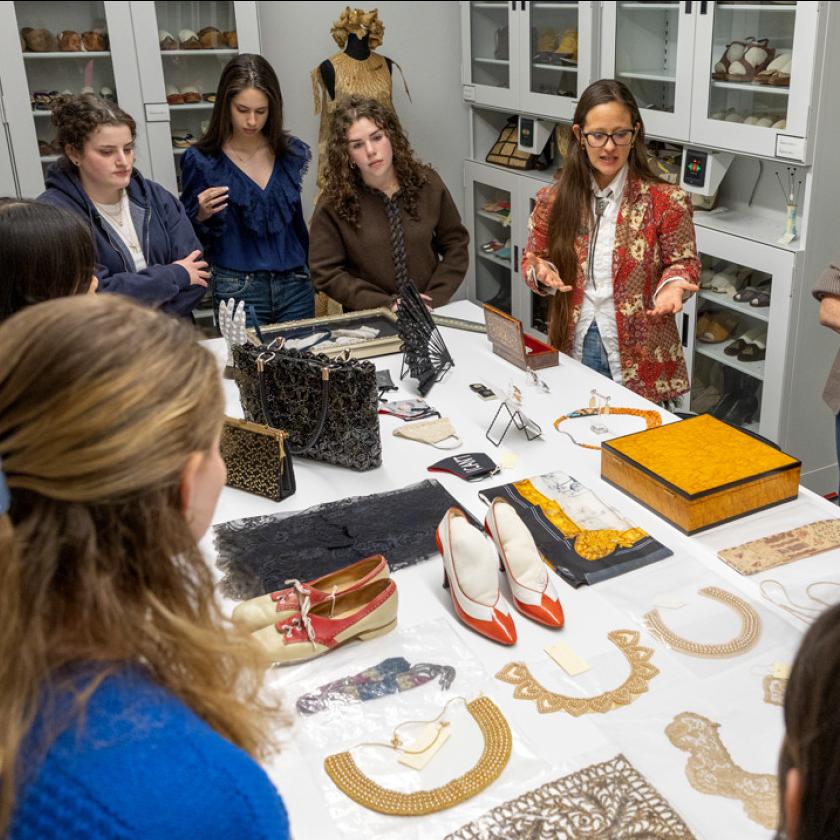
Denise Green shows students around the Cornell Fashion + Textile Collection and highlights artifacts on loan from the family of Ruth Bader Ginsburg ’54.
Ruth Bader Ginsburg ’54 was a champion for women’s equality. Her style, and the substance behind it, will be on display in an exhibit, “Fashioning Justice: Ruth Bader Ginsburg ’54 and the Power of Presence.”
Jason Koski/Cornell University
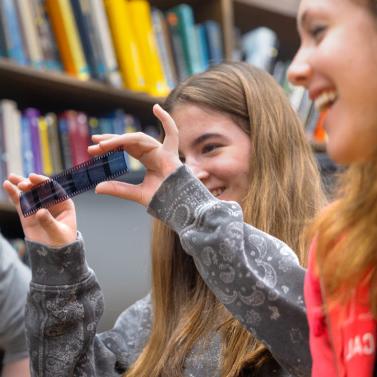
Students examine old strips of film.
Cornell’s Spacecraft Planetary Image Facility (SPIF), which manages print and online images taken by NASA missions, supports astronomy research and conducts dozens of outreach events every year.
The Assessing and Imagining the Impact of Generative AI on Science Symposium, March 3-5, will feature experts from across academia and industry engaging in discussions on the use and implications of generative AI.
Jason Koski/Cornell University
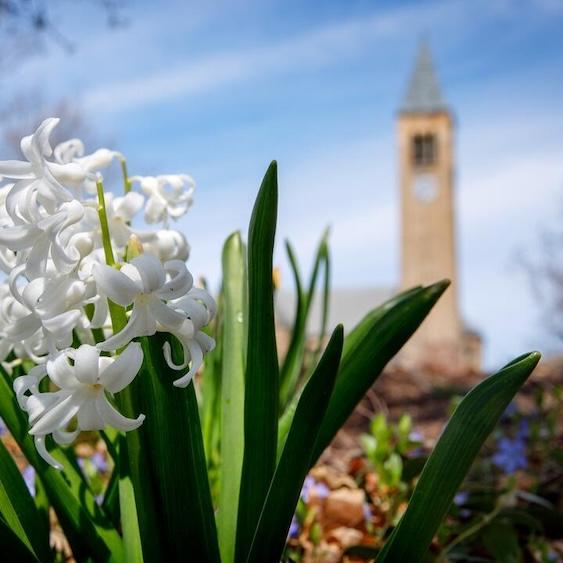
Spring flowers bloom near Ho Plaza
The Cornell Center for Social Sciences has selected 10 faculty members, including several from A&S, as 2026–27 Faculty Fellows, providing course release and funding to support interdisciplinary social science research with real-world impact.
Provided
Prof. Alexander Livingston talks with Upward Bound students over winter break during a pilot of the new summer program for high school students.
Fourteen members of Cornell’s faculty and staff are being recognized this year with Community-Engaged Practice and Innovation Awards from the David M. Einhorn Center for Community Engagement; from A&S it's government professor Alexandre Livingston.
Employees who are impressed by vague corporate-speak like “synergistic leadership,” or “growth-hacking paradigms” may struggle with practical decision-making, a new Cornell study into “corporate BS” reveals.
Researchers have found that quantum systems in a frozen state can be stabilized long enough to be a useful strategy for preserving information before it disappears.
Provided
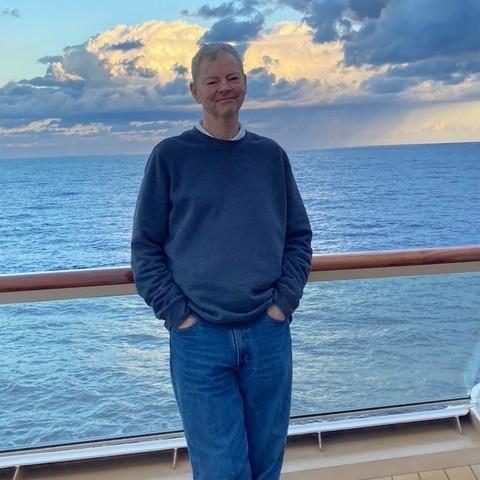
Robert Sullivan on a Mediterranean cruise near Naples, Italy, in January 2024.
… he remained a Boston Red Sox fan all his life, attending a game at Fenway Park as recently as September. Provided … service will be held on Monday, March 9, at 11 a.m. at the First Congregational Church of Ithaca, 309 Highland Road. A …
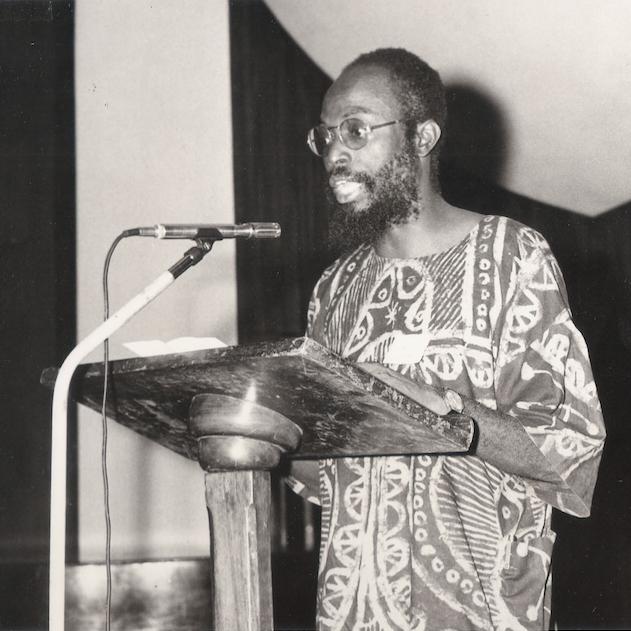
Biodun “BJ” Jeyifo, a leading literary critic and cultural theorist known for his analysis of modernity and its attendant social and cultural crises, died Feb. 11 in Lagos, Nigeria. He was 80.
Jason Koski/Cornell University
As part of the new course, students broke out into small groups to discuss big questions relating to law, health, technology and business.
On a Saturday morning in February – the coldest day yet of a cold winter – more than 350 students trekked to Statler Hall for an innovative new course on civics.
Cornell researchers have developed an online module, running just over an hour in length, that can be offered as a way to instill concepts of critical thinking early in a student’s academic journey.
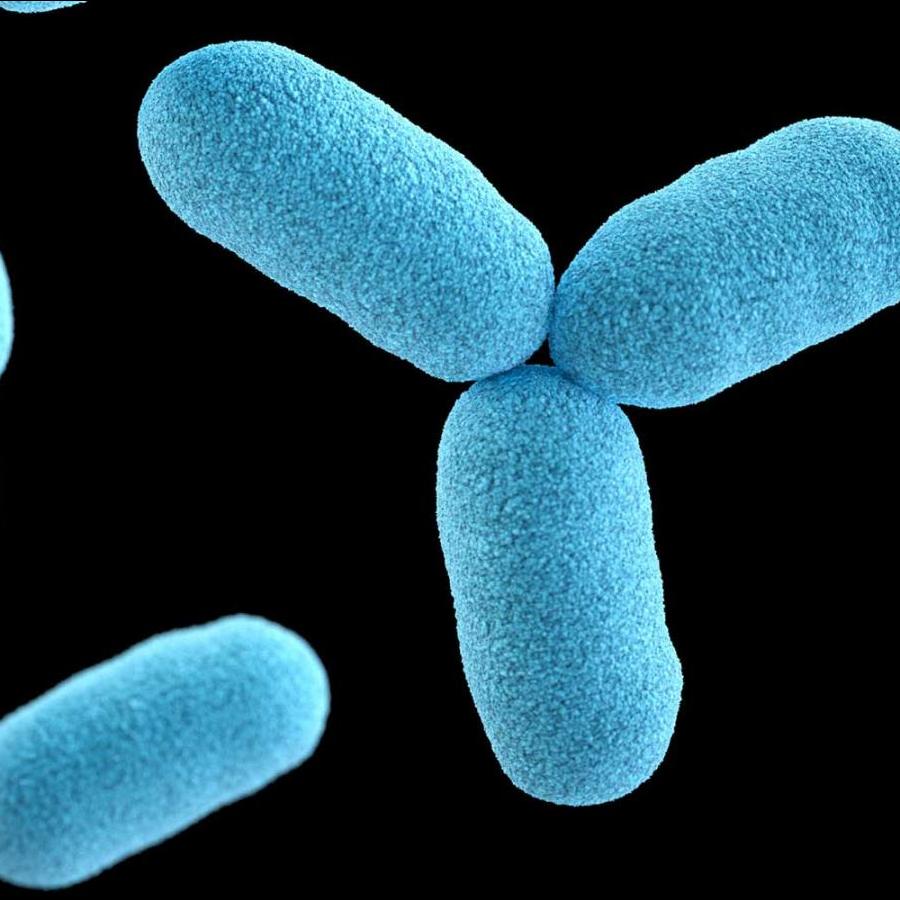
Researchers discovered electron transfer in electroactive bacteria is mediated by CymA proteins’ ability to synchronize and form a biomolecular condensate in the cell’s inner membrane.
Cornell researchers have uncovered a built-in molecular “gate” that controls the production of the molecule nitric oxide, a crucial signaling molecule throughout biology that in humans helps regulate blood pressure, brain signaling, and immune defenses. But when levels go unchecked, it can damage cells and disrupt normal signaling.
Getty Images/Provided
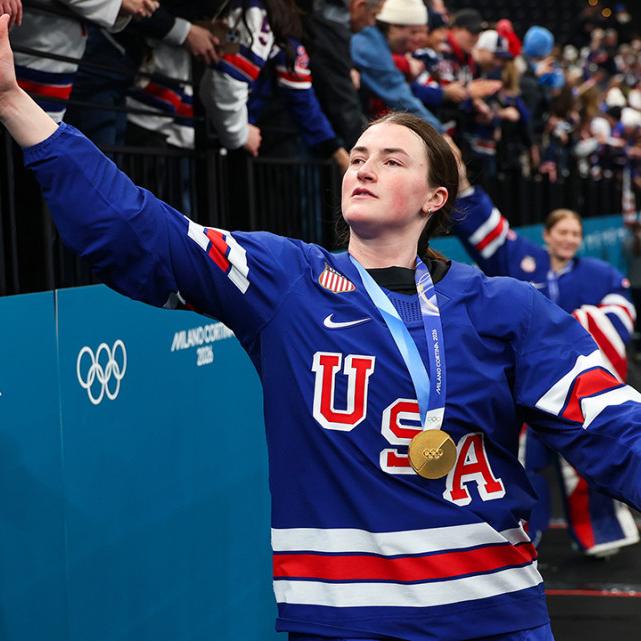
Rory Guilday ’25 thanks fans after receiving the gold medal.
Rory Guilday ’25 won a gold medal and Brianne Jenner ’15 and Kristin O'Neill ’20 took silver in women’s Olympic hockey.
Alexandra Bayer/Cornell University
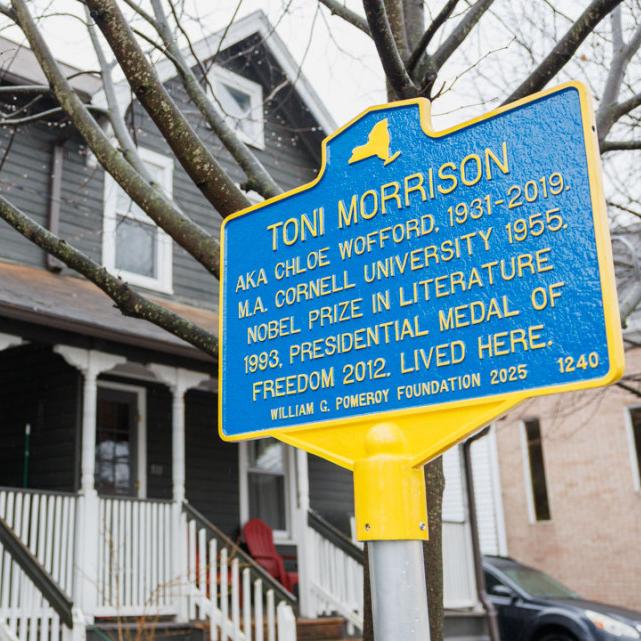
A historical marker for Toni Morrison, M.A. ’55, was unveiled at 513 N. Albany St in Ithaca, where she lived during her first year at Cornell.
Cornell faculty, staff, students and community members celebrated the 95th birthday of Toni Morrison, M.A. ’55, by unveiling a new historical marker in front of 513 N. Albany St., where she lived while in graduate school.
Named for Cornell’s first president, the program sponsors scholars and public intellectuals in the life sciences, physical sciences, humanities, social sciences and the arts and this semester features several connections with the College of Arts and Sciences.
Five Cornell faculty members are among 126 early-career researchers across North America who have won 2026 Sloan Research Fellowships from the Alfred P. Sloan Foundation.
Provided
Christian Gant-Madison '25, right, interned with Congressman Gabe Evans (CO-08), left, last summer.
Christian Gant-Madison's '25 platform will use AI to connect youth to jobs, skill development opportunities, civic education information and social resources.
Cornell researchers have discovered a new way cells regulate how they respond to stress.
Provided
The Center for Teaching Innovation will host the faculty panel "The Art of the Lab," the second installment in its annual "Art of Teaching" series, on Feb. 11.
CTI’s “The Art of Teaching” series returns Feb. 11 with “The Art of the Lab.” Faculty panelists will share creative instructional approaches for designing student-centered laboratory experiences.
New York Times columnist Bret Stephens, New York Times White House correspondent Zolan Kanno-Youngs and ProPublica investigative reporter Keri Blakinger ’14 will visit Cornell this spring.
Cornell University
Rory Guilday ’25 will become the first Cornell alumna to represent the United States in women’s hockey at the Olympics.
A Cornell student and two alumni have been named Schwarzman Scholars for the 2026-27 academic year and will spend it in a master’s program in global affairs at Beijing’s Tsinghua University.
Cornell Cinema will present a screening of the documentary “Rule Breakers,” chronicling the founding of Afghanistan’s first all-girls robotics team, followed by a panel discussion and Q&A.
Psychology researcher Jordan Wylie and colleagues found that artistic excellence, rather than moral excellence, offers greater access to one’s true self.
Four Cornell faculty members are among 99 researchers across the U.S. who have been awarded grants by the U.S. Department of Energy as part of its Office of Science Early Career Research Program.
Four faculty from A&S have been awarded Cornell’s highest honors for graduate and undergraduate teaching.
Garth Avery/Cornell University
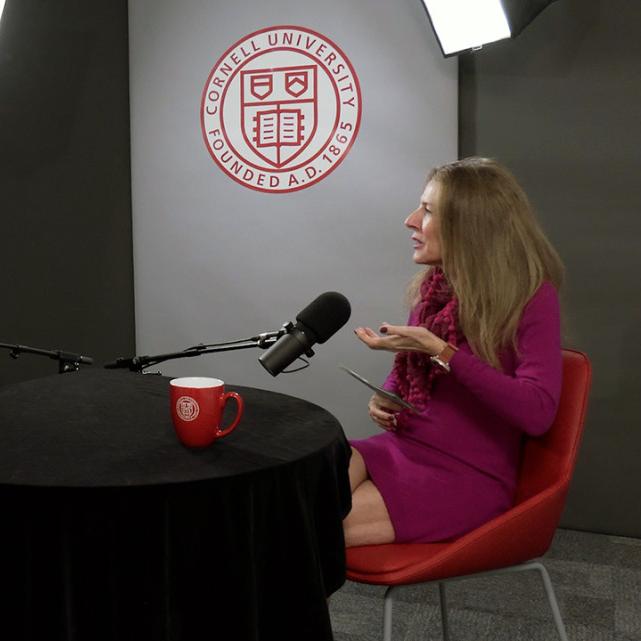
Jessica Salerno, left, associate professor in the College of Human Ecology and Cornell Law School, speaks with Cornell Chronicle writer Laura Reiley for the “Research Matters” podcast.
Launching Jan. 27 with three episodes, “Research Matters” spotlights Cornell scholars whose research directly engages with real-world challenges, from climate change and public safety to mental health.
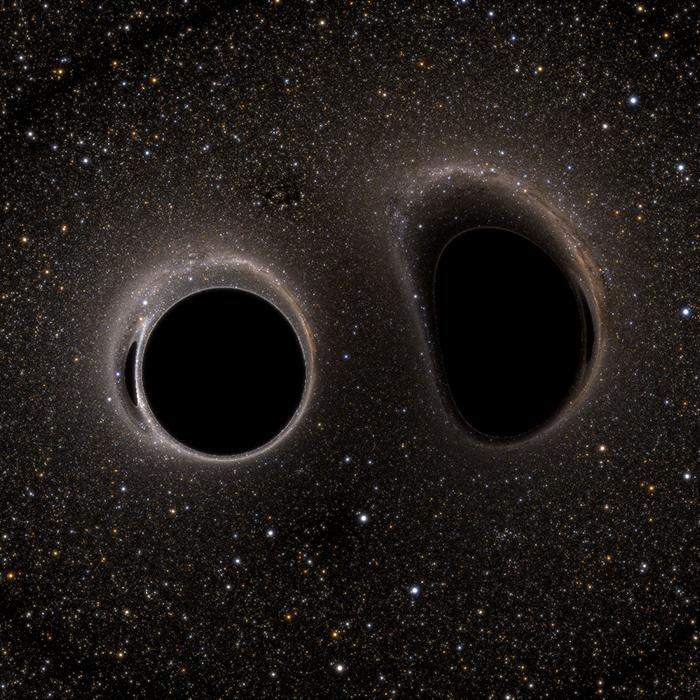
SXS Lensing/Simulating eXtreme Spacetimes Collaboration
A visualization from a computer simulation of two black holes
Researchers believe that mental representations of language patterns make humans adept at improvising new sentences.
Provided
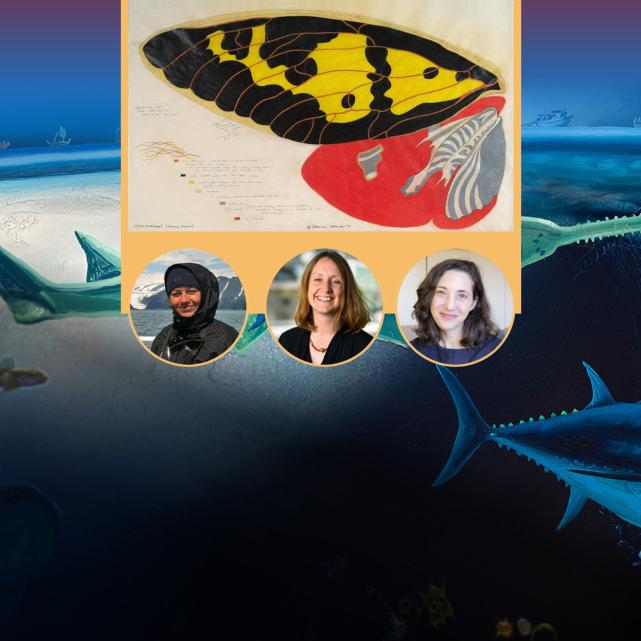
The "Teaching About Climate Change: Art, Action, and Reflection" event on Wed. Jan. 28, a collaboration between the Center for Teaching Innovation and the Herbert F. Johnson Museum of Art, will include a faculty panel, workshop, and tour of “Naples: Course of Empire,” the new Alexis Rockman exhibit that opens Jan. 20 at the Johnson Museum.
On Jan. 28, the Center for Teaching Innovation and Herbert F. Johnson Museum of Art will co-host “Teaching About Climate Change: Art, Action and Reflection,” a faculty panel, teaching workshop and exhibit tour exploring how instructors can engage the humanities, climate change and community in their teaching.
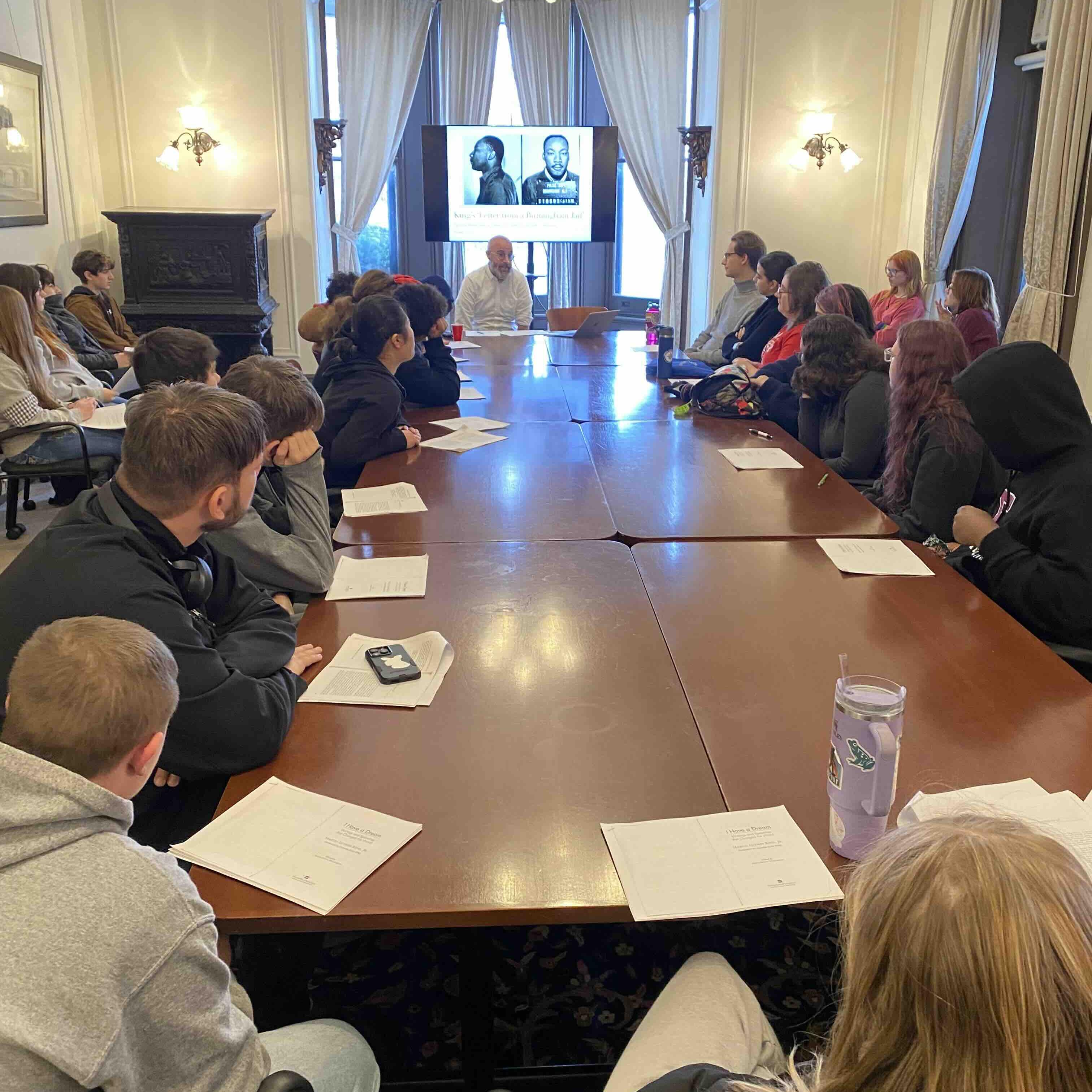
Martin Luther King Jr.’s speeches tapped into a Black musical tradition that animated the Civil Rights Movement, says Ambre Dromgoole, assistant professor of Africana religions and music.
In 2026, the from the Gordon and Betty Moore Foundation will begin funding 10 two-year postdoctoral appointments including three in astronomy, chemistry and physics in the College of Arts and Sciences.
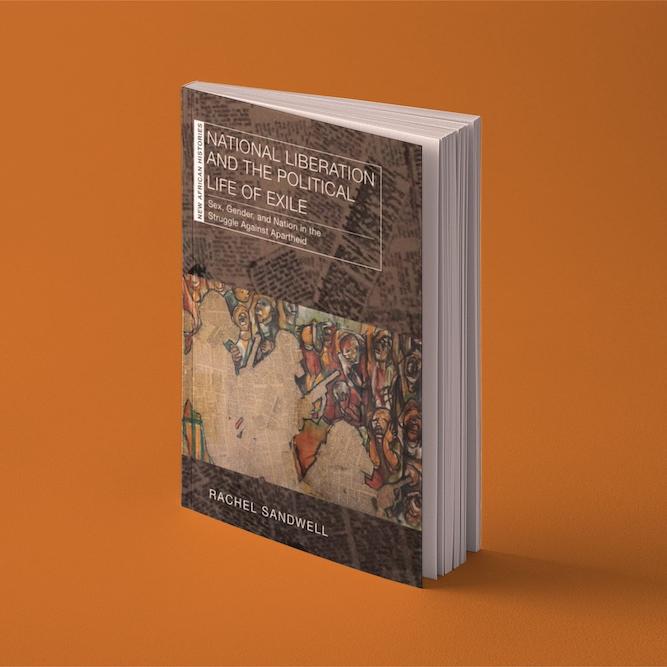
Women played a major role in debates surrounding the fight against apartheid in South Africa, Rachel Sandwell writes in a new book, “National Liberation and the Political Life of Exile: Sex, Gender, and Nation in the Struggle against Apartheid.”
Rick Ryan/Cornell University
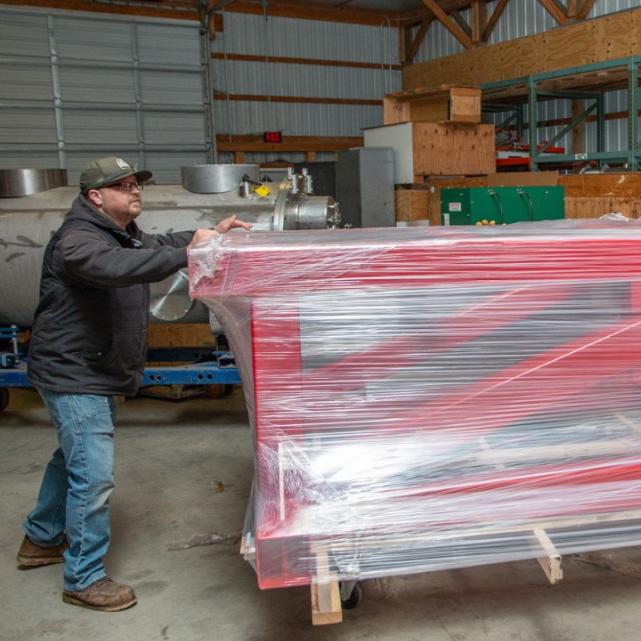
Lead rigger Ed Foster guides the movement of the Prime-Cam support raft, a carefully choreographed step in preparing the telescope for shipment.
Behind a world-leading telescope bound for Chile is a team of engineers, machinists, electronics specialists and riggers at Cornell. Meet the specialized staff whose expertise is helping push cosmology to new frontiers.
A new study shows that using large language models like ChatGPT boosts paper production, especially for non-native English speakers, but the overall increase in AI-written papers is making it harder to separate the valuable contributions from the AI slop.
Ryan Young/Cornell University
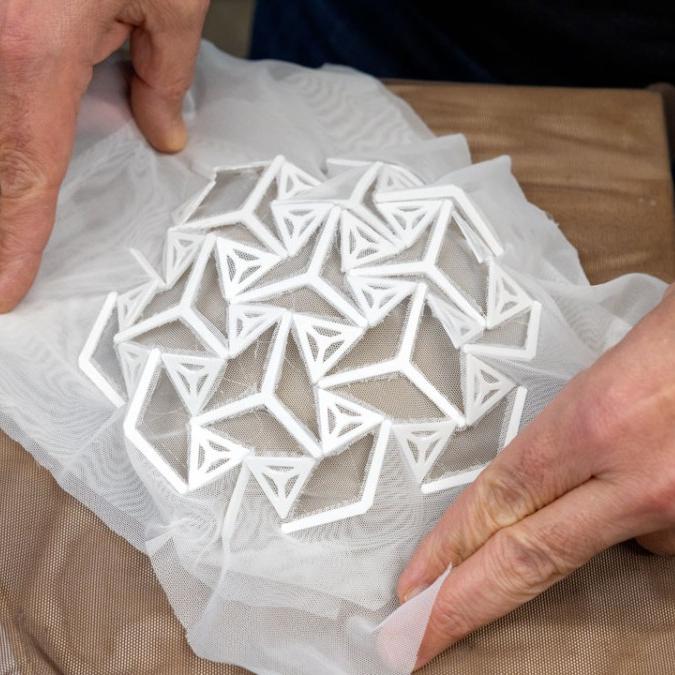
HelioSkin is a lightweight, stretchable architectural fabric that is aesthetically attractive and can wrap around complex shapes.
In 2025, Cornell produced cutting-edge AI research, inaugurated a president and advanced agriculture and sustainability. The university’s faculty, staff, students and alumni made the world a better place, welcomed back two Nobel laureate alumni and conducted research that matters.
Provided
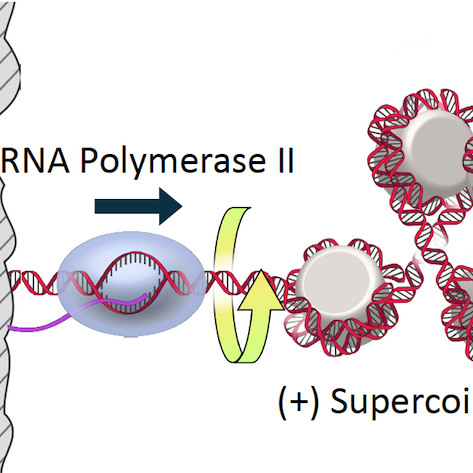
This cartoon illustrates how RNA polymerase generates torsional stress in DNA during transcription. Chromatin, composed of nucleosomes with DNA wrapped around histone proteins, buffers this stress, enabling the polymerase to transcribe through nucleosomes.
Researchers discovered that DNA packaging structures called nucleosomes, which have been traditionally seen as roadblocks for gene expression, actually help reduce torsional stress in DNA strands and facilitate genetic information decoding.
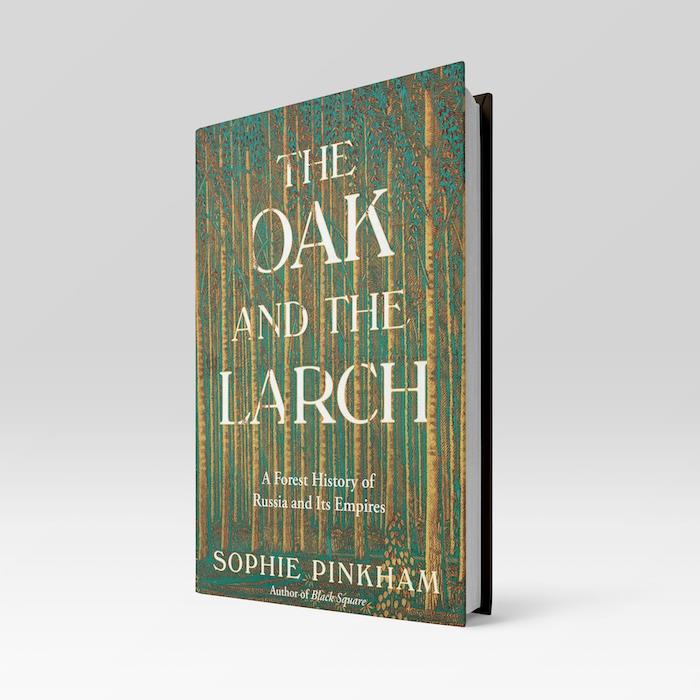
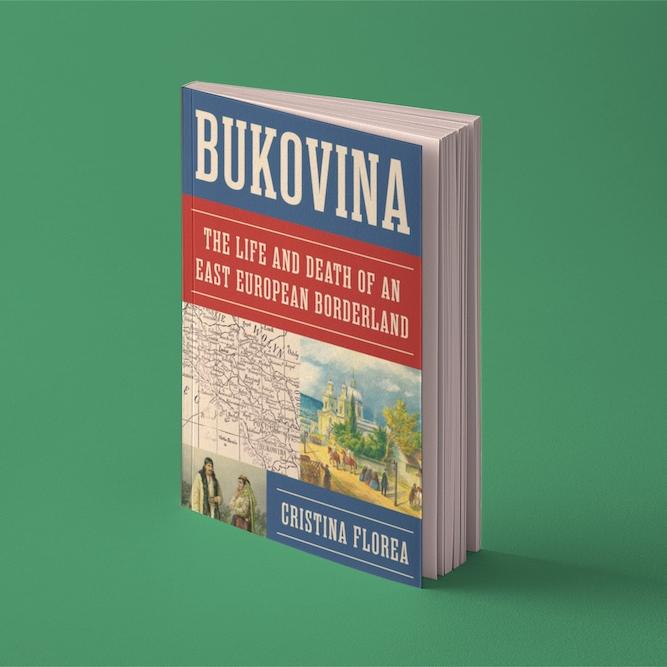
The region never fit easily among its neighbors, as regimes including the Habsburg Empire and the Soviet Union tried to remake it in their image.
Chris Kitchen for Cornell University
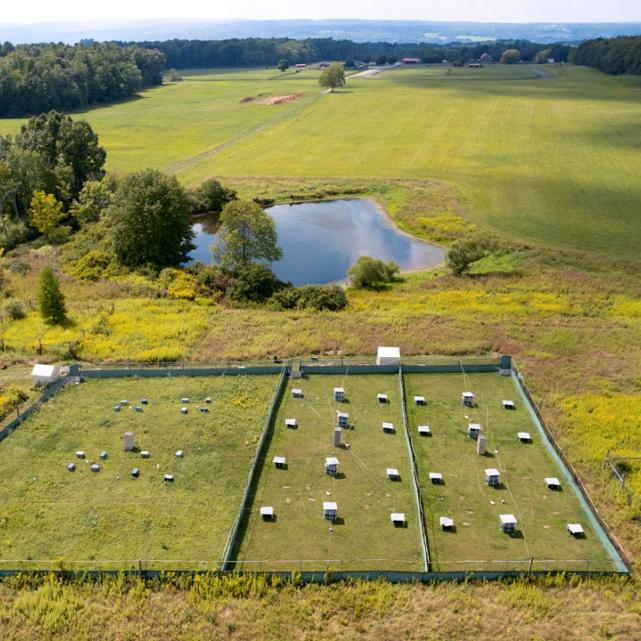
Researchers said enclosed fields, just off Cornell's campus, vastly expand the experiences of lab mice, which have only ever lived in a cage a little larger than a shoebox.
In a new book, Donald Campbell, Ph.D. ’71, professor emeritus of astronomy, recounts the history of Arecibo from construction to its last days under Cornell’s management in 2011.
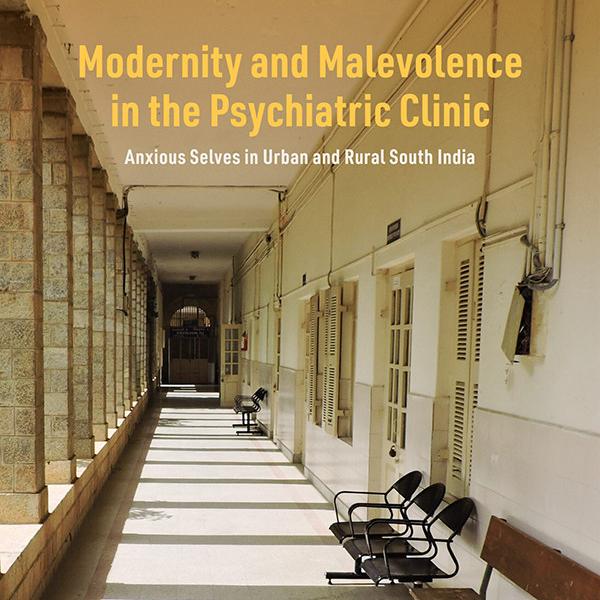
The book shows how patterns of psycho-social stress combined with modernity’s pressures can influence psychiatric practice.
Jason Koski/Cornell University
A team of scientists from Cornell, the State University of New York College of Environmental Science and Forestry and the New York State Department of Environmental Conservation took a DEC boat out onto Seneca Lake in September to place sensors and take water samples from the lake's depths.
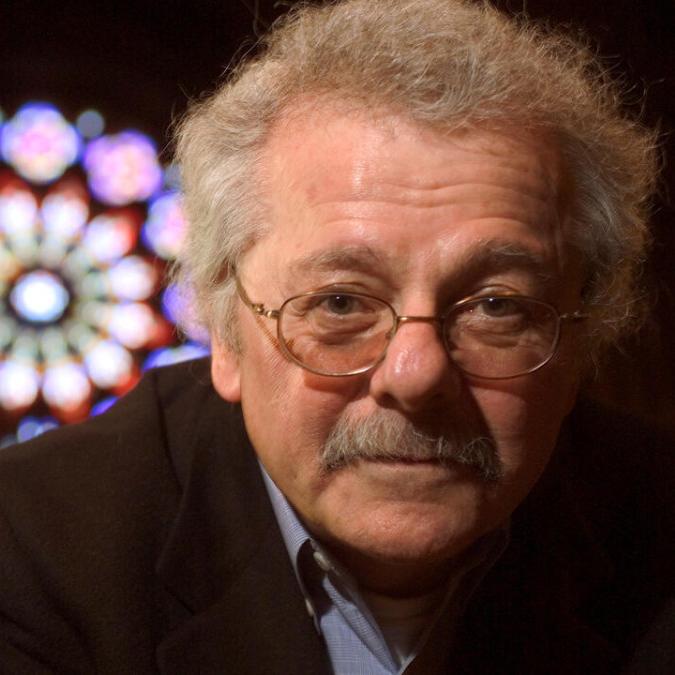
Salvatore taught at the ILR School and in the American Studies Program in the College of Arts and Sciences for 36 years, retiring in 2017 as the Maurice and Hinda Neufeld Founders Emeritus Professor of Industrial and Labor Relations.
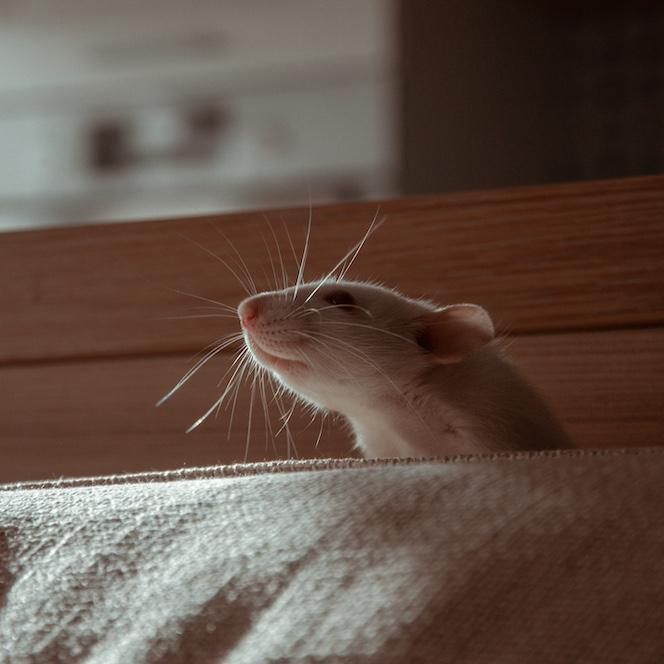
The mice could remember new experiences that would normally be forgotten – a finding with important implications for treating Alzheimer’s disease.
Alexandra Bayer/Cornell University
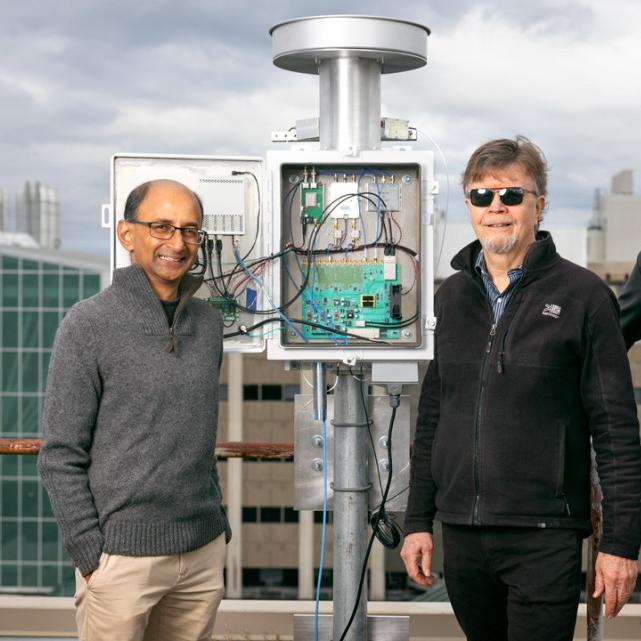
Shami Chatterjee, associate professor of astronomy in the College of Arts and Sciences; James Cordes, the George Feldstein Professor of Astronomy; and doctoral student Sashabaw Niedbalski, on the roof of the Space Sciences Building next to the Global Radio Explorer Telescope.
The Cornell Center for Social Sciences offers multiple grants to help Cornell faculty maximize their research impact. These awards help seed ambitious projects and provide support to teams of faculty applying to major external funding and collaboration opportunities.
Benjamin D. Esham/Wikimedia Commons, Creative Commons license 4.0
Electrons can be elusive, but Cornell researchers using a new computational method can now account for where they go – or don’t go – in certain layered materials.
Two new papers – with experiments conducted in four countries – demonstrate that chatbots powered by large language models (LLMs) are quite effective at political persuasion, moving opposition voters’ preferences by 10 percentage points or more in many cases.
Serge Petchenyi/Cornell University
The "Improving STEM Learning and Pedagogical Assessment" innovation project focused on creating an equitable environment for students to work in teams.
With a 2024-2025 Innovative Teaching & Learning Grant, A&S professors collaborated with others to develope an AI tool to foster student metacognitive skills around teamwork in STEM classes.
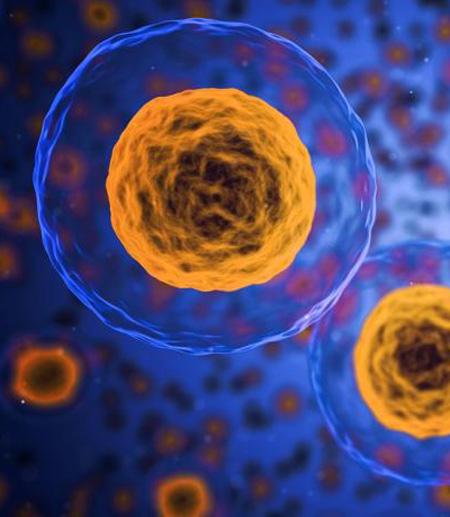
Scientists have outlined exactly how embryonic stem cells protect other cells from the effects of oxidative stress, thus preventing cellular aging.
Sreang Hok/Cornell University
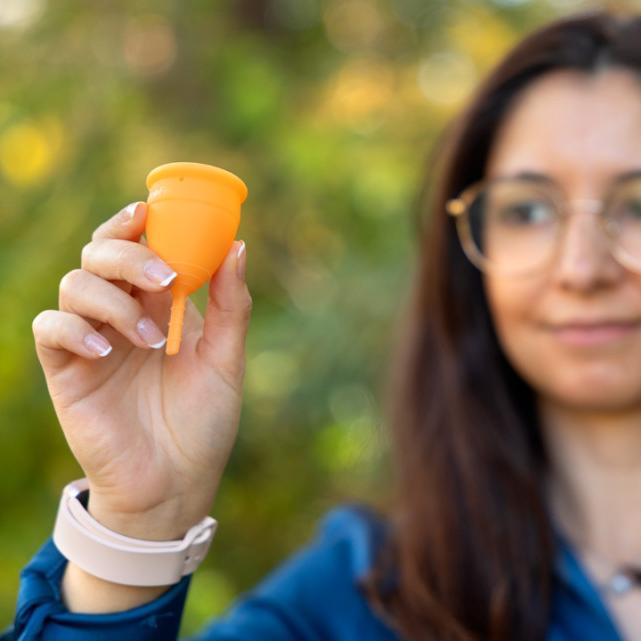
Ligia Coelho, a Postdoctoral Fellow in astronomy in the College of Arts and Sciences and fellow at the Carl Sagan Institute, holds a menstrual cup.
To equip astronauts with health choices for future missions, a Cornell postdoctoral fellow is leading research with AstroCup, a group that recently tested two menstrual cups in spaceflight as payload on an uncrewed rocket flight.
Provided
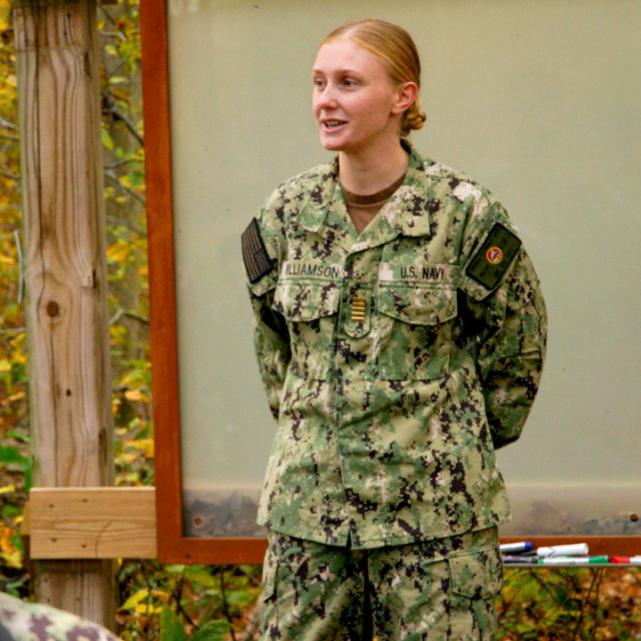
Kylie Williamson ’26 has been named Navy/Marines Student of the Year by Navy Federal Credit Union, a top honor in the Reserve Officers Training Corps system.
Kylie Williamson ’26 has been named Navy/Marines Student of the Year by Navy Federal Credit Union, a top honor in the Reserve Officers Training Corps system. Williamson is the first Cornell student to win the award.
New grant funding will support eight research projects seeking to reduce AI’s energy use and integrate AI in environmental research.
Charissa King-O’Brien/Cornell Engineering
Postdoctoral researcher Rebecca Gerdes, Ph.D. ’24, (left) and Jillian Goldfarb, associate professor of chemical and biomolecular engineering, led an interdisciplinary team that determined that organic residues of plant oils are poorly preserved in calcareous soils from the Mediterranean.
An interdisciplinary team of researchers determined that organic residues of plant oils are poorly preserved in calcareous soils from the Mediterranean, leading decades of archaeologists to likely misidentify olive oil in ceramic artifacts.
The portraits are part of a series by Christopher Michel, the National Academies of Sciences, Engineering and Medicine’s inaugural artist-in-residence.
The David M. Einhorn Center for Community Engagement has released a new video series highlighting a decade of progress and impact in community-engaged learning across the university.
Diane Tessaglia-Hymes
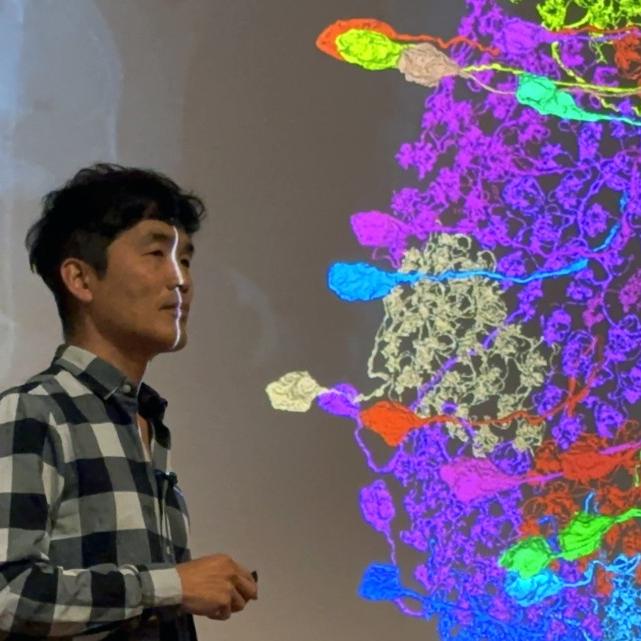
H. Sebastian Seung, professor of computer science and neuroscience at Princeton, showing a portion of the fruit fly connectome in the optic lobe as a featured speaker at the 2025 Cornell Neurotech Mong Family Foundation Symposium.
Using a Cornell-built instrument and Cornell-built high-speed detector, a team of researchers captured atomically thin materials responding to light with a dynamic twisting motion.
Adam B. Langeveld/Carl Sagan Institute. Adapted from NASA/Ames/JPL-Caltech
Artist concept of a cloudy Earth-like exoplanet with colorful biota in the clouds.
Cornell researchers have created the first reflectance spectra – a color-coded key – of microorganisms that live in the clouds floating above Earth’s surface.
The spread of dubious headlines on social media isn’t just a right-wing thing – it's a social media thing, according to new research from psychology professor David Rand ’04.
Simon Wheeler for Cornell University
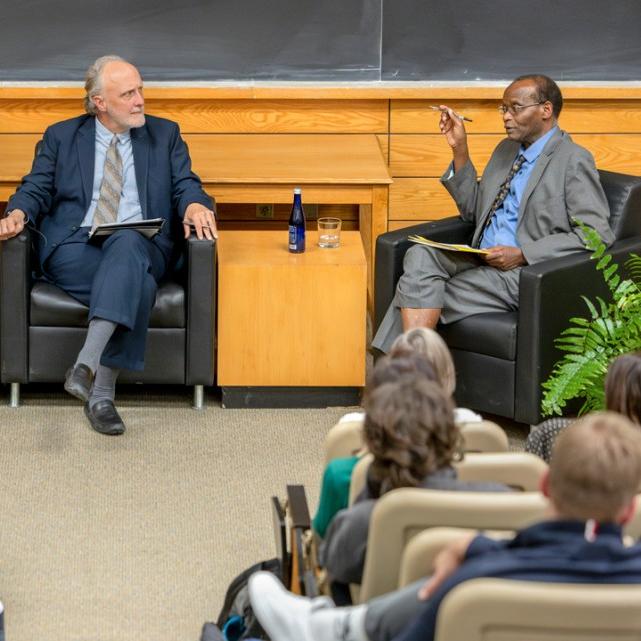
Muna Ndulo, right, speaks as Chris Barrett, left, and moderator Paul Kaiser listen at the Einaudi Center’s Lund Critical Debate.
Faculty members discussed the value of international aid in the wake of the Trump administration’s policy that froze foreign assistance.
Sunwoo Lee/Provided
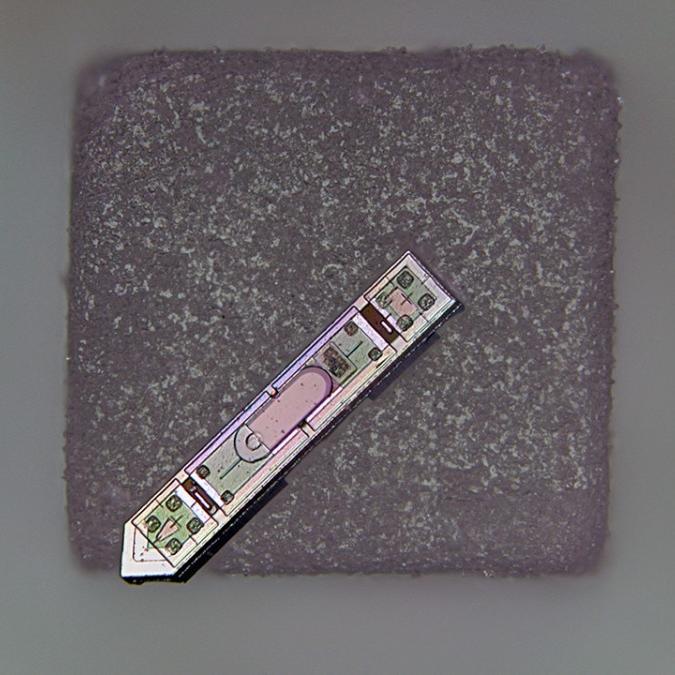
A neural implant developed at Cornell rests on a grain of salt. About 300 microns long and 70 microns wide, it’s the smallest neural implant capable of wirelessly transmitting brain activity data.
Cornell researchers and collaborators have developed a neural implant so small that it can rest on a grain of salt, yet it can wirelessly transmit brain activity data in a living animal for more than a year.
A new study explores how people feel about sharing their good deeds.
Provided
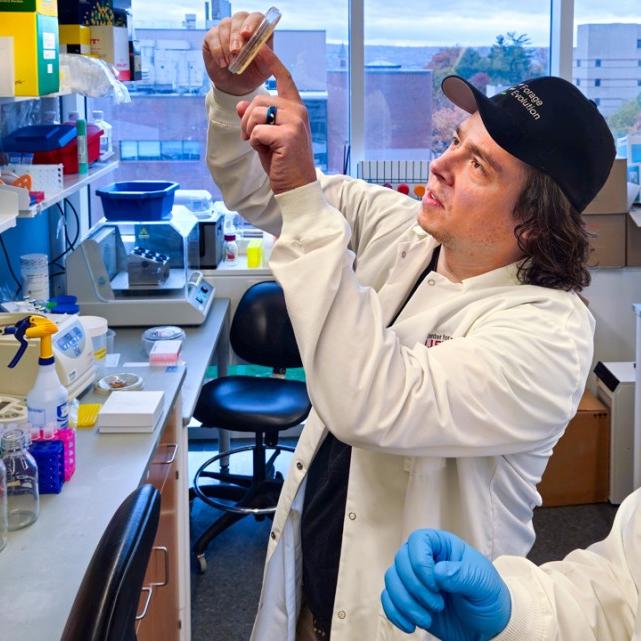
Bryce Brownfield, Ph.D. ’23 (left) and Cameron Kitzinger ’22 work in their lab for Forage Evolution, which was recently admitted into Cornell’s Center for Life Science Ventures incubator.
A keynote and faculty panel on Nov. 12 will focus on how faculty can communicate their generative AI-related expectations to students, how students can take accountability for their work, and what this looks like in practice.
Ryan Young/Cornell University
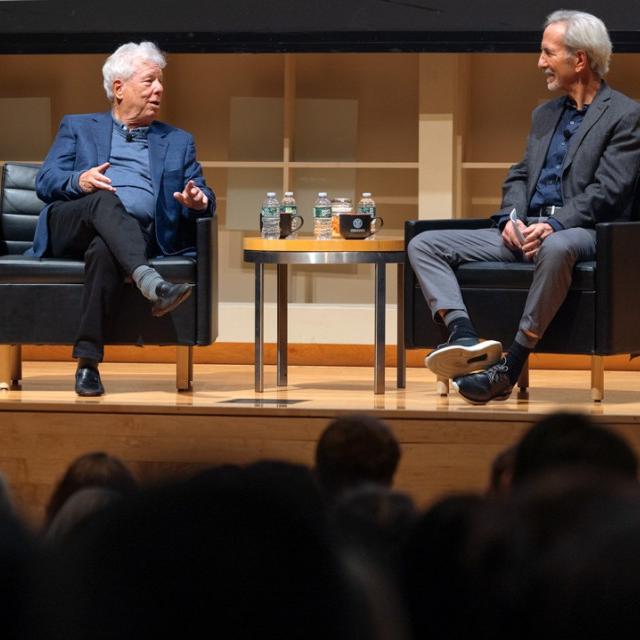
Nobel Prize-winning economist and former Cornell professor Richard Thaler, left, speaks on stage with Thomas Gilovich, the Irene Becker Rosenfeld Professor of Psychology, in the Statler Auditorium.
Richard Thaler, a Nobel laureate who was a professor at the Samuel Curtis Johnson Graduate School of Management from 1978 to 1995, spoke Oct. 17 at the Alice Statler Auditorium.